Jesus taught us to pray, “Thy will be done...” but it isn’t always easy to know what the will of God is. But there is one thing that is always the will of God.
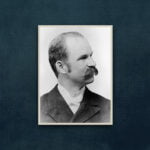
“I’m going out to see my Father’s world.” These words were often heard as the young pastor went for a jog in the morning sunshine. His usual route involved running two miles to a certain hill and then back again. Sometimes he would run farther on to a bird sanctuary to see more of his “Father’s world.” Reverend Maltbie D. Babcock’s vigorous morning exercise set the tone for his day—praise to God and enjoyment of life. Reverend Babcock was a man of many talents. A brilliant scholar and athlete, he had been an expert swimmer and the captain of the collegiate baseball team. His musical interests had included directing the university orchestra, playing multiple instruments, and composing Godly music. Other talents involved his leading the university glee club, singing, and art. In his leisure time, he was also an avid fisherman. Although he could have chosen from many different professions, Reverend Babcock’s love for the Lord led him to choose the pastoral ministry. During his first pastorate he composed the hymn “This Is My Father’s World.” This is my Father’s world,And to my list’ning ears,All nature sings and ’round me ringsThe music of the spheres. How was Reverend Babcock able […]
The hymn writer Reginald Heber was a young boy when he came to know Jesus as his Savior. Being very bright, he learned to read before the age of five. One of his favorite books was about the famous Christian martyr, Henry Martyn. Martyn’s life and death impacted the Reverend Heber. He had great respect for those who would endure years of pain and suffering, loneliness and frustration, all in order to hold to God’s truth and to share that truth with others. Reverend Heber wrote about such martyrs who endured for the cause of Christ in his hymn “The Son of God Goes Forth”: The Son of God goes forth to war,A kingly crown to gain;His blood-red banner streams afar:Who follows in His train?Who best can drink his cup of woe,Triumphant over pain,Who patient bears his cross below,He follows in His train. The phrase “follows in His train” is repeated several times in the hymn. A train is the long, flowing portion of a king’s robe that trails behind him as he ascends his throne. Those who “follow in his train” are the ones committed to the king and his cause. They will courageously endure whatever necessary to […]
A brilliant student, Eliza Hewitt was the class valedictorian when she graduated from Girls’ Normal School in Philadelphia. Her high school trained young ladies to become teachers upon graduation. Thus, Miss Hewitt became a public school teacher in the town where she was born and lived her entire life. A short time later, however, Miss Hewitt had to leave teaching due to a spinal injury. The common understanding was that the injury resulted while she was disciplining a student. The unruly boy struck her back with a heavy slate! The painful blow severely injured her back. Bedridden due to the pain, she could no longer do the normal, everyday things she had enjoyed. During those months of suffering following the injury, Miss Hewitt spent much time with God in prayer and in His Word. She desired to express to others her special relationship with Him. As a result, she began writing poems for children and for Sunday School resources. When the heavy, restrictive cast required for her recovery was removed, she is said to have written the hymn “There Is Sunshine in My Soul Today”! Miss Hewitt found that, in her time of suffering and rehabilitation, God used something grievous […]
The year was 1637. Almost twenty years of the brutal Thirty Years’ War in Europe had been fought. In the walled German city of Eilenberg, a group of starving citizens approached the tents of their Swedish invaders. The Swedish army’s commander had levied an unbearable tax on the impoverished city. No one could pay it. Led by their pastor, Martin Rinkart, the people had come to plead for a reduction in the tax. The response was a firm “No!” Turning to his fellow-townsmen, Pastor Rinkart humbly urged, “Come, my children, we can find no mercy with men; let us take refuge with God.” Falling to his knees, Pastor Rinkart prayed, surrounded by others now also on their knees. Then they sang the German hymn, “When in the Hour of Utmost Need.” Seeing the humble scene before him touched the heart of the commander. He relented and greatly reduced the tax! The Thirty Years’ War (1618–1648) began as a spiritual conflict between Protestants and Roman Catholics in Germany but eventually became a political war for territory. Multitudes had sought refuge in the walled city. The crowded conditions produced starvation and disease. One plague in the city claimed 8,000 lives! In 1637, […]
In the early 1700s, a young German nobleman named Nikolaus Zinzendorf visited the Dusseldorf Museum. One particular painting captivated his attention. The painting depicted Jesus with a crown of thorns on His head just before His crucifixion. The caption below read: “I have done this for you; what have you done for Me?” The painting moved young Zinzendorf to a wholehearted commitment to serve God. Count Zinzendorf became one of the most influential leaders in the history of Christian missions. More than one hundred years later, another young Christian visited that same museum. A tired, seventeen-year-old Frances Havergal sat opposite that same painting. Quietly she gazed at the dramatic painting along with its inscription. Deeply moved, she began jotting down phrases. Miss Havergal’s sister later wrote: “On January 10, 1858, [Frances] read the motto, and the lines of her hymn flashed upon her. She wrote them in pencil on a scrap of paper. Reading them over [once she returned home] she thought them so poor that she tossed them on the fire, but they fell out [of the fire] untouched.” The story continues that her father grasped the papers that weren’t burned and encouraged his daughter to keep them. Her […]
Adelaide Pollard was discouraged. As she sat in a prayer meeting, doubts and disappointments engulfed her. She had prepared to go to Africa as a missionary, but her hopes were dashed when she was unable to raise enough financial support. Nearby, an elderly lady was praying. Miss Pollard overheard her say, “It is all right, Lord! It doesn’t matter what You bring into our lives; just have Your own way with us!” Miss Pollard was struck by the older woman’s fervent desire for God’s will rather than her own. Pondering the lady’s prayer of yieldedness, Miss Pollard resolved to submit herself anew to God and His will. She felt her sadness lift, replaced with hopefulness. That evening, the praying woman’s words resonated as Miss Pollard read Jeremiah 18:3–4: “Then I went down to the potter’s house, and, behold, he wrought a work on the wheels. And the vessel that he made of clay was marred in the hand of the potter: so he made it again another vessel, as seemed good to the potter to make it.” The overheard prayer combined with Scriptural truth impacted Miss Pollard that night. Realizing that she was clay in the hands of the Master […]
The drenched, terror-filled sailor clutched the helm. As another angry billow crashed against the ship, the entire vessel shuddered violently and then dropped into the hollow of the next giant wave. The storm raged relentlessly. Experienced sailors cried aloud, clinging white-knuckled to the railings. Also aboard was passenger William Whiting. He had committed his life to Christ years earlier. Awed by the powerful waves, he fervently, confidently petitioned the Master of the sea and wind. Finally the damaged ship limped into port. The passengers and crew were battered, but alive! The experience seemingly echoed Psalm 107:23–29: They that go down to the sea in ships . . . see the works of the Lord, and his wonders in the deep. For he commandeth, and raiseth the stormy wind, which lifteth up the waves thereof. They mount up to the heaven, they go down again to the depths: their soul is melted because of trouble. They reel to and fro, and stagger . . . and are at their wits’ end. Then they cry unto the Lord in their trouble, and he bringeth them out of their distresses. He maketh the storm a calm, so that the waves thereof are still. […]
Mr. Linden’s student was deathly ill and had called for his beloved schoolteacher. Responding quickly, the teacher came to the boy’s home. Entering the dimly lit bedroom, the teacher tenderly lifted the young boy into his arms and began pacing back and forth. Little Johnny Fax, sickly and pale, gazed gratefully at Mr. Linden’s face and faintly whispered, “Sing.” The gentleman began singing softly: Jesus loves me, this I know;For the Bible tells me so;Little ones to Him belong,They are weak but He is strong. The original stanzas closed with this final verse: Jesus loves me, He will stayClose beside me all the way;Then His little child He’ll takeUp to heaven for His dear sake. The above story and poem are from the Victorian novel Say and Seal. The book introduced the poem that affirms the heartwarming truth that “Jesus Loves Me.” The book, co-authored by sisters Anna and Susan Warner, was published in 1860, and it quickly became a bestseller. The poem penned by Miss Anna resonated with many readers. Miss Warner and her sister had become writers due to what seemed a terrible misfortune to human eyes. Their widowed father lost his wealth in the financial Panic of […]
The light breeze wafted over the seaside town of Brighton, England. Flowers bloomed in the early May sunlight. However, inside one home the scene was not so calm and peaceful! The guest at the family dinner table, an evangelist from Switzerland, was asking some startling questions: “Are you a Christian? Have you experienced Christ?” His kind yet direct questions particularly offended one of his hosts. The thirty-three-year-old daughter, Charlotte Elliott, quickly replied that her salvation was not his concern! Miss Elliott had enjoyed a happy childhood. Her artistic talent had been developed extensively during her young adult years. However, as she had neared her thirtieth birthday, her health began to fail. Now, three years later, she was an invalid. Her poor health depressed and embittered her. How dare this guest, Dr. Malan, confront her about her spiritual health! “You are tired of yourself, aren’t you?” Dr. Malan persisted gently. “You are holding to your hate and anger because you have nothing else in the world to cling to. Consequently, you have become sour, bitter, and resentful.” The family quietly slipped from the room, leaving the two to continue their discussion. God’s Spirit was moving in Miss Elliott’s resistant heart. Finally, […]
The Confederate cannons boomed, hurling heavy ammunition that exploded in thudding, fiery, noisy bursts. The Civil War battle of Allatoona Pass, Georgia, was brutal. Union soldiers despaired inside the fort atop the hill. They were completely surrounded! Within the strong stone walls, their fellow soldiers lay wounded and dying. Confederate soldiers barraged the fort, skillfully shooting with accuracy as their bullets hit their marks. Only a few wayward bullets whistled past the ears of disheartened Union soldiers. On October 5, 1864, the Allatoona Pass fort was attacked by the Confederates. The fort held the prized treasure of 1.5 million food rations for the Union army. The Union soldiers guarding this precious resource were now outfought. Once thinking they were secure, the men now had lost all hope of survival, much less victory. Soon the demand for surrender came. The weary Union soldiers looked at both the fallen and those barely standing. Hopelessness was evident on each face. Wait! Approximately twenty miles away, a tiny white speck waved from another high hill. Every eye strained to see. Some peeked cautiously over the stone wall and some peered through peepholes. What was the signaled message? “Hold the fort. I am coming. Sherman.” […]
The Italian summer sun streamed over the tall grass and leafy olive trees. A middle-aged man sat still, listening to the singing birds and the gentle breeze rustling in the trees. He felt the warmth of the sun. A painful eye infection had weakened his sight and was slowly rendering him blind; but although his vision was failing, his other senses were heightened. The Italian man was Giovanni Bernardone. Born into a wealthy family around a.d. 1200, he lived an indulgent life until age twenty-five, when he dedicated his life to God. Mr. Bernardone declined the rich inheritance that was his due and chose instead to live a simple life of self-denial. What a dramatic change in lifestyle—from possessing great riches to having only the barest of necessities! Mr. Bernardone is better known as Saint Francis of Assisi. He lived peacefully near the Italian village of Assisi and spent his days preaching and helping the poor. Saint Francis creatively expressed the joy within his soul by writing these words, which became the hymn titled “All Creatures of Our God and King”: All creatures of our God and King,Lift up your voice and with us singAlleluia, Alleluia!Thou burning sun with golden […]
I surrender all;I surrender all;All to Thee, my blessed Savior,I surrender all. These simple words of wholehearted commitment to Christ have been sung by believers around the world. Who wrote these compelling lines and why? Judson Van DeVenter was born in Michigan in 1855. From an early age, he had a deep appreciation for art and music. When he was seventeen, he became a Christian. He later attended Hillsdale College. After college, art was very important in Mr. Van DeVenter’s life. He eventually became supervisor of art in various public high schools in Pennsylvania. During this same time, Mr. Van DeVenter was very active in his church, often singing in the choir andparticipating in evangelistic rallies. Observing his enthusiasm and ability in evangelism and counseling, his friends urged him to pursue full-time ministry. However, Mr. Van DeVenter enjoyed art and was unwilling to set it aside to be more involved in Christian ministry. For five years, he struggled inwardly between his two desires: to become a recognized artist and to serve the Lord in full-time ministry. Finally, the struggle climaxed. Mr. Van DeVenter described the moment: At last the pivotal hour of my life came, and I surrendered all. A […]
BOOM! Some of the soldiers froze, staring skyward as another shrapnel-filled cannonball shot across the battlefield and exploded midair! The noise was deafening. Metal shards flew through the air! Amidst the confusion, the alert commander simultaneously tracked the enemy’s movement while strategically positioning his own army. Suddenly, he shouted, “Forward, men!” Lifting high his silver sword gleaming in the sunlight, he sounded the battle cry! Surprised, the enemy began retreating! With renewed vigor, the attacking army advanced. The men were fully convinced that victory was theirs! Several years after the American Civil War ended, a new hymn was written that reminded Christians of a different war still being waged. The hymn’s writer, William F. Sherwin, was born in 1826 in Massachusetts. As a young man, he had studied under the famous composer Lowell Mason. Later, Mr. Sherwin taught at the New England Conservatory of Music. He was also a voice instructor and congregational music director who had become known for his hymn-writing abilities. The rallying new hymn, “Sound the Battle Cry,” was one of his many works. In this particular hymn, Mr. Sherwin focused on the spiritual warfare Christians face. The words urge believers to give up comfortable, passive living […]
One Sunday afternoon, a woman walked into New York state’s Sing Sing prison. Her purpose was to lead a religious service for the imprisoned women. Sing Sing was a high-security prison that reputedly held the worst criminals. As she entered, the visitor heard the loud clunk of the heavy steel door lock securely behind her. Before her, the female inmates gathered in the hallway to attend the religious service. Hateful tension existed between the guards and the incarcerated women. On this particular afternoon, a guard gave a harsh order which sparked the prisoners’ anger. Instantly, they reacted! Long-standing bitterness and fury flamed to the surface, and within moments a riot broke out! Hastily, the desperate guard called for reinforcements. The revolting prisoners proved difficult to subdue. Quickly the uprising escalated! Suddenly, over the noisy cursing and shouting, a voice clearly sang out these words: Yield not to temptation For yielding is sin,Each vict’ry will help you Some other to win;Fight manfully onward, Dark passions subdue,Look ever to Jesus—He will carry you through. The rioters paused to hear the words. Other voices joined in. The singing grew louder and stronger. Shouting ceased as more prisoners began to sing. Shun evil companions, […]
The small family stood tearfully beside the little grave. Pastor George Prentiss and his wife, Elizabeth, were grief-stricken. They had just buried one of their young children. Mrs. Prentiss’s heart was especially overwhelmed with sorrow and pain. A short time later, tragedy struck again when the youngest Prentiss child also died. Devastated, Mrs. Prentiss wrote in her diary, “Empty hands; a worn-out, exhausted body; and unutterable longings to flee from a world that has so many sharp experiences.” Despite her sorrow, Mrs. Prentiss continued to trust God instead of becoming bitter. Even in poor health, she faithfully honored God by lovingly serving her husband and young family. At one point, Mrs. Prentiss studied the story of Jacob in the Old Testament and how God met him in a special way. Earnestly, she asked God to grant her a similar experience. Later, reflecting upon the hymn “Nearer, My God, to Thee,” she was inspired to write her own poem about her heart’s desire. More love to Thee, O Christ,More love to Thee!Hear Thou the prayer I makeOn bended knee;This is my earnest plea: More love,O Christ, to Thee . . . The words flowed forth! However, near the end,the words stopped. […]
The eighteenth of nineteen children, Charles Wesley was brought up by Godly parents. However, the family’s commitment to follow Christian principles made them unpopular. During the forty years they ministered in the small town of Epworth, England, they encountered cruelty and persecution from the villagers. On various occasions, the villagers threatened to harm the Wesley children, crippled their dog, burned their crops, and injured their cows. The Wesley home was even set afire several times! Despite the persecution, Mr. and Mrs. Wesley remained steadfast in their faith. Their wise responses to such opposition set an example for their children to follow. The children, in turn, influenced others to choose righteousness. Charles Wesley was well-educated, first by his mother and then during years of formal training at two universities. While returning from a mission trip to the United States, he wondered about his own salvation. Aboard the ship sailing homeward, he met a Christian who spoke to him of assurance of salvation. Soon thereafter, Reverend Wesley experienced peace with Christ when he received assurance of his salvation. A year later, he began preaching across the English countryside. Riding on horseback from town to town, he proclaimed God’s Word in churches and […]
In the late 1800s, a Philadelphia pastor was known by the nickname “the Sunshine Minister.” Reverend Frank Graeff had a radiant personality and an ever-present smile. Because of his sunny demeanor and simple faith, children were often drawn to him. Although Reverend Graeff’s nickname indicated a life filled with joy, the man also knew heartache and spiritual trials. While his specific difficulties and sorrows are unknown, at one point in his life he struggled with depression. The man recognized by many for his cheerful countenance found himself crumbling under overwhelming burdens. Amid his helplessness and misery, Reverend Graeff wisely turned to Christ, the only One Who could truly understand his soul’s sorrow. During this severe season of his life, Reverend Graeff reflected upon the words of a particular hymn, “What a Friend We Have in Jesus.” As he read the words of truth and comfort about Jesus being a Friend Who cares about our sorrows, the despondent minister’s burdens were lifted! Encouraged by the hymn, he turned to I Peter 5:7 in his Bible and read: “Casting all your care upon him; for he careth for you.” God’s Word strengthened his heart, and Reverend Graeff was inspired to write his […]
Leaning forward so as not to miss a single word, Reverend Charles Luther listened intently. The visiting evangelist shared about a dying young man’s confession. In Christian service only a month before his death, the young man’s last words had been a lament: “No, I am not afraid; Jesus saves me now. But oh! must I go, and empty-handed?” The dying man knew he would have joy in Jesus’ presence, and yet he also was sorrowful because he had not led others to Jesus. Inspired by the heartbreaking testimony, Reverend Luther wrote a poem that considered the sadness of meeting Jesus empty-handed. Not at death I shrink nor falter,For my Savior saves me now;But to meet Him empty-handed,Tho’t of that now clouds my brow. Once the poem was completed, Reverend Luther gave it to George C. Stebbins, an American Gospel hymn writer and composer. Mr. Stebbins composed music for the words, and the poem became the hymn titled “Must I Go, and Empty-Handed?” The story does not end there! About fifteen years later, a reckless, sinful man stumbled upon a city mission meeting in England. While others were singing the third verse of this hymn, the man was convicted as […]
The crying infant rubbed at her swollen eyes with her tiny fists. The one doctor who served in the county was unavailable. So, in desperation, the infant’s parents called a man who claimed to have medical knowledge. He prescribed hot poultices to be applied to their baby’s eyes. The infection soon healed, but something was wrong. The parents later learned that the man was not a doctor at all, and his prescribed remedy had destroyed their baby girl’s eyesight. The baby, Frances Jane Crosby, was affectionately called “Fanny.” When she was eight years old, she expressed her resolve to be content despite being completely blind: Oh, what a happy soul am I!Although I cannot see,I am resolved that in this worldContented I will be. Years later, Fanny Crosby wrote in her journal that her parents had taught her about God’s working in ways we do not understand: When my dear mother knew that I was to be shut out from all the beauties of the natural world, she told me . . . that sometimes Providence deprived persons of some physical faculty in order that the spiritual insight might be more fully awake. . . . I made up my […]
Aaron Wolfe walked quickly to the shipping office. Two weeks earlier in Florida, he had stowed all his worldly goods in crates on a ship headed to New York. Then, with just a knapsack, he had traveled via the cheaper overland route. The thirty-four-year-old had graduated from seminary in New York, worked several years in Florida as a headmaster, and was now returning to the Northeast to seek a pastorate. He fully expected his crated valuables—his personal library, sermon notes, and other resources needed by a pastor—to be waiting for him when he arrived. Upon entering the shipping office, Reverend Wolfe told the clerk the name of the ship that carried his belongings. The clerk had bad news for him. On the day the ship had planned to set sail, a storm had blown into port. Lightning had struck the ship and set the vessel afire. The ship’s main cargo—turpentine—had ignited instantly, and both ship and cargo were destroyed. The news was devastating. Yet, as Reverend Wolfe would later recount with a grateful spirit, God used this tragedy to redirect his calling. He realized his life and work were not dependent on the books, papers, and other physical possessions he […]