Biographies

Categories

Topics

Character Qualities

Commands of Christ

Basic Life Principles

Attributes of God

George Washington Carver is most famous for discovering many remarkable uses of the sweet potato and the peanut. But Carver’s influence was far beyond these two commodities. His greatest legacy was his life of loving service to his fellow man.
The Brewsters took a bold step when they left the established church to unite with a small, persecuted body of believers known as Separatists. William Brewster knew that he was risking his status, his livelihood, and perhaps his own life by uniting with these despised Christians, but he saw the justice of their cause and he loved the truth more than his own life.
Stephen, the first Christian martyr, was a man of God who consistently and faithfully loved his neighbor. His name is of Greek origin and means “crowned one.” When Stephen first became a believer in the Lord Jesus Christ is uncertain. He was probably a Hellenistic (Greek) Jew from Jerusalem who came to trust and follow the Lord Jesus during His public ministry.
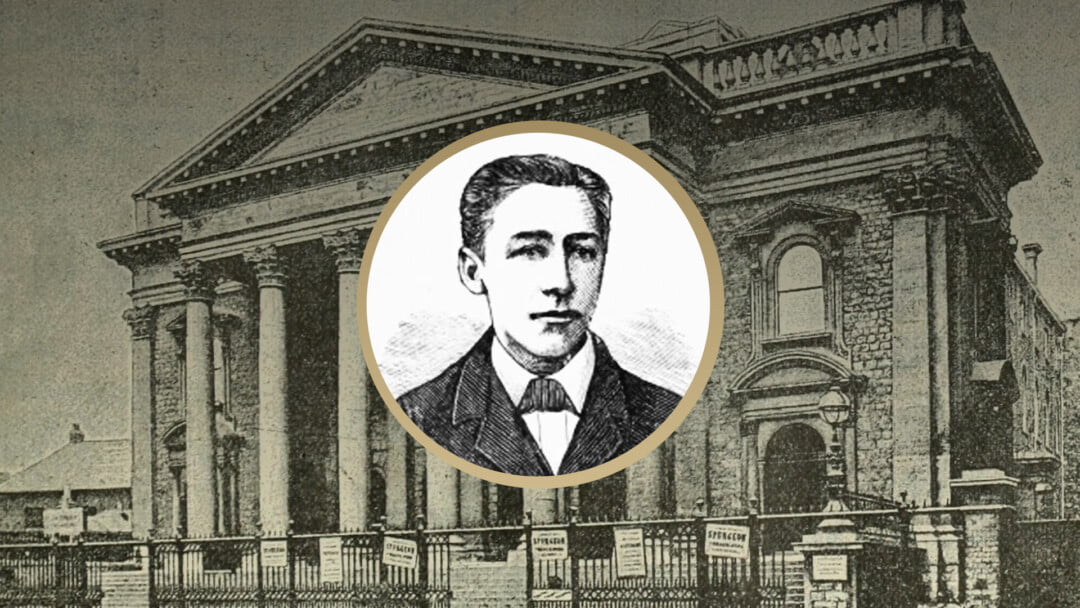
The hills of Scotland have afforded a lovely playground for many generations of young Scottish lads and lasses. In the midst of the heather growing on the wind-swept hills, the lowing of the Highland cattle, the bluebells dotting the land, and the craggy ruins of ancient castles inciting curiosity, all provide an enticement to exploration that is irresistible for a little boy.
The French nobleman opened again the book he held in his hands. The nobleman was a prisoner of war, taken captive by the Spanish while defending Saint Quentin (France) in 1557. His brother had sent the book for him to read in his captivity. In the eyes of many, it was a forbidden book—a French Bible. Admiral Gaspard de Coligny was about to read that forbidden book! How might that book change his life?
Many of us recognize the inspiring title of this famous book of selected Scripture meditations: My Utmost for His Highest. However, fewer people are familiar with the life of the man who made these words his testimony. Although Oswald Chambers lived to be only forty-three years old, his life after his conversion at age fifteen was characterized by a desire to love the Lord with all his heart, soul, and might.
For all his failures, David still obeyed the greatest commandment in the Law: he loved the LORD his God with all his heart, with all his soul, and with all his might.
The young lawyer peered through the early morning darkness. His gaze was directed toward Fort McHenry, which guarded the entrance to Baltimore Harbor. Throughout the previous night, September 13, 1814, he had strained his eyes to try to see the fort. The “bombs bursting in air” had periodically illuminated the darkness, giving a brief but reassuring evidence that “our flag was still there.” From the deck of the British warship where he was temporarily detained, the lawyer, Francis Scott Key, could only watch in helpless anxiety as the “perilous fight” was waged. All night the bombardment by the British navy had continued against the handful of American defenders who garrisoned the fort standing “between their loved homes and the war’s desolation.”
The young missionary eagerly awaited the arrival of his bride. For months Henry Martyn had been expecting his beloved Lydia to make the journey from England to take up residence with him at Danapur, on the banks of the Ganges River in northeast India. Week after week passed as he waited for his bride.
ArticlesArticles
A captivating “read-aloud” nature story introduces the character quality of Persuasiveness, followed by a story from the pages of Scripture! Character Sketches is designed to be a tool that fathers can use to teach their children basic concepts of Scripture that are also illustrated in the world of nature.
Contentment does not come naturally to the selfish heart of man. Neither did it come naturally to the Apostle Paul. In a letter to the Philippians, he testified that it was through hardships and adversity that he had “learned to be content” (Philippians 4:11). We too must learn contentment through the daily experiences of our lives.
Rare in this world is genuine contentment. Very easily we can compare ourselves with others and then grumble and murmur about our difficult lot in life. Covetousness arises very naturally to the heart of man, and it is very easy to envy the blessings that others enjoy. While it may seem that our trials and difficulties are insurmountable, we can always find another man in circumstances that are worse than our own. Today’s biographical sketch looks at the inspiring example of a pastor who not only became blind and lame, but even lost his voice. Still, he remained content with the providence of God.
In every circumstance, Elisha was content with God’s provision and protection. According to II Kings Chapter 6, on one occasion while Elisha and his servant were in the village of Dothan, an entire army was dispatched with the express purpose of capturing Elisha. The man of God remained perfectly calm and content in the midst of almost certain capture.
Who was Dr. Moon, the bold proclaimer of truth on Treasure Island? Irwin Moon was born in Grand Junction, Colorado on November 3, 1907. The scientific age was dawning. The Wright brothers had recently flown their gravity-defying invention—the airplane—at Kitty Hawk. Internal combustion engines were powering automobiles in a bid to replace horses and mules. Young Irwin had an early hunger to be a scientist and take part in this fascinating new world.
From time to time throughout history, God has raised up certain men to become champions of truth in their generation. In the days of the American War for Independence, an unlikely hero from rural Virginia became known as the “Trumpet of the Revolution.” His bold proclamation of truth, his willingness to confront apathy among his countrymen, and his courage to raise a timely warning against tyranny earned him this descriptive title.
We often hear the claim that the Pilgrims stole land, resources, and crops from the Indians. Plenty of scholars promote this view who see all European settlers as robbers and all North American natives as victims. However, there are plenty of scholars who vigorously deny all wrongdoing on the part of the Pilgrims and paint all Indians as bloodthirsty savages who killed and plundered, and needed to be placed in subjugation. Before any hasty or emotional judgment on the question of relations between European settlers, known commonly as “Pilgrims,” and native inhabitants of Cape Cod, known commonly as “Indians,” it is important to view the settlement question in the light of a broader, historical view.
Tax collectors were despised by patriotic Jews in the first century. Tax collectors, or “publicans,” were viewed as collaborators with Roman tyrants at best, and merciless parasites or outright thieves at worst!
ArticlesArticles
New from Character Sketches, Volume IV! A captivating “read-aloud” nature story introduces the character quality of Boldness. This is followed by a story from the pages of Scripture! Character Sketches is designed to be a tool that fathers can use to teach their children basic concepts of Scripture that are also illustrated in the world of nature.
We have become so accustomed to price tags that we take them for granted. But one hundred fifty years ago, price tags were rarely used in most stores in America. Merchants and consumers were accustomed to the system of barter and trade. If a merchant thought that he could sell you a good axe for ten dollars, why would he let a customer buy one for only seven dollars? Merchants intentionally did not show their customers a fixed price. But this system led to much corruption, and many people were taken advantage of over the years through unscrupulous and greedy “negotiations.”
Titus stands as a splendid example of a young convert to Christianity who learned quickly to “adorn the doctrine of God our Saviour” (Titus 2:10) by living a pure life in an impure world. Every temptation faced by young men in our own increasingly godless society was faced by Titus as he walked the streets of Corinth and traveled throughout the island of Crete.
Loading...