Biographies

Categories

Topics

Character Qualities

Commands of Christ

Basic Life Principles

Attributes of God

ArticlesArticles
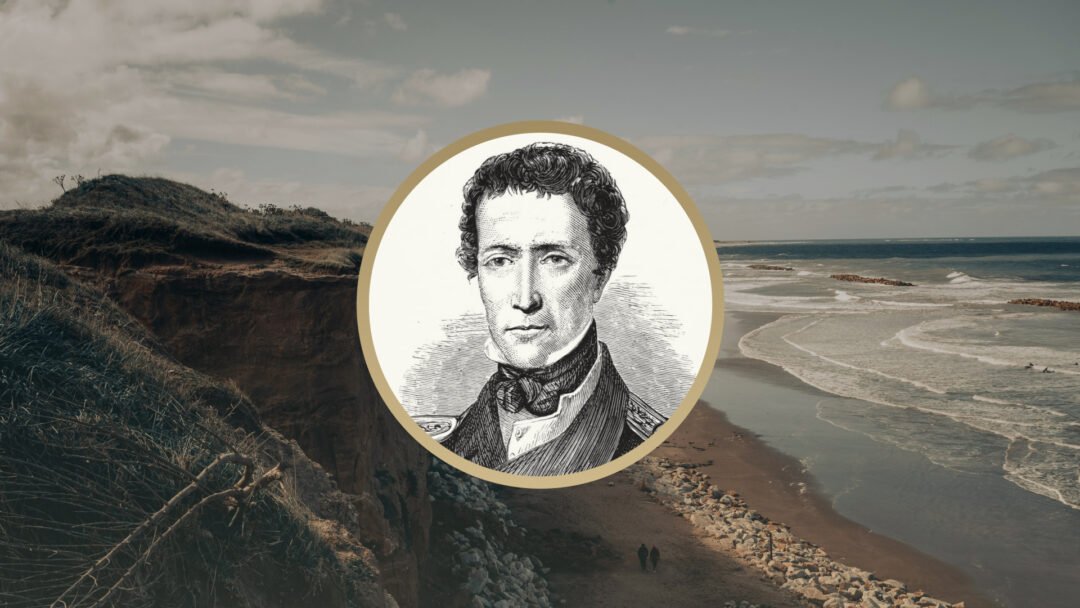
The sun was rising as people streamed up Holborn Hill, heading to their places of employment. Among them was thirty-four-year-old Edward Mote, the owner of a cabinetmaking shop. As he walked, his mind was filled with thoughts of his security in Christ. These thoughts would become the words to a new hymn:  On Christ the Solid Rock I stand,All other ground is sinking sand. At his shop, Mr. Mote instructed the workers and then sequestered himself alone in his office. By the day’s end, he had written four verses of his new hymn! Soon afterward, Mr. Mote was invited to a friend’s home. The host shared how he and his wife usually sang a hymn, read Scripture, and then prayed together. However, the couple’s hymnal had been misplaced. So, Mr. Mote offered: “I have some verses in my pocket; if you like, we could sing them.” The verses were the new hymn written earlier that week in his work office. The host’s ill wife enjoyed the words of the hymn so much that the man requested Mr. Mote to leave a copy for her. Greatly encouraged, he went home, “and by the fireside [I] composed the last two verses . […]
ArticlesArticles
The moon shone through the curtains in the New York home. The moonlight revealed the middle-aged lady’s face, grimacing from pain. Lydia Baxter was an invalid and had spent most of her married life confined to her bed. Carefully she moved her stiff muscles into a different position. Then, closing her eyes again, she whispered a name . . . . Many Christian workers gathered at the Baxter home because of the beloved woman’s cheerful personality. Despite her physical incapacity, Mrs. Baxter’s spirit was in fellowship with the Lord, and joy filled her heart. Preachers, evangelists, and Christian workers sought her out for comfort and encouragement. She would share with those who asked how she could be so joyful in the midst of physical pain—the secret was in the name she often whispered: I have a very special armor. I have the name ofJesus. When the tempter tries to make me blueor despondent, I mention the name of Jesus, andhe can’t get through to me anymore. Mrs. Baxter was an avid student of the Bible and loved to discuss the meanings of Biblical names. Bible names such as Sarah (“princess”), Samuel (“asked of God”), and Isaac (“laughter”) are well-known examples. […]
ArticlesArticles
The young girl sat quietly beside her mother’s bed. She waited silently for her mother, who was deathly ill, to speak. Softly her mother said, “Fanny dear, pray God to prepare you for all He is preparing for you.” Her mother’s dying words became Frances Havergal’s lifelong prayer. Only eleven years old when her mother died, Miss Havergal turned to her Savior through a disciplined prayer life. Concentrated time with Jesus enabled Miss Havergal to know her Savior and His grace for living a life of discretion.  Miss Havergal began reading at age three and writing poetry when she was seven. Her writing opened the door to a special friend in her life when she was older. That friend was Fanny Crosby, who also enjoyed a close relationship with her Heavenly Father while writing poems and hymns for His glory. Although the two women never met in person, Miss Havergal admired Fanny Crosby and her joy in the Lord. Despite the two ladies living on opposite sides of a vast ocean, their friendship was filled with mutual encouragement and enjoyment through their letters and poems. Miss Havergal showed discretion in choosing a friend who shared her desire to grow spiritually […]
ArticlesArticles
In 1925, a new hymn appeared in the children’s publication, Golden Bells. Titled “May the Mind of Christ, My Savior,” it included Philippians 2:5 as a byline: “Let this mind be in you, which was also in Christ Jesus.” Very little is known about the hymn writer, Kate Wilkinson. She was born in 1859 in England and married in her early thirties. Mrs. Wilkinson attended the Keswick Conventions, which were gatherings of conservative evangelical Christians. She also ministered to girls in West London. This hymn was published when she was sixty-six years old. Three years later, in 1928, Mrs. Wilkinson passed away.  Written as a prayer, this hymn asks for God’s enabling to help us live as Christ would. Deference is “limiting my freedom in order not to offend the tastes of those God has called me to serve.” The opening line—“May the mind of Christ, my Savior Live in me from day to day,”—is a reminder to defer to Christ and seek His perspective throughout each day. In every situation ask: “How would Jesus respond?” or “What would He have me say?”  Each verse in the hymn expounds a secret of the Christian life. First, God’s love and power […]
ArticlesArticles
While teaching English in faraway Japan, the twenty-three-year-old American professor sat at his desk one day, intently writing a letter to his mother. Howard Walter wanted to encourage her with the vision statement he had written for his life. His mother had influenced him greatly by the habits of dependability and service she had instilled in him as a young child. Weeks later in America, his mother eagerly opened his letter. Enclosed was his poem of three stanzas, titled “My Creed.” She rejoiced as she read the poem which stated her son’s strong convictions! The proud mother promptly sent a copy of her son’s poem to Harper’s Magazine. “My Creed” was published in the May 1909 issue. I would be true, for there are those who trust me;I would be pure, for there are those who care.I would be strong, for there is much to suffer;I would be brave, for there is much to dare. Who was the young man behind these penned affirmations? Howard Walter was born in 1883. He graduated from Princeton University, then journeyed to Tokyo to teach English at Waseda University. Fulfilling his one-year commitment there, Mr. Walter came home, attended seminary, and afterward served as […]
ArticlesArticles
For years, Charles Wesley determined to zealously serve God. In college he and his brother started a “Holy Club,” whose members fasted and did good deeds. The brothers also sailed from England across the ocean to evangelize the Native Americans in the New World. Yet, for all their goodwill and charity at home and abroad, the two young men were lost, lacking the true Answer for their souls. They needed God’s forgiveness. Charles Wesley began to understand forgiveness when homeward bound from a missionary jour-ney. Aboard ship he met Mr. Thomas Bray, whom Mr. Wesley described as “a poor, innocent mechanic who knows nothing but Christ.” Upon arriving in England, Mr. Wesley also met Mr. Bray’s sister who also shared with him about Christ and salvation. Other believers soon entered his circle of friends. According to his personal diary, on Pentecost Sunday, May 20, 1738, the young man finally understood forgiveness and salvation, and gave his life to Christ. Mr. Wesley wrote, “I now found myself at peace with God, and rejoiced in hope of loving Christ.” Finally at peace with God, Mr. Wesley’s Christian work now sprang from a grateful heart. He joined his brother, John, who also was […]
ArticlesArticles
“I’m going out to see my Father’s world.” These words were often heard as the young pastor went for a jog in the morning sunshine. His usual route involved running two miles to a certain hill and then back again. Sometimes he would run farther on to a bird sanctuary to see more of his “Father’s world.” Reverend Maltbie D. Babcock’s vigorous morning exercise set the tone for his day—praise to God and enjoyment of life. Reverend Babcock was a man of many talents. A brilliant scholar and athlete, he had been an expert swimmer and the captain of the collegiate baseball team. His musical interests had included directing the university orchestra, playing multiple instruments, and composing Godly music. Other talents involved his leading the university glee club, singing, and art. In his leisure time, he was also an avid fisherman. Although he could have chosen from many different professions, Reverend Babcock’s love for the Lord led him to choose the pastoral ministry. During his first pastorate he composed the hymn “This Is My Father’s World.” This is my Father’s world,And to my list’ning ears,All nature sings and ’round me ringsThe music of the spheres. How was Reverend Babcock able […]
ArticlesArticles
A brilliant student, Eliza Hewitt was the class valedictorian when she graduated from Girls’ Normal School in Philadelphia. Her high school trained young ladies to become teachers upon graduation. Thus, Miss Hewitt became a public school teacher in the town where she was born and lived her entire life. A short time later, however, Miss Hewitt had to leave teaching due to a spinal injury. The common understanding was that the injury resulted while she was disciplining a student. The unruly boy struck her back with a heavy slate! The painful blow severely injured her back. Bedridden due to the pain, she could no longer do the normal, everyday things she had enjoyed.  During those months of suffering following the injury, Miss Hewitt spent much time with God in prayer and in His Word. She desired to express to others her special relation­ship with Him. As a result, she began writing poems for children and for Sunday School resources. When the heavy, restrictive cast required for her recovery was removed, she is said to have written the hymn “There Is Sunshine in My Soul Today”! Miss Hewitt found that, in her time of suffering and rehabili­tation, God used something grievous […]
ArticlesArticles
The year was 1637. Almost twenty years of the brutal Thirty Years’ War in Europe had been fought. In the walled German city of Eilenberg, a group of starving citizens approached the tents of their Swedish invaders.  The Swedish army’s commander had levied an unbearable tax on the impoverished city. No one could pay it. Led by their pastor, Martin Rinkart, the people had come to plead for a reduction in the tax. The response was a firm “No!” Turning to his fellow-townsmen, Pastor Rinkart humbly urged, “Come, my children, we can find no mercy with men; let us take refuge with God.” Falling to his knees, Pastor Rinkart prayed, surrounded by others now also on their knees. Then they sang the German hymn, “When in the Hour of Utmost Need.” Seeing the humble scene before him touched the heart of the commander. He relented and greatly reduced the tax!  The Thirty Years’ War (1618–1648) began as a spiritual conflict between Protestants and Roman Catholics in Germany but eventually became a political war for territory. Multitudes had sought refuge in the walled city. The crowded conditions produced starvation and disease. One plague in the city claimed 8,000 lives! In 1637, […]
ArticlesArticles
Adelaide Pollard was discouraged. As she sat in a prayer meeting, doubts and disappointments engulfed her. She had prepared to go to Africa as a missionary, but her hopes were dashed when she was unable to raise enough financial support.  Nearby, an elderly lady was praying. Miss Pollard overheard her say, “It is all right, Lord! It doesn’t matter what You bring into our lives; just have Your own way with us!” Miss Pollard was struck by the older woman’s fervent desire for God’s will rather than her own. Pondering the lady’s prayer of yieldedness, Miss Pollard resolved to submit herself anew to God and His will. She felt her sadness lift, replaced with hopefulness. That evening, the praying woman’s words resonated as Miss Pollard read Jeremiah 18:3–4: “Then I went down to the potter’s house, and, behold, he wrought a work on the wheels. And the vessel that he made of clay was marred in the hand of the potter: so he made it again another vessel, as seemed good to the potter to make it.” The overheard prayer combined with Scriptural truth impacted Miss Pollard that night. Realizing that she was clay in the hands of the Master […]
ArticlesArticles
Mr. Linden’s student was deathly ill and had called for his beloved schoolteacher. Responding quickly, the teacher came to the boy’s home. Entering the dimly lit bedroom, the teacher tenderly lifted the young boy into his arms and began pacing back and forth. Little Johnny Fax, sickly and pale, gazed gratefully at Mr. Linden’s face and faintly whispered, “Sing.” The gentleman began singing softly: Jesus loves me, this I know;For the Bible tells me so;Little ones to Him belong,They are weak but He is strong.  The original stanzas closed with this final verse:  Jesus loves me, He will stayClose beside me all the way;Then His little child He’ll takeUp to heaven for His dear sake.  The above story and poem are from the Victorian novel Say and Seal. The book introduced the poem that affirms the heartwarming truth that “Jesus Loves Me.”  The book, co-authored by sisters Anna and Susan Warner, was published in 1860, and it quickly became a bestseller. The poem penned by Miss Anna resonated with many readers.  Miss Warner and her sister had become writers due to what seemed a terrible misfortune to human eyes. Their widowed father lost his wealth in the financial Panic of […]
ArticlesArticles
The Italian summer sun streamed over the tall grass and leafy olive trees. A middle-aged man sat still, listening to the singing birds and the gentle breeze rustling in the trees. He felt the warmth of the sun. A painful eye infection had weakened his sight and was slowly rendering him blind; but although his vision was failing, his other senses were heightened.  The Italian man was Giovanni Bernardone. Born into a wealthy family around a.d. 1200, he lived an indulgent life until age twenty-five, when he dedicated his life to God. Mr. Bernardone declined the rich inheritance that was his due and chose instead to live a simple life of self-denial. What a dramatic change in lifestyle—from possessing great riches to having only the barest of necessities! Mr. Bernardone is better known as Saint Francis of Assisi. He lived peacefully near the Italian village of Assisi and spent his days preaching and helping the poor. Saint Francis creatively expressed the joy within his soul by writing these words, which became the hymn titled “All Creatures of Our God and King”:  All creatures of our God and King,Lift up your voice and with us singAlleluia, Alleluia!Thou burning sun with golden […]
ArticlesArticles
I surrender all;I surrender all;All to Thee, my blessed Savior,I surrender all. These simple words of wholehearted commitment to Christ have been sung by believers around the world. Who wrote these compelling lines and why? Judson Van DeVenter was born in Michigan in 1855. From an early age, he had a deep appreciation for art and music. When he was seventeen, he became a Christian. He later attended Hillsdale College. After college, art was very important in Mr. Van DeVenter’s life. He eventually became supervisor of art in various public high schools in Pennsylvania. During this same time, Mr. Van DeVenter was very active in his church, often singing in the choir andparticipating in evangelistic rallies. Observing his enthusiasm and ability in evangelism and counseling, his friends urged him to pursue full-time ministry. However, Mr. Van DeVenter enjoyed art and was unwilling to set it aside to be more involved in Christian ministry. For five years, he struggled inwardly between his two desires: to become a recognized artist and to serve the Lord in full-time ministry. Finally, the struggle climaxed. Mr. Van DeVenter described the moment: At last the pivotal hour of my life came, and I surrendered all. A […]
ArticlesArticles
The small family stood tearfully beside the little grave. Pastor George Prentiss and his wife, Elizabeth, were grief-stricken. They had just buried one of their young children. Mrs. Prentiss’s heart was especially overwhelmed with sorrow and pain. A short time later, tragedy struck again when the youngest Prentiss child also died. Devastated, Mrs. Prentiss wrote in her diary, “Empty hands; a worn-out, exhausted body; and unutterable longings to flee from a world that has so many sharp experiences.” Despite her sorrow, Mrs. Prentiss continued to trust God instead of becoming bitter. Even in poor health, she faithfully honored God by lovingly serving her husband and young family. At one point, Mrs. Prentiss studied the story of Jacob in the Old Testament and how God met him in a special way. Earnestly, she asked God to grant her a similar experience. Later, reflecting upon the hymn “Nearer, My God, to Thee,” she was inspired to write her own poem about her heart’s desire. More love to Thee, O Christ,More love to Thee!Hear Thou the prayer I makeOn bended knee;This is my earnest plea: More love,O Christ, to Thee . . .  The words flowed forth! However, near the end,the words stopped. […]
ArticlesArticles
The eighteenth of nineteen children, Charles Wesley was brought up by Godly parents. However, the family’s commitment to follow Christian principles made them unpopular. During the forty years they ministered in the small town of Epworth, England, they encountered cruelty and persecution from the villagers. On various occasions, the villagers threatened to harm the Wesley children, crippled their dog, burned their crops, and injured their cows. The Wesley home was even set afire several times! Despite the persecution, Mr. and Mrs. Wesley remained steadfast in their faith. Their wise responses to such opposition set an example for their children to follow. The children, in turn, influenced others to choose righteousness. Charles Wesley was well-educated, first by his mother and then during years of formal training at two universities. While returning from a mission trip to the United States, he wondered about his own salvation. Aboard the ship sailing homeward, he met a Christian who spoke to him of assurance of salvation. Soon thereafter, Reverend Wesley experienced peace with Christ when he received assurance of his salvation. A year later, he began preaching across the English countryside. Riding on horseback from town to town, he proclaimed God’s Word in churches and […]
ArticlesArticles
In the late 1800s, a Philadelphia pastor was known by the nickname “the Sunshine Minister.” Reverend Frank Graeff had a radiant personality and an ever-­present smile. Because of his sunny demeanor and simple faith, children were often drawn to him. Although Reverend Graeff’s nickname indicated a life filled with joy, the man also knew heartache and spiritual trials. While his specific difficulties and sorrows are unknown, at one point in his life he struggled with depression. The man recognized by many for his cheerful countenance found himself crumbling under overwhelming burdens.  Amid his helplessness and misery, Reverend Graeff wisely turned to Christ, the only One Who could truly understand his soul’s sorrow. During this severe season of his life, Reverend Graeff reflected upon the words of a particular hymn, “What a Friend We Have in Jesus.” As he read the words of truth and comfort about Jesus being a Friend Who cares about our sorrows, the despondent minister’s burdens were lifted! Encouraged by the hymn, he turned to I Peter 5:7 in his Bible and read: “Casting all your care upon him; for he careth for you.” God’s Word strengthened his heart, and Reverend Graeff was inspired to write his […]
ArticlesArticles
The crying infant rubbed at her swollen eyes with her tiny fists. The one doctor who served in the county was unavailable. So, in desperation, the infant’s parents called a man who claimed to have medical knowledge. He prescribed hot poultices to be applied to their baby’s eyes. The infection soon healed, but something was wrong. The parents later learned that the man was not a doctor at all, and his prescribed remedy had destroyed their baby girl’s eyesight. The baby, Frances Jane Crosby, was affectionately called “Fanny.” When she was eight years old, she expressed her resolve to be content despite being completely blind: Oh, what a happy soul am I!Although I cannot see,I am resolved that in this worldContented I will be. Years later, Fanny Crosby wrote in her journal that her parents had taught her about God’s working in ways we do not understand: When my dear mother knew that I was to be shut out from all the beauties of the natural world, she told me . . .  that sometimes Providence deprived persons of some physical faculty in order that the spiritual insight might be more fully awake. . . . I made up my […]
ArticlesArticles
Aaron Wolfe walked quickly to the shipping office. Two weeks earlier in Florida, he had stowed all his worldly goods in crates on a ship headed to New York. Then, with just a knapsack, he had traveled via the cheaper overland route. The thirty-four-year-old had graduated from seminary in New York, worked several years in Florida as a headmaster, and was now returning to the Northeast to seek a pastorate.  He fully expected his crated valuables—his personal library, sermon notes, and other resources needed by a pastor—to be waiting for him when he arrived.  Upon entering the shipping office, Reverend Wolfe told the clerk the name of the ship that carried his belongings. The clerk had bad news for him. On the day the ship had planned to set sail, a storm had blown into port. Lightning had struck the ship and set the vessel afire. The ship’s main cargo—turpentine—had ignited instantly, and both ship and cargo were destroyed.  The news was devastating. Yet, as Reverend Wolfe would later recount with a grateful spirit, God used this tragedy to redirect his calling. He realized his life and work were not dependent on the books, papers, and other physical possessions he […]
ArticlesArticles
The missionary stared at the letter in his hand. In the 1800s, the Gospel was spreading in China, but travel was difficult and the work was hard. In some areas, the Chinese vehemently rejected foreigners and threatened their lives. The letter Hudson Taylor held in his hand reported that riots were occurring in two missions in the region. A coworker was present when the letter arrived. As he moved toward the door to leave Mr. Taylor with the letter, he heard the soft whistling of the hymn “Jesus, I Am Resting, Resting.” Surprised, the coworker turned around and asked Mr. Taylor, “How can you whistle, when our friends are in so much danger?” Hudson Taylor looked up. Calmly he replied: “Would you have me anxious and troubled? That would not help them, and would certainly incapacitate me for my work. I just have to roll the burden onto the Lord.” “Rolling his burden upon the Lord” was a demonstration of Hudson Taylor’s faith. Other missionaries reported seeing him oftentimes playing on a little reed organ and softly singing this hymn. How­ever, “resting” had not always been his practice. Mr. Taylor founded the China Inland Mission in 1865. However, after four-and-a-half […]
ArticlesArticles
Laughter filled the London home! Eleven young adults were visiting with each other for five days in 1874. One guest, thirty-eight-year-old Frances Havergal, although enjoying this time of fellowship with her friends, found herself especially burdened to pray for them. Kneeling in the guest bedroom, the Christian woman boldly prayed, “Lord, give me all in this house!” Some were Christians but immature believers, while the remainder were unsaved. Fervently, she prayed for her ten friends. God immediately began answering her prayer. When only one day of the visit remained, eight friends had either affirmed their commitment to Christ or been saved! After Miss Havergal had gone to bed on their final evening together, she heard a knock at her door. The two daughters who lived in the home asked if they might speak with her at that late hour. Miss Havergal eagerly made herself available, hoping her prayers for these last two might be answered with their decisions to accept Christ as Savior. Soon they were weeping in anguish over their wretched spiritual condition. With great joy, Miss Havergal led them to Christ! Afterward, Miss Havergal was too excited to sleep. Wide awake, she praised God for His answers to […]
Loading...