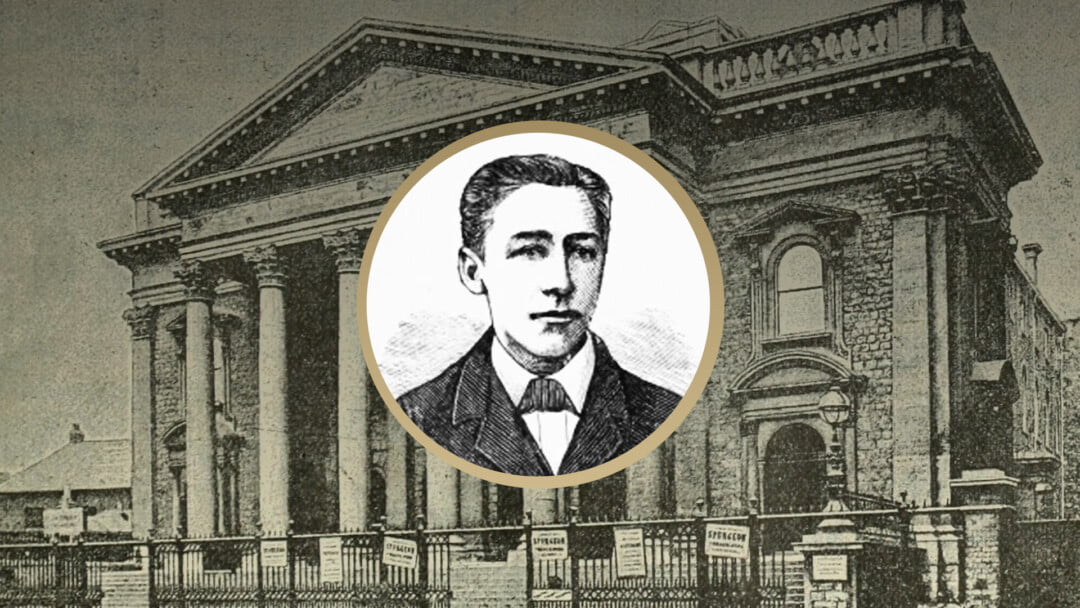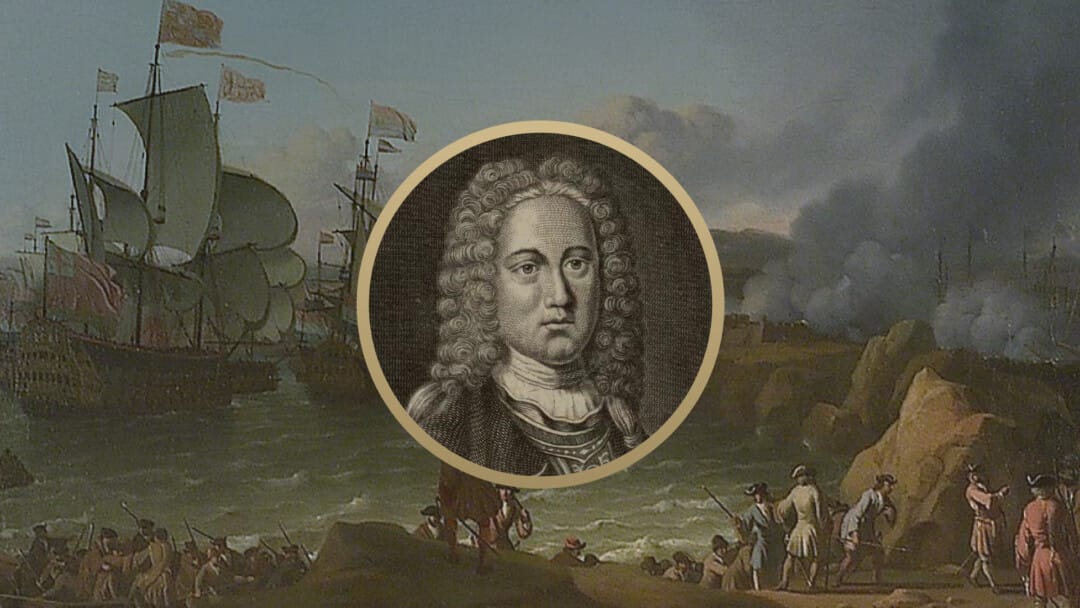
At the Battle of Ramillies in 1706, which was part of the War of Spanish Succession, nineteen-year-old James Gardiner was serving in Belgium under the command of the Duke of Marlborough. Young Officer Gardiner was assigned to the ...
5min
No results found.
Benjamin Morgan Palmer: The Goodness of God in the Midst of Sorrow
The greatest example of one laying down his life for his friends is Christ. We will never be able to fully comprehend the spiritual aspect of Christ’s suffering and shame, but medical studies shed glimpses of light on the physical agony and all the horror that Jesus endured on the cross.
In one terrible day, Job was stripped of every outward manifestation of God’s goodness. As we meet Job in the Bible, God calls him “the greatest of all the men of the east” (Job 1:3). He was a man of upright character. He feared the Lord. He avoided evil. He regularly prayed and offered sacrifices. In spite of this consistent, God-honoring character, God had a purpose in the testing of Job. He allowed Satan to tempt Job and to take from the man all that he held dear. In one heartrending parade of messengers bringing bad news, Job was informed that his donkeys and oxen had been stolen by the Sabeans, his sheep had been burned with fire, his camels had been stolen by a band of Chaldeans, and his servants had been slain. Worst of all, his sons and his daughters had been killed when the house in which they were feasting collapsed upon them, leaving Job with no living posterity. Job’s response is a remarkable testimony to his character. As he grieved over the loss of his precious children, we are told that he “rent his mantle, and shaved his head, and fell down upon the ground, and […]
The first petition of “The Lord’s Prayer” shows us the high regard in which our Lord Jesus held the name of His Father. When the disciples came to Jesus asking Him to teach them to pray, He answered them, “After this manner therefore pray ye: Our Father which art in heaven, Hallowed be thy name” (Matthew 6:9). The word hallowed used here is the same word that is usually rendered “sanctified.” The beautiful parallel construction in Greek is easily lost in any English translation. The first three petitions of this prayer, all directed toward our Father in Heaven, are given to us in a distinctive word order. The word order has the verb first for emphasis so that it literally translates: “Let it be sanctified: the name of Thee. Let it be established: the kingdom of Thee. Let it be performed: the will of Thee.” Let’s take a closer look at these statements of affirmation that Christ instructed us to use when we approach our Heavenly Father in prayer. Let it be Sanctified: The Name of Thee The chief goal of the Lord Jesus Christ was to sanctify the name of His Heavenly Father on earth. When Jesus was born, the angels […]
On a cold, miserable day, a French warship steadily made its way along the Scottish coastline. The warship was powered by human labor — the steady pull of many chained galley slaves. Aboard the ship, performing backbreaking work at the oars, was a feeble man who was very near the point of death. It had been many months since the Scotsman had seen his native land.
If Joseph asked you why God allowed him to be sold into slavery by his own brothers; to be torn from his family and home; to be falsely accused by the wife of his Egyptian master, to whom he had been loyal and devoted; and to be unjustly imprisoned and ignored, how might you answer?
Seven-year-old William Bradford stood over the grave of his mother in the little village of Austerfield in the hills of Yorkshire, England. Having previously lost his father when he was a baby, young William was now alone in the world. Few would have supposed that this orphaned boy would amount to anything.
The moon shone through the curtains in the New York home. The moonlight revealed the middle-aged lady’s face, grimacing from pain. Lydia Baxter was an invalid and had spent most of her married life confined to her bed. Carefully she moved her stiff muscles into a different position. Then, closing her eyes again, she whispered a name . . . . Many Christian workers gathered at the Baxter home because of the beloved woman’s cheerful personality. Despite her physical incapacity, Mrs. Baxter’s spirit was in fellowship with the Lord, and joy filled her heart. Preachers, evangelists, and Christian workers sought her out for comfort and encouragement. She would share with those who asked how she could be so joyful in the midst of physical pain—the secret was in the name she often whispered: I have a very special armor. I have the name ofJesus. When the tempter tries to make me blueor despondent, I mention the name of Jesus, andhe can’t get through to me anymore. Mrs. Baxter was an avid student of the Bible and loved to discuss the meanings of Biblical names. Bible names such as Sarah (“princess”), Samuel (“asked of God”), and Isaac (“laughter”) are well-known examples. […]
White waves churned from under the large boat as it sailed across the large lake in Sweden, on its way to the city of Gothenburg. Standing at the rail of the ship, Pastor Jonas Sandell and his daughter gazed at the view. They had always shared a close, loving relationship. As a child, his daughter Lina had been sickly and often stayed in her father’s study while all the other children played outside. Not only did those hours together build a special bond between them, but through her father’s tender, loving example, she learned to know the sweet compassion and care of her Heavenly Father. As she grew older, she became her father’s secretary, and for that reason she was accompanying him on this peaceful boat trip. In a single moment, however, her world changed. With a sudden jolt, the boat lurched. In horror, the young woman saw her beloved father abruptly lose his balance, totter, and fall overboard! The sailors did all they could, but they were too late. By the time they pulled Pastor Sandell’s body out of the water, he had drowned. What a sudden, terrible grief—especially for someone as close to her father as Miss Sandell […]
The poor, ill woman had seen many afflictions. The pastor, Elisha Hoffman, was known for his compassion for the destitute and those literally from the poorer side of town. As he visited this suffering lady, she wearily unburdened her heart to him. She looked to him in pain and discouragement and begged of him, “What shall I do? What shall I do?” How well the pastor understood her pain and sorrows! His own life had been touched with deep sorrow when his young wife had died several years earlier. With tenderness and heartfelt empathy, he prayed with the suffering woman. He shared specific Scriptures to comfort her. Then he added, “Youcannot do better than to take all of your sorrows to Jesus. You must tell Jesus!” Her eyes lit up as she exclaimed, “Yes! I must tell Jesus!” Pastor Hoffman later recorded: “As I left her home I had a vision of that joy-illuminated face . . . and I heard all along my pathway the echo, ‘I must tell Jesus. . . I must tell Jesus.’” Once home, the pastor wrote down those words and the lines they inspired. From burdens to troubles to temptations, over and over the […]
A brilliant student, Eliza Hewitt was the class valedictorian when she graduated from Girls’ Normal School in Philadelphia. Her high school trained young ladies to become teachers upon graduation. Thus, Miss Hewitt became a public school teacher in the town where she was born and lived her entire life. A short time later, however, Miss Hewitt had to leave teaching due to a spinal injury. The common understanding was that the injury resulted while she was disciplining a student. The unruly boy struck her back with a heavy slate! The painful blow severely injured her back. Bedridden due to the pain, she could no longer do the normal, everyday things she had enjoyed. During those months of suffering following the injury, Miss Hewitt spent much time with God in prayer and in His Word. She desired to express to others her special relationship with Him. As a result, she began writing poems for children and for Sunday School resources. When the heavy, restrictive cast required for her recovery was removed, she is said to have written the hymn “There Is Sunshine in My Soul Today”! Miss Hewitt found that, in her time of suffering and rehabilitation, God used something grievous […]
The year was 1637. Almost twenty years of the brutal Thirty Years’ War in Europe had been fought. In the walled German city of Eilenberg, a group of starving citizens approached the tents of their Swedish invaders. The Swedish army’s commander had levied an unbearable tax on the impoverished city. No one could pay it. Led by their pastor, Martin Rinkart, the people had come to plead for a reduction in the tax. The response was a firm “No!” Turning to his fellow-townsmen, Pastor Rinkart humbly urged, “Come, my children, we can find no mercy with men; let us take refuge with God.” Falling to his knees, Pastor Rinkart prayed, surrounded by others now also on their knees. Then they sang the German hymn, “When in the Hour of Utmost Need.” Seeing the humble scene before him touched the heart of the commander. He relented and greatly reduced the tax! The Thirty Years’ War (1618–1648) began as a spiritual conflict between Protestants and Roman Catholics in Germany but eventually became a political war for territory. Multitudes had sought refuge in the walled city. The crowded conditions produced starvation and disease. One plague in the city claimed 8,000 lives! In 1637, […]
The drenched, terror-filled sailor clutched the helm. As another angry billow crashed against the ship, the entire vessel shuddered violently and then dropped into the hollow of the next giant wave. The storm raged relentlessly. Experienced sailors cried aloud, clinging white-knuckled to the railings. Also aboard was passenger William Whiting. He had committed his life to Christ years earlier. Awed by the powerful waves, he fervently, confidently petitioned the Master of the sea and wind. Finally the damaged ship limped into port. The passengers and crew were battered, but alive! The experience seemingly echoed Psalm 107:23–29: They that go down to the sea in ships . . . see the works of the Lord, and his wonders in the deep. For he commandeth, and raiseth the stormy wind, which lifteth up the waves thereof. They mount up to the heaven, they go down again to the depths: their soul is melted because of trouble. They reel to and fro, and stagger . . . and are at their wits’ end. Then they cry unto the Lord in their trouble, and he bringeth them out of their distresses. He maketh the storm a calm, so that the waves thereof are still. […]
The Confederate cannons boomed, hurling heavy ammunition that exploded in thudding, fiery, noisy bursts. The Civil War battle of Allatoona Pass, Georgia, was brutal. Union soldiers despaired inside the fort atop the hill. They were completely surrounded! Within the strong stone walls, their fellow soldiers lay wounded and dying. Confederate soldiers barraged the fort, skillfully shooting with accuracy as their bullets hit their marks. Only a few wayward bullets whistled past the ears of disheartened Union soldiers. On October 5, 1864, the Allatoona Pass fort was attacked by the Confederates. The fort held the prized treasure of 1.5 million food rations for the Union army. The Union soldiers guarding this precious resource were now outfought. Once thinking they were secure, the men now had lost all hope of survival, much less victory. Soon the demand for surrender came. The weary Union soldiers looked at both the fallen and those barely standing. Hopelessness was evident on each face. Wait! Approximately twenty miles away, a tiny white speck waved from another high hill. Every eye strained to see. Some peeked cautiously over the stone wall and some peered through peepholes. What was the signaled message? “Hold the fort. I am coming. Sherman.” […]
The small family stood tearfully beside the little grave. Pastor George Prentiss and his wife, Elizabeth, were grief-stricken. They had just buried one of their young children. Mrs. Prentiss’s heart was especially overwhelmed with sorrow and pain. A short time later, tragedy struck again when the youngest Prentiss child also died. Devastated, Mrs. Prentiss wrote in her diary, “Empty hands; a worn-out, exhausted body; and unutterable longings to flee from a world that has so many sharp experiences.” Despite her sorrow, Mrs. Prentiss continued to trust God instead of becoming bitter. Even in poor health, she faithfully honored God by lovingly serving her husband and young family. At one point, Mrs. Prentiss studied the story of Jacob in the Old Testament and how God met him in a special way. Earnestly, she asked God to grant her a similar experience. Later, reflecting upon the hymn “Nearer, My God, to Thee,” she was inspired to write her own poem about her heart’s desire. More love to Thee, O Christ,More love to Thee!Hear Thou the prayer I makeOn bended knee;This is my earnest plea: More love,O Christ, to Thee . . . The words flowed forth! However, near the end,the words stopped. […]
In the late 1800s, a Philadelphia pastor was known by the nickname “the Sunshine Minister.” Reverend Frank Graeff had a radiant personality and an ever-present smile. Because of his sunny demeanor and simple faith, children were often drawn to him. Although Reverend Graeff’s nickname indicated a life filled with joy, the man also knew heartache and spiritual trials. While his specific difficulties and sorrows are unknown, at one point in his life he struggled with depression. The man recognized by many for his cheerful countenance found himself crumbling under overwhelming burdens. Amid his helplessness and misery, Reverend Graeff wisely turned to Christ, the only One Who could truly understand his soul’s sorrow. During this severe season of his life, Reverend Graeff reflected upon the words of a particular hymn, “What a Friend We Have in Jesus.” As he read the words of truth and comfort about Jesus being a Friend Who cares about our sorrows, the despondent minister’s burdens were lifted! Encouraged by the hymn, he turned to I Peter 5:7 in his Bible and read: “Casting all your care upon him; for he careth for you.” God’s Word strengthened his heart, and Reverend Graeff was inspired to write his […]
The crying infant rubbed at her swollen eyes with her tiny fists. The one doctor who served in the county was unavailable. So, in desperation, the infant’s parents called a man who claimed to have medical knowledge. He prescribed hot poultices to be applied to their baby’s eyes. The infection soon healed, but something was wrong. The parents later learned that the man was not a doctor at all, and his prescribed remedy had destroyed their baby girl’s eyesight. The baby, Frances Jane Crosby, was affectionately called “Fanny.” When she was eight years old, she expressed her resolve to be content despite being completely blind: Oh, what a happy soul am I!Although I cannot see,I am resolved that in this worldContented I will be. Years later, Fanny Crosby wrote in her journal that her parents had taught her about God’s working in ways we do not understand: When my dear mother knew that I was to be shut out from all the beauties of the natural world, she told me . . . that sometimes Providence deprived persons of some physical faculty in order that the spiritual insight might be more fully awake. . . . I made up my […]
Aaron Wolfe walked quickly to the shipping office. Two weeks earlier in Florida, he had stowed all his worldly goods in crates on a ship headed to New York. Then, with just a knapsack, he had traveled via the cheaper overland route. The thirty-four-year-old had graduated from seminary in New York, worked several years in Florida as a headmaster, and was now returning to the Northeast to seek a pastorate. He fully expected his crated valuables—his personal library, sermon notes, and other resources needed by a pastor—to be waiting for him when he arrived. Upon entering the shipping office, Reverend Wolfe told the clerk the name of the ship that carried his belongings. The clerk had bad news for him. On the day the ship had planned to set sail, a storm had blown into port. Lightning had struck the ship and set the vessel afire. The ship’s main cargo—turpentine—had ignited instantly, and both ship and cargo were destroyed. The news was devastating. Yet, as Reverend Wolfe would later recount with a grateful spirit, God used this tragedy to redirect his calling. He realized his life and work were not dependent on the books, papers, and other physical possessions he […]
The missionary stared at the letter in his hand. In the 1800s, the Gospel was spreading in China, but travel was difficult and the work was hard. In some areas, the Chinese vehemently rejected foreigners and threatened their lives. The letter Hudson Taylor held in his hand reported that riots were occurring in two missions in the region. A coworker was present when the letter arrived. As he moved toward the door to leave Mr. Taylor with the letter, he heard the soft whistling of the hymn “Jesus, I Am Resting, Resting.” Surprised, the coworker turned around and asked Mr. Taylor, “How can you whistle, when our friends are in so much danger?” Hudson Taylor looked up. Calmly he replied: “Would you have me anxious and troubled? That would not help them, and would certainly incapacitate me for my work. I just have to roll the burden onto the Lord.” “Rolling his burden upon the Lord” was a demonstration of Hudson Taylor’s faith. Other missionaries reported seeing him oftentimes playing on a little reed organ and softly singing this hymn. However, “resting” had not always been his practice. Mr. Taylor founded the China Inland Mission in 1865. However, after four-and-a-half […]
Reverend Luther Bridgers began preaching when he was seventeen and a student at Asbury Seminary in Kentucky. There he met his wife, and by his mid-twenties, Reverend Bridgers had a growing family and a busy ministry of preaching, evangelism, and church-planting. His life was filled with God’s blessings. One day while his wife and children were visiting grandparents, tragedy struck. “Fire! Fire!” The house was quickly engulfed in flames. The grandparents somehow managed to escape, but Mrs. Bridgers and her three young sons were trapped inside! As the flames swiftly consumed the house, the gathering neighbors sadly realized that nothing could be done to save the four souls trapped inside. Soon the news of the fire and the lost lives reached Reverend Bridgers, who had been preaching in a nearby town. The devastating loss of his wife and children gripped the preacher’s soul. For several months the grieving man was too stunned to continue his ministry. However, he knew he could find his encouragement in the Lord. Reverend Bridgers eventually turned from his sorrow to looking to God alone. God restored the man’s joy. Four years later the reverend remarried and continued his Gospel ministry. Reverend Bridgers wrote the words […]
Enthusiasm in the soul is like a candle. It gives light, but it is self-consuming. On the other hand, enthusiasm generated in the spirit is like the flame of an oil lamp. As long as we are filled by the Spirit of God and the Word of God, enthusiasm, like an oil-filled lamp, will burn indefinitely.