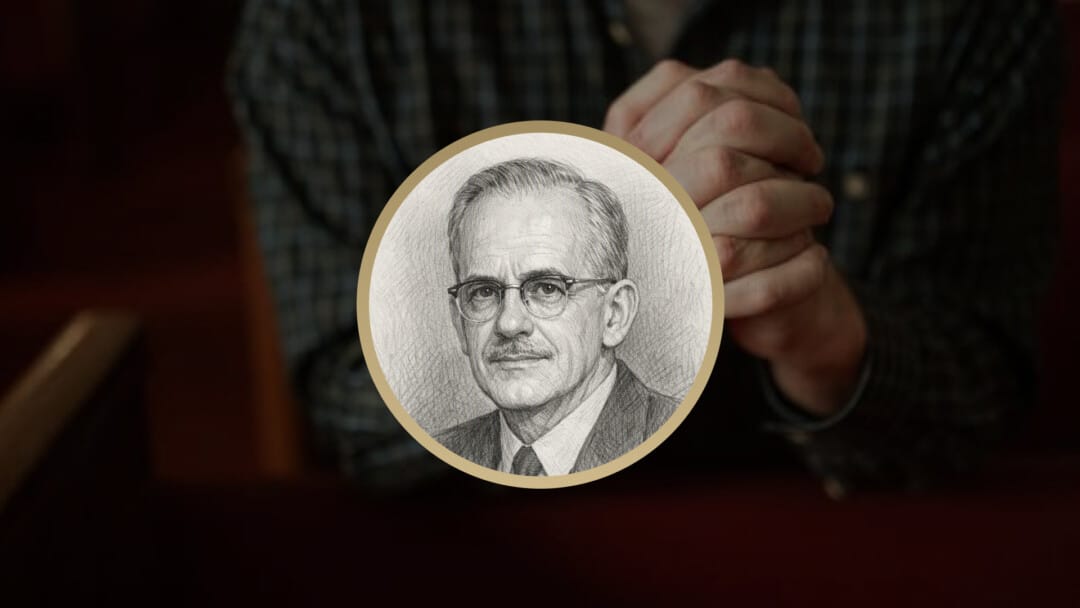


One of the most fascinating British generals of all time was Major General Charles Gordon. He was sometimes called “Chinese Gordon” for his remarkable campaigns in China as he commanded the “Ever Victorious Army.” He is also known to history as “Gordon of Khartoum” for his courageous but fatal defense of that capital city against a besieging Muslim horde.
Charles Gordon was a sincere but eccentric Christian who loved the Lord his God with all his heart, soul, mind, and strength. Like the American General Stonewall Jackson, many of Gordon’s contemporaries considered him crazy. But all had to admit that, in spite of his idiosyncrasies, he was a brilliant general, a superb leader of men, and a bold and fearless commander. Shortly before his death in Sudan, Gordon told the garrison he commanded, “Gordon fears nothing, for God created him without fear.”
The splendid fact about General Charles Gordon is that, as stated in this biographical sketch’s title, he acted on what he knew. Realizing that as a mortal man, he could never fully understand the God of the universe, he resolved to act, and to act decisively on whatever God revealed as the duty of man.
Gordon was the son of a soldier; his father was Major General Henry William Gordon. In fact, Charles Gordon’s ancestors had consecutively served as officers in the British service for four generations! From the time of his birth, he seemed destined to follow in the footsteps of his fathers. All of Gordon’s brothers likewise became officers in the British army.
Gordon grew up in various army posts all over Europe where his father served as commander. Some of his formative years were spent in the Ionian Islands. As a young boy, he had an early bent toward spiritual things. When he was ten, the death of a favorite sister, sixteen-year-old Emily, caused him to think deeply about eternity and the things of God. Another sister, Augusta, took her little brother under her wing. Her deep piety and devotion to Jesus Christ had a lasting influence upon Charles Gordon. He wrote long, thoughtful letters to Augusta for the rest of his life.
Gordon obtained his commission as a second lieutenant in the Royal Engineers in 1852. Thus, he became a part of the elite group of officers known as sappers (military engineers that support frontline infantry). With the outbreak of the Crimean War, Gordon saw action in combat for the first time. He performed well in the Engineer Corps and earned deep respect from his fellow sappers for his coolness under fire and his ability to inspire confidence in the men under his command. He was wounded in action for the first time and displayed great courage on the battlefield. A favorite Scripture verse for the courageous, brave soldier was Philippians 1:21, “For to me to live is Christ, and to die is gain.”
After the conclusion of the Crimean War, Gordon was assigned as a surveyor for the British Army to establish the new frontiers of the Russian Empire. He spent time in Romania, as well as in Turkey and Armenia. Gordon loved the mountains in the vicinity of the Biblical Mount Ararat. He often speculated on the resting location of Noah’s ark. These topics became a lifetime fascination.
Gordon returned to England in 1858, but he soon tired of duty on the home front. He longed for action and adventure. The Taiping Rebellion in China provided the action he was seeking. The War Office agreed to send the newly promoted captain to China, where the Second Opium War was just winding down.
While in China, Charles Gordon was catapulted to worldwide fame. Although many in Great Britain sympathized with the rebel army in China, Gordon became convinced that the rebellion was not in China’s best interest nor that of the British Empire. He took command of an army of Chinese loyalists and endeavored to put down the Taiping Rebellion.
Gordon proved to be an innovative and brilliant commander of men. Although he was only a captain in the regular British Army, Chinese officials gave him the rank of general. He commanded the Ever Victorious Army and succeeded in putting down the rebellion in battle after battle.
The Chinese Emperor gave General Gordon gifts of gold, silver, and elaborate silks. Gordon refused all these gifts; instead the British general gave all glory to God and lived humbly as a Christian. Some Chinese officials regarded him as divine. Forever after, Gordon became known back home in Britain as “Chinese Gordon.”
After his military service in China, Gordon served successively along the Danube River and then along the Nile in Egypt. He became intimately acquainted with British colonial problems in North Africa; he served the khedive (tribal official) as a governor in lands that now comprise southern Sudan and northern Uganda. There he endeavored to end the cruel slave trade.
Following his celebrated service in Asia and Africa, Gordon returned home to Britain. His service in the British Army was marked by dramatic contrasts: exciting adventures abroad alternating with routine inspections of army posts at home. But wherever he was, Gordon was always faithful.
Charles Gordon took a special lifelong interest in the welfare of children. A bachelor, Gordon never had a family of his own, but he always cared deeply for the next generation. He personally funded the education of his nieces and nephews. Wherever he was stationed, he organized gatherings of boys and girls for regular Bible classes. Never caring for personal wealth, he would give his last penny for the support of orphans. Many of these recipients were the boys who looked at Charles Gordon as the reason their lives were changed for the better.
Even during his active campaigns in Africa, General Gordon always kept a prayer list of the young men that he had mentored. He kept a map marked with where they were located in the world. Some were in the Navy. Others were merchants. Some were ministers of the Gospel. Gordon prayed for them as though they were his own sons.
Gordon had many outspoken political views on slavery and on the proper course for Egypt, Ireland, and South Africa, which made him many enemies in Parliament. He cowed to no opinion, and his forceful arguments for what appeared to him to be right were delivered without reserve and without fear. Many of his views, repudiated at the time, proved in the long run to be the right course of action.
Gordon was stationed on the strategic island of Mauritius in the Indian Ocean in 1881. While there, he became convinced that the original Garden of Eden was located in the Seychelles islands, particularly on Praslin Island. He convinced himself that the Biblical Tree of the Knowledge of Good and Evil was the Coco de Mer (sea coconut) tree, and that the breadfruit tree was the Tree of Life mentioned in Scripture. He published a pamphlet on the subject and tried to convince others of his views.
In another aspect of his Christian life, Gordon warred so vehemently against sin in his own life that he viewed himself as trapped in a vile body of clay. In letters to his sister, he described his war against sin as compared with the prophet Samuel “hewing Agag in pieces before the Lord.”
A trip to Syria and Jerusalem in 1882 was a highlight of his life. There he wandered among the scenes of Biblical importance. He eagerly latched upon a hill north of the Damascus Gate as an alternative to the traditional site of Golgotha and argued vociferously for its authenticity. Today, the place is still called “Gordon’s Calvary.”
Major General Gordon was sent again to Africa in 1884 to solve the complex colonial problems along the upper reaches of the Nile. Here, Gordon felt himself abandoned by the British government and believed it his duty to hold the garrison at Khartoum against an overwhelming force of Muslim tribes united under Muhammed Ahmad, known as the “Mahdi.”
After a bold defense that lasted a year, Gordon’s starving garrison was finally overwhelmed. Major General Charles Gordon died as he had lived: fearless, alone, and devoted entirely to the course of duty that he firmly believed was right.
Sources and Further Reference:
Pollock, John. Gordon: The Man Behind the Legend. Hachette, UK: Constable, 1993.