
John the Apostle knew what it meant to abide in Christ. It was John who devoted five chapters of his Gospel record to Christ’s discussion with His disciples on the night that He was betrayed. Bible scholars refer to this conversation as the “Upper Room Discourse.” During this discussion, Jesus introduced the imagery of the vine and the branches with these words: “Abide in me, and I in you. As the branch cannot bear fruit of itself, except it abide in the vine; no more can ye, except ye abide in me” (John 15:4).
John not only recorded these words of our Lord; he lived them! Throughout the earthly ministry of Jesus, John was always close by Christ’s side and part of the Lord Jesus’ inner circle. At the Last Supper, it was John who reclined at the table next to his Lord. Of all of the disciples, John was the only one specifically mentioned as being present at the crucifixion. It was John to whom the dying Jesus entrusted the care of His mother, Mary. After our Lord yielded up His Spirit, it was John who testified of the water and the blood that flowed from Jesus’ pierced side.
After Christ’s resurrection, John was the one who later recognized and identified Jesus on the shores of the Sea of Galilee. The disciple carefully avoided using his own name in the Gospel record that bears his name. Instead, he referred to himself as the disciple “whom Jesus loved” (John 13:23). Far from an expression of pride, John’s asserting that Jesus loved him best of all was an expression of humility. The Greek verbal tense emphasizes the true meaning of John’s term for himself: “The disciple whom Jesus kept on loving.” In other words, John was amazed and humbled that Jesus kept on loving him, in spite of his many failures!
John’s parents were Zebedee and Salome, and he was reared in the little fishing village of Capernaum, located on the northwest shore of the Sea of Galilee. When one compares the four Gospel records, a strong case can be made that Salome, the mother of John, was the sister of Mary, the mother of Jesus, as mentioned in John 19:25. This family connection could perhaps explain the close relationship between Jesus and His possible cousins, James and John.
As we further examine the Gospel record, we gain a glimpse of the Apostle John’s personality. Often called the “Apostle of Love,” he certainly did not start out as a “meek and mild” young man! On the contrary, Jesus had a special nickname for His cousins, James and John. According to Mark 3:17, He called them Boanerges. Boanerges is the Hebrew word that means “sons of thunder.”
John was fiercely loyal to Christ. On one occasion as recorded in Luke 9:52–54, John and his brother James were deeply offended when a village of Samaritans denied hospitality to the Master and His disciples. Following Elijah the prophet’s example as recorded in II Kings 1:9–15, John and James desired to call down fire from heaven to consume the ungrateful Samaritans. Jesus rebuked the zealous brothers for their inappropriate response in this situation.
As part of Christ’s inner circle, John was given the opportunity to see and hear things that some of the other disciples did not see or hear. He witnessed the raising of the daughter of Jairus, the Transfiguration, and the Lord’s agony in the Garden of Gethsemane.
When Salome asked Jesus for the privilege of her sons to sit on His right and left hand in the Kingdom, Christ redirected the ambitions of these loyal disciples. According to Matthew 20:22, He replied to them, “Ye know not what ye ask. Are ye able to drink of the cup that I shall drink of, and to be baptized with the baptism that I am baptized with?” (Matthew 20:22). John and James gave Christ the honorable and sincere answer: “We are able.”
The lifelong testimony of the Apostle John proved over and over the sincerity of those words. John narrated carefully the details of the Upper Room Discourse. Later, he repeated many of these words in his series of epistles to the believers of the early church.
In the early chapters of the Book of Acts, it is recorded that John preached a risen Christ. As a result of his preaching, he was beaten and tried by the Sanhedrin on several occasions. According to Acts 4:13, when the rulers of the Sanhedrin “saw the boldness of Peter and John, and perceived that they were unlearned and ignorant men, they marvelled; and they took knowledge of them, that they had been with Jesus.”
According to Acts 8:14–15, John, along with Peter, had a ministry to the Samaritans. This ministry was in the very same place where John had once sought to call down the fire of judgment upon the people! However, this time he called down the fire of the blessing of the Holy Spirit. The “son of thunder” had become a man of mercy and the “apostle of love.”
The Apostle John labored many years for Christ. His brother James was the first of the disciples to give his life as a martyr for Christ. Early church history records how John lived the longest of all the twelve disciples. Common belief holds that John cared for Mary, the mother of Jesus, to her dying day. He labored many years as the pastor of the church at Ephesus, and eventually wrote the Gospel that bears his name, as well as three Epistles and the Book of Revelation.
Church history records that John suffered much for the testimony of Jesus. On one occasion, John was tortured by being dipped into a cauldron of hot oil. Another time he was forced to drink poison. The disciple survived both of these torments, but perhaps more significantly, he had proved his youthful determination to, as he affirmed in Mark 10:39, “drink of the cup” and to “be baptized” with the baptism of Christ’s suffering.
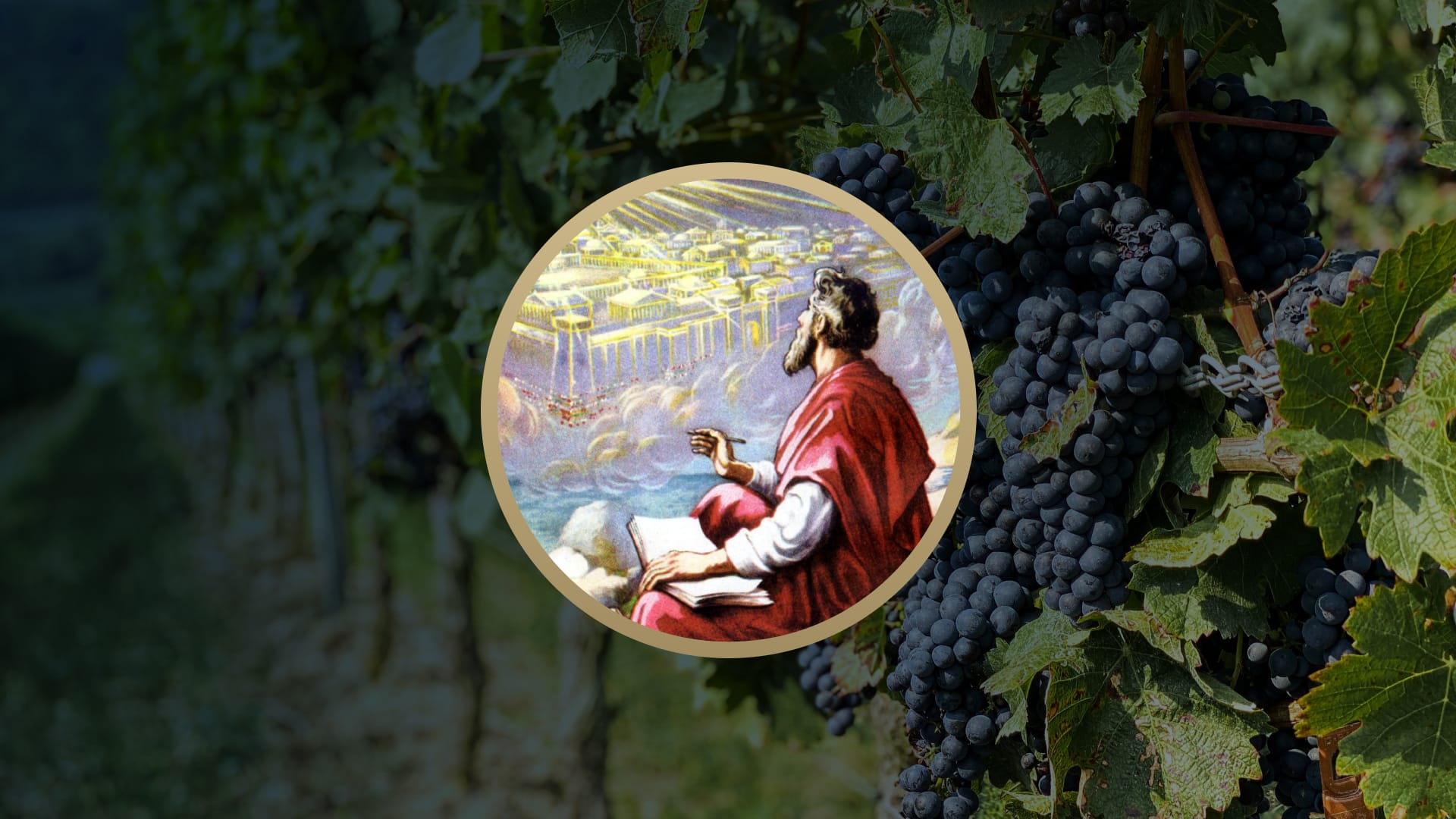
It is touching that Jesus once again visited John in his old age. When the beloved apostle was exiled to the island of Patmos, the Lord Jesus appeared to him in radiant glory according to Revelation 1. The head that was once crowned with thorns was now “white like wool” (verse 14). The side that was pierced with a spear was now girded with “a golden girdle” (verse 13). The feet that still bore the terrible wounds of our redemption were now “like unto fine brass” (verse 15). John the Apostle’s reaction in the presence of the glorified Savior was to fall as if dead at Christ’s feet. The Lord Jesus lovingly laid His hand upon the prostrate John and spoke words of comfort to him: “Fear not; . . . I am he that liveth, and was dead; and, behold, I am alive for evermore” (verses 17–18).
John received the message of hope that is recorded in the Book of Revelation. He encouraged future generations of Christians to keep on living, keep on trusting, keep on serving, keep on looking for, and keep on abiding in the Christ he had faithfully loved for so many years.
John lived the message that he preached. He loved the Christ Who had first loved him. John abided in Christ, and Christ abided in John. The apostle closed the Book of Revelation with his prayer of confident hope: “Even so, come, Lord Jesus. The grace of our Lord Jesus Christ be with you all. Amen” (Revelation 22:20–21).
Sources and Further Reference:
Eusebius. Ecclesiastical History. Grand Rapids, MI: Baker Book House, 1966.
Foxe, John. Foxe’s Book of Martyrs. Peabody, MA: Hendrickson Publishers, 2011.