
In Acts 18:24, we meet a remarkable man named Apollos. The Apostle Paul had just completed his second missionary journey. On that journey, he had briefly preached the Gospel at Ephesus, where he had left Aquila and Priscilla, and then he departed for Jerusalem. During his absence, another preacher arrived in Ephesus.
The report of this preacher is recorded in Acts 18:24–26. “And a certain Jew named Apollos, born at Alexandria, an eloquent man, and mighty in the scriptures, came to Ephesus. This man was instructed in the way of the Lord; and being fervent in the spirit, he spake and taught diligently the things of the Lord, knowing only the baptism of John. And he began to speak boldly in the synagogue: whom when Aquila and Priscilla had heard, they took him unto them, and expounded unto him the way of God more perfectly.”
Apollos was from Alexandria, in North Africa. At the time of Christ, a large Jewish population was there. The Septuagint—the Greek translation of the Old Testament—had been translated by scholars in that city. If Athens was the center of philosophy, and if Rome was the center of power, then Alexandria was the center of education and literature. In Alexandria was a massive library that was famous throughout the known world; it was the repository of many ancient books in many languages, books ancient even in the days of Christ. It is estimated that this library contained 300,000 volumes on all subjects, ranging from pre-flood history to science to mathematics, to geography and cartography.
These books were all at the fingertips of Apollos. In Scripture, Apollos was described as “an eloquent man,” which, literally from the Greek, meant a “man of words.” He was acquainted with learning, the sciences, engineering, and mathematics; Apollos was a scholar of the highest ability and skill. He was learned in mind, eloquent in speech, skilled in rhetoric, and trained in logic. Crowning all these scholastic strengths is the final phrase in verse 24 that describes him as “mighty in the Scriptures.”
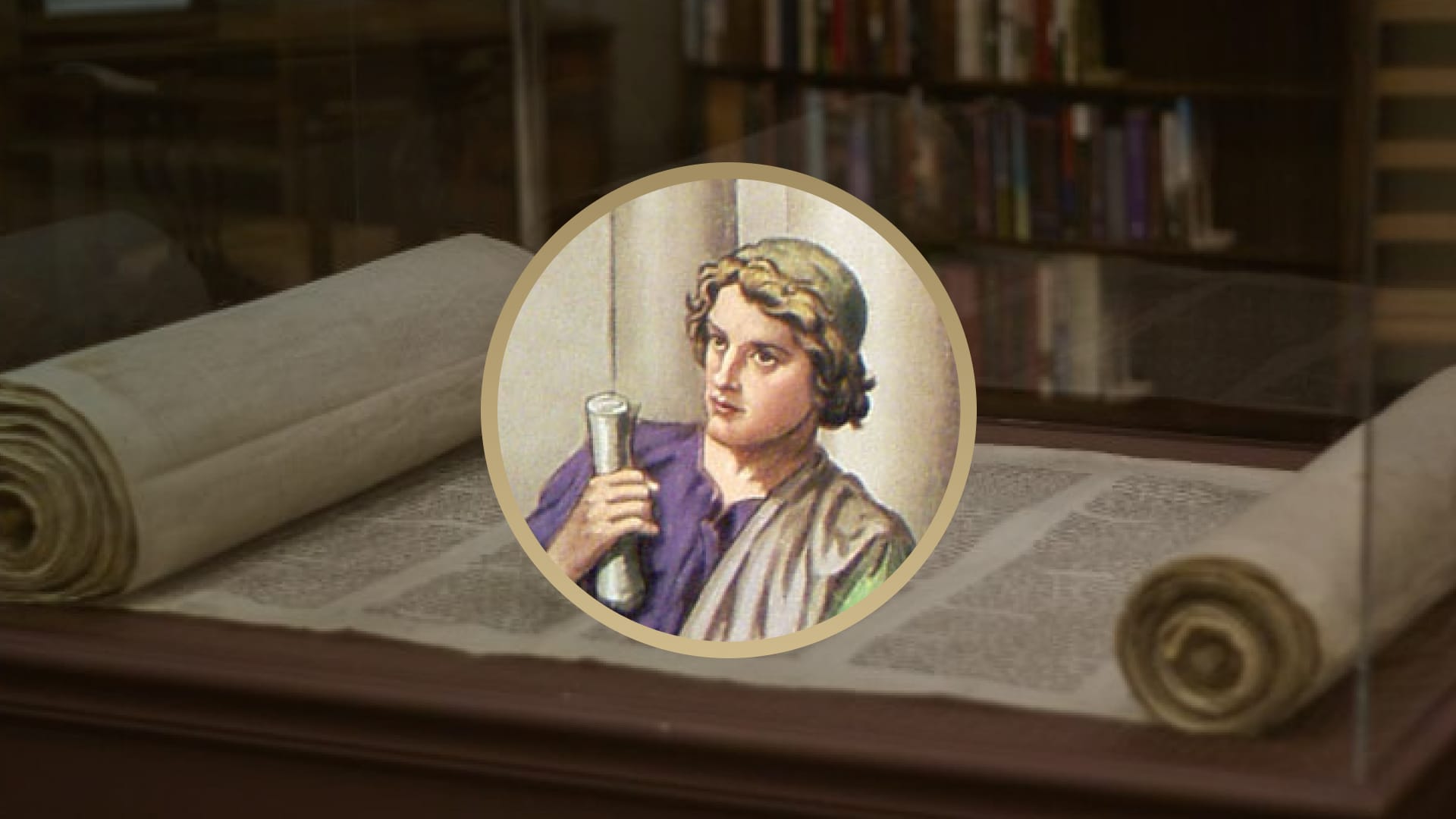
Apollos was intimately familiar with the Word of God as revealed to Moses, to David, to Samuel, and to the prophets. He very likely owned a copy of the customary Greek Bible of his day, the Septuagint.
According to Acts 18:25, “This man was instructed in the way of the Lord.” The word translated “instructed” is the Greek word from which we get our term catechized, meaning “taught face to face, taught verbally.” Thus, Apollos had at least a knowledge of the Torah and the basic truths of the promised Messiah. In the same passage, we read that Apollos “being fervent in the spirit, he spake and taught diligently the things of the Lord, knowing only the baptism of John.”
This man preached the Messiah in the same way that John the Baptist preached Him: in the manner of an Old Testament prophet, proclaiming the need for repentance and baptism. Apparently, while in Alexandria, Apollos had heard of the ministry of John the Baptist. He began preaching in the Greek world what John was preaching in the Hebrew world. But Apollos’s preaching was only partial knowledge of the Gospel message. While Apollos had been preaching, the Messiah had been revealed, had died, and had risen again.
When Apollos arrived in Ephesus, according to Jewish custom regarding visiting rabbis, he was asked to teach in the synagogue. By God’s providence, two Christians were in the audience! There was not yet an organized church in Ephesus. The few believers that were in Ephesus went to the synagogue along with the unbelieving Jews on the Sabbath, then possibly they met again on Sunday in the home of Aquila and Priscilla.
According to Acts 18:26, Apollos “began to speak boldly in the synagogue: whom when Aquila and Priscilla had heard, they took him unto them, and expounded unto him the way of God more perfectly.” To speak out publicly would have been to embarrass the rabbi. But to not speak at all would have been to suppress the truth. So, hospitably, tactfully, and graciously, these two humble tentmakers invited the eloquent proclaimer to their home to share with him the truth of the resurrected Jesus Christ.
While we acknowledge the tact of Priscilla and Aquila, let us not fail to note the remarkable humility of Apollos to hear their message. The trade of tentmaking was a degrading thing for a serious Jew. Not only was it hard work, but the main customer of tents was the Roman government. These tents were used to supply the Roman legions. This fact alone would have been an offense to a patriotic Jew. To add to that offense, tentmaking required the handling of goats’ hair, and sometimes the handling of leather and the skins of dead animals, rendering the tentmaker, at times, ceremonially unclean. All of these potential offenses, Apollos graciously overlooked.
By the time Aquila and Priscilla finished speaking, Apollos was fully convinced by their testimony, by their sincerity, and by his own knowledge of the Scripture, that this Jesus of Nazareth was indeed the very Messiah of Whom he had been preaching all along. A scholar of reason and logic, he submitted his intellect to the Word of God. Reason bowed low before revelation; armed with his new knowledge, Apollos went out to serve the Christ of Whom he had just been told.
“And when he was disposed to pass into Achaia, the brethren wrote, exhorting the disciples to receive him: who, when he was come, helped them much which had believed through grace” (Acts 18:27). The brethren—the believers of Ephesus including Aquila and Priscilla—commended this learned rabbi to the brethren of Achaia, which was the province of Greece where Corinth was the main city. Apollos, in his turn, “helped them much which had believed through grace.” His main contribution is described as the passage closes, “For he mightily convinced the Jews, and that publicly, shewing by the scriptures that Jesus was Christ” (Acts 18:28).
Apollos used his scholastic abilities to the fullest in his service for the Lord. If the life record of Apollos ended here in the Book of Acts, it would already be significant. But the record does not end here.
Apparently, Apollos remained for quite a while in the city of Corinth. Paul had already labored there for eighteen months during his second missionary journey. He had planted the Gospel seed. Then, while Paul was in Jerusalem, Apollos went there to water the Good News that had been planted. Paul summed up the ministry of the Gospel in Corinth with these words in I Corinthians 3:6, “I have planted, Apollos watered; but God gave the increase.”
Although some troublemakers in Corinth tried to drive a wedge between Paul and Apollos (I Corinthians 3:3–4), we see no evidence of a personal rift between these two servants of Christ. Rather, we see a glimpse of the warm friendship between Paul and Apollos in the last chapter of I Corinthians. There Paul writes, “As touching our brother Apollos, I greatly desired him to come unto you with the brethren: but his will was not at all to come at this time; but he will come when he shall have convenient time” (I Corinthians 16:12).
After this reference, nothing is heard from Apollos for about ten years. Luke’s narrative followed the path of Paul and left Apollos to serve the Lord elsewhere. The last Biblical reference to him is found in Paul’s letter to Titus. Near the end of this letter, Paul makes a reference to Apollos, “Bring Zenas the lawyer and Apollos on their journey diligently, that nothing be wanting unto them” (Titus 3:13).
Apparently, Zenas and Apollos were on a journey, and the island of Crete lay on their route. Paul had entrusted this letter to Titus to their care. Titus was to send Zenas and Apollos on their way, along with a generous gift to cover their travel expenses. The record of Apollos thus closes in a fitting way—on a fresh mission to some exciting place in the Lord’s service!
Whatever Apollos did, he did wholeheartedly. He was talented, yet humble. He was learned, yet teachable. He was popular, yet deferent. Apollos was fervent in spirit, but meek enough to calm a church dispute. He was mighty in the Scriptures, yet willing to be taught by a tentmaker and his wife. Apollos honored God’s Word above human reason. Having placed all his talents, education, and enthusiasm on the altar, Apollos dedicated himself entirely to the service of the Lord Jesus Christ.
It has been suggested for good reason that the Epistle to the Hebrews was written by Apollos. The lofty language, the advanced Greek grammar and construction, the flawless logic, and the eloquence of this epistle certainly give credence to this theory.
Wherever we find Apollos, we find him speaking and teaching diligently the things of the Lord. The testimony of Apollos calls upon modern scholars to submit their intellect to the Word of God and be, like Apollos, mighty in the Scriptures.