
Living at the dawn of the coming of Messiah, John the Baptist was a unique man for a unique time. According to Luke 1:15, he was “filled with the Holy Ghost, even from his mother’s womb.” He rightly can be called the last of the Old Testament prophets. He also could be called the first of the New Testament preachers. Indeed, John the Baptist occupied a unique place in Bible history.
John’s miraculous birth was the fulfillment of Old Testament prophecy in passages such as Isaiah 40 and Malachi 4. His priestly father Zecharias was visited in the Temple by the angel Gabriel. There Zecharias, aged and childless, heard the angel’s announcement that he would have a son, and his son would be the forerunner of the Messiah. His wife Elisabeth conceived John in her old age. Also miraculously, the unborn John leaped in the womb for joy when he heard the voice of Mary, who was with child with the Messiah! When Zecharias and Elisabeth’s son was born, he was given the name John, meaning “Jehovah is gracious.”
Zecharias gave this blessing over his infant son: “And thou, child, shalt be called the prophet of the Highest: for thou shalt go before the face of the Lord to prepare his ways; To give knowledge of salvation unto his people by the remission of their sins, Through the tender mercy of our God; whereby the dayspring from on high hath visited us, To give light to them that sit in darkness and in the shadow of death, to guide our feet into the way of peace” (Luke 1:76–79).
In Luke 1:80, the early life of John the Baptist is summed up. “And the child grew, and waxed strong in spirit, and was in the deserts till the day of his shewing unto Israel.” From this brief description onward, we know very little of John’s life.
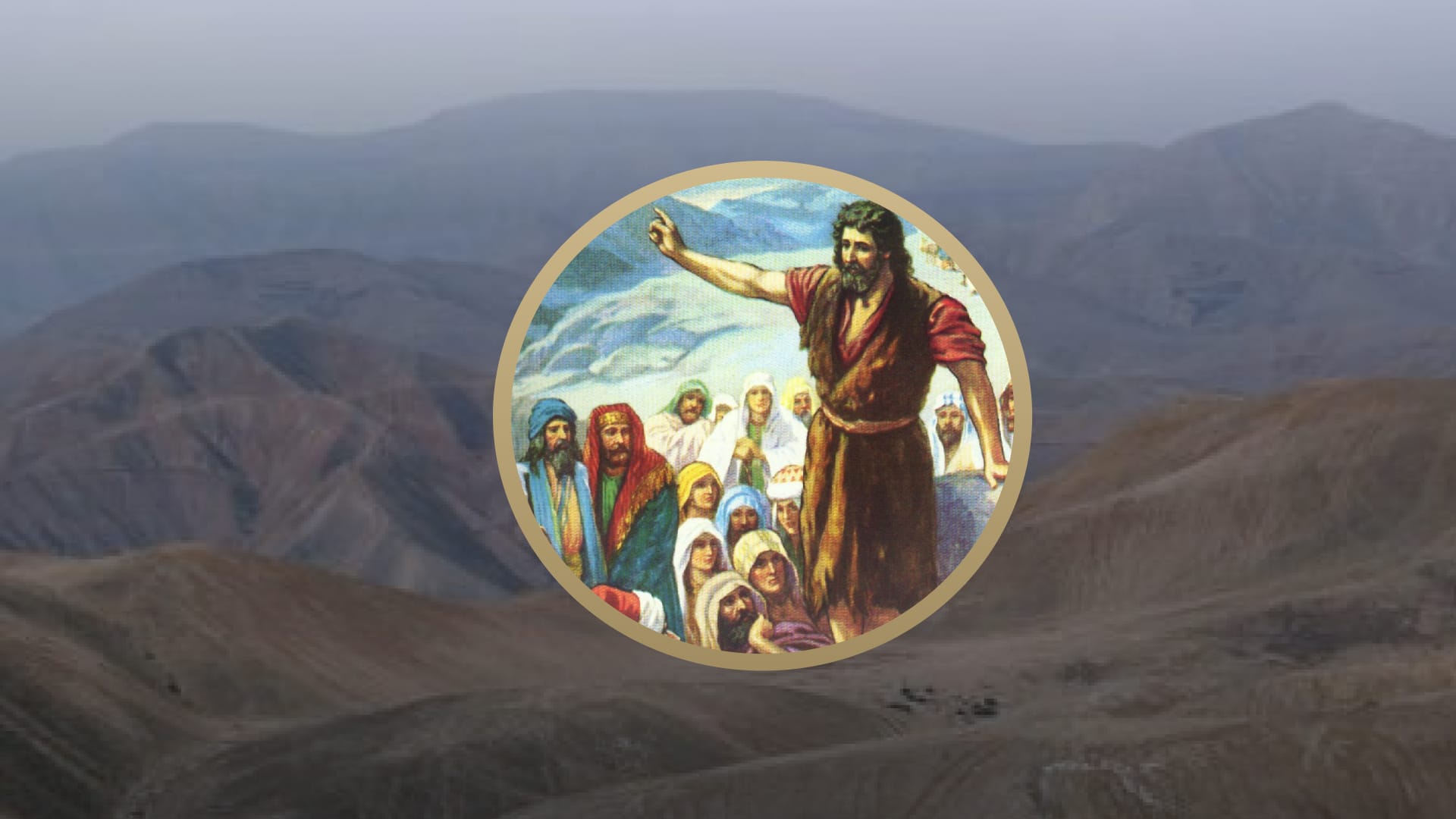
When John appeared again in the record of Scripture, he was no longer a little baby. Almost thirty-one years had passed since his birth; he was six months older than Jesus. John was rugged, bronzed by the desert sun, and a man of the wilderness like Elijah the prophet was.
Life for John the Baptist was tough, thorny, and filled with hardship. For sustenance he ate locusts and wild honey. His clothing was woven from the rough hair of the camel. The man lived in the wilderness. The wilderness of Judea and the northern edge of the Negev remain today largely as then when John dwelt there.
This wilderness area was a rough, barren, rocky desert. Few were the creatures that lived in such a harsh environment. A few jackals might scurry across the barren hills in search of dinner, which would consist of small desert rodents, such as sand rats and jirds (similar to gerbils), or a few hardy birds. In the absence of humidity, temperatures soar in the daytime and plummet in the nighttime.
Jesus said of this region in His commendation of John the Baptist, “What went ye out into the wilderness for to see? A reed shaken with the wind? But what went ye out for to see? A man clothed in soft raiment? Behold, they which are gorgeously apparelled, and live delicately, are in kings’ courts. But what went ye out for to see? A prophet? Yea, I say unto you, and much more than a prophet. This is he, of whom it is written, Behold, I send my messenger before thy face, which shall prepare thy way before thee” (Luke 7:24–27).
Finally, the day came when John the Baptist knew that the time was right for one of the most important announcements of human history. “Behold the Lamb of God, which taketh away the sin of the world” (John 1:29). In modern Christianity, this statement of John’s is so familiar that the profound and startling nature of this statement in the world of the first century is often missed.
Throughout all of history, this statement regarding sin could never have been made before! Under the Aaronic priesthood, sin could be atoned, or “covered,” for a year. God’s wrath could be propitiated—that is, “satisfied” by the shed blood of the lamb or bullock offered in faith by the believing soul. However, sin could never be truly and totally taken away, as John proclaimed, until the coming of the sacrificial Lamb of God.
A few days after this announcement, Jesus came again to John, this time in order to be baptized in the Jordan River. John saw Heaven opened and the Spirit of God, sent by the Father, descend and rest upon the Son. By his own testimony, John the Baptist “saw, and bare record that this is the Son of God” (John 1:34).
After that climactic event in the life of John the Baptist, some of his own disciples left him to follow Jesus, as he had encouraged them to do. He continued to preach and call people to repentance. As the weeks passed, the crowds that had once flocked to hear him preach were now following the teaching of another man, Jesus of Nazareth.
For some of John the Baptist’s disciples, this situation was a matter of concern. “And they came unto John, and said unto him, Rabbi, he that was with thee beyond Jordan, to whom thou barest witness, behold, the same baptizeth, and all men come to him” (John 3:26).
John’s testimony in the face of his disciples’ inquiry is splendid! “John answered and said, A man can receive nothing, except it be given him from heaven. Ye yourselves bear me witness, that I said, I am not the Christ, but that I am sent before him. He that hath the bride is the bridegroom: but the friend of the bridegroom, which standeth and heareth him, rejoiceth greatly because of the bridegroom’s voice: this my joy therefore is fulfilled” (John 3:27–29).
Rather than being discouraged at the diminishing crowds, John rejoiced. He knew that he was not that Light, but rather that he was merely sent to bear witness of that Light. The splendid testimony of John’s life is summed up in John 3:30—“He must increase, but I must decrease.”
John the Baptist was a bold preacher of righteousness who could not hold his peace at wickedness. He publicly rebuked the Roman leader, Herod Antipas, for the illicit relation he had with his own brother’s wife. For this confrontation, John incurred the king’s wrath and was imprisoned when he spoke out publicly against Herod’s incestuous marriage.
During those long, agonizing days in the dismal prison cell within the fortress of Machaerus, John the Baptist was attended by a few followers who stayed at the side of their master.
According to Luke 7:17–28, a few insights are given into his latter days. While John was imprisoned, Jesus caused a dead man to rise again just outside the village of Nain. John heard about the miracle. “And this rumour of him went forth throughout all Judaea, and throughout all the region round about. And the disciples of John shewed him of all these things” (vv. 17–18).
When John received this news, he called “unto him two of his disciples sent them to Jesus, saying, Art thou he that should come? or look we for another?” (verse 19). In the light of what we know about John, more likely his questions were motivated not by doubt of whether or not Jesus was the Christ, but rather by a desire John shared with Christ’s Apostles to know the exact time and way that the Kingdom would be restored to Israel.
Our Lord did not give a verbal answer right away to John’s disciples. “And in that same hour he cured many of their infirmities and plagues, and of evil spirits; and unto many that were blind he gave sight. Then Jesus answering said unto them, Go your way, and tell John what things ye have seen and heard; how that the blind see, the lame walk, the lepers are cleansed, the deaf hear, the dead are raised, to the poor the gospel is preached. And blessed is he, whosoever shall not be offended in me” (vv. 21–23).
The Lord Jesus, as He so often did, answered the question by pointing John again to the testimony of Scripture. John was satisfied. His work was fulfilled. His task was finished. He had found the pearl of great price! The proud, the unrepentant, the hypocritical, and the scorning Pharisees were the “swine” before whom John would not cast his pearls. But to any sincerely repentant and humble soul, John had pointed out the Lamb of God that takes away the sins of the world.
John the Baptist remained imprisoned. He spent his final days in a gloomy dungeon. His life was cut short in the strength of manhood when he was beheaded in the wee hours of the morning after a debauched birthday party for King Herod. His burial place was unmarked, and it remains unknown.
John had proclaimed the coming of the Messiah, but he never lived to see the work of redemption accomplished. His life is summed up in these words: “The same came for a witness, to bear witness of the Light, that all men through him might believe” (John 1:7). Jesus Christ had the highest words of commendation for this unique man, saying of him, “Among those that are born of women there is not a greater prophet than John the Baptist” (Luke 7:28).