
The meeting between Jesus and the woman of Syrophoenicia was a rare occurrence because it took place in a Gentile country. Syroephonicia was outside the traditional borders of the land of Israel, up in the region that is now in the country of Lebanon. This conversation took place just after the popularity of Christ in Galilee had peaked, then started to decline. Christ desired to take His disciples away from the hustle and bustle of the crowds for a period of special training and preparation for His crucifixion the coming spring. This interaction was one of the few that our Lord had with a Gentile.
“Then Jesus went thence, and departed into the coasts of Tyre and Sidon” (Matthew 15:21). The time was midsummer. Jesus and His disciples moved from the hot basin of the Sea of Galilee and traveled to the relief of the cool mountain air of the Northwest.
Here Christ was entering the very grounds to which Elijah had once fled from Ahab and Jezebel. He was going, as the prophet Elijah had, to an appointment with a Canaanite woman of the pagan kingdoms of Tyre and Sidon.
Tyre and Sidon represented very wicked cultures. The two cities on the Mediterranean coast were populated by the Phoenicians. These people had amassed great wealth and power over the centuries by their maritime trade. The wicked queen Jezebel was a native of this region. Cultish idolatrous religions that involved Temple prostitution and unspeakable behaviors were deeply rooted in this land.
In spite of the wrath of God upon this idolatrous land, there were some bright promises extended to Tyre and Sidon under the blessings of the Messiah. After foretelling the awful destruction of Tyre, the Lord promised that the riches of Tyre would be dedicated to the Lord. “And her merchandise and her hire shall be holiness to the LORD” (Isaiah 23:18).
From time to time throughout history, God’s mercy had been poured out upon this land. In the days of Elijah, God commanded the prophet to find shelter in the home of a widow living in the village of Zarephath. This small village near the Mediterranean coastline was located between the two cities of Tyre and Sidon. This widow was the one who gave up her last little flat loaf of bread to feed the man of God. God rewarded this widow by sustaining her with the measure of flour and a small bit of oil that did not fail for the remainder of the famine. Elijah also miraculously restored this widow’s small son back to life.
Now, approximately 800 years after the days of Elijah, the Lord Jesus Christ entered that same region. “And, behold, a woman of Canaan came out of the same coasts, and cried unto him, saying, Have mercy on me, O Lord, thou Son of David; my daughter is grievously vexed with a devil” (Matthew 15:22).
The age of the girl is not known. The word used here for daughter is a very broad word that could indicate any age. Perhaps she was just a little girl. The devil delights to take possession of the hearts of the young. Possibly she was a teenager and already had been ensnared in sin.
However, notice the compassionate heart of her mother. The woman identified with the state of her afflicted daughter. The woman did not say, “Have mercy on my daughter.” Rather, she implored, “Have mercy on me.” She fully placed on her own shoulders the weight of her daughter’s condition.
This woman ascribed to Jesus some astonishing titles. She first addressed Him as “Lord.” Next, she called on Jesus as the “Son of David.” It is unusual to find a pagan Gentile recognizing Jesus of Nazareth as the Jewish Messiah. The chief priests and scribes never even acknowledged this truth!
How did this woman know Who He was? Probably the fame of Christ had already reached Tyre and Sidon. Early in His ministry, Mark 3:8 records that the inhabitants of Tyre and Sidon came down into Galilee to listen to the teaching of Christ and to be healed by His miraculous power.
Also, perhaps there was a second reason: the story of the widow of Zarephath. Elijah, a man of God and Hebrew prophet, had raised her son from the dead. As a result, she had believed that the God of Elijah was the living God. It is not impossible that this woman was a descendant of that same widow of Zarephath. At this time, Christ was not far from Zarephath—possibly He was in that very village itself! Even if not of direct descent from the Old Testament widow and her son, the remembrance of that miracle very possibly was well known in those villages.
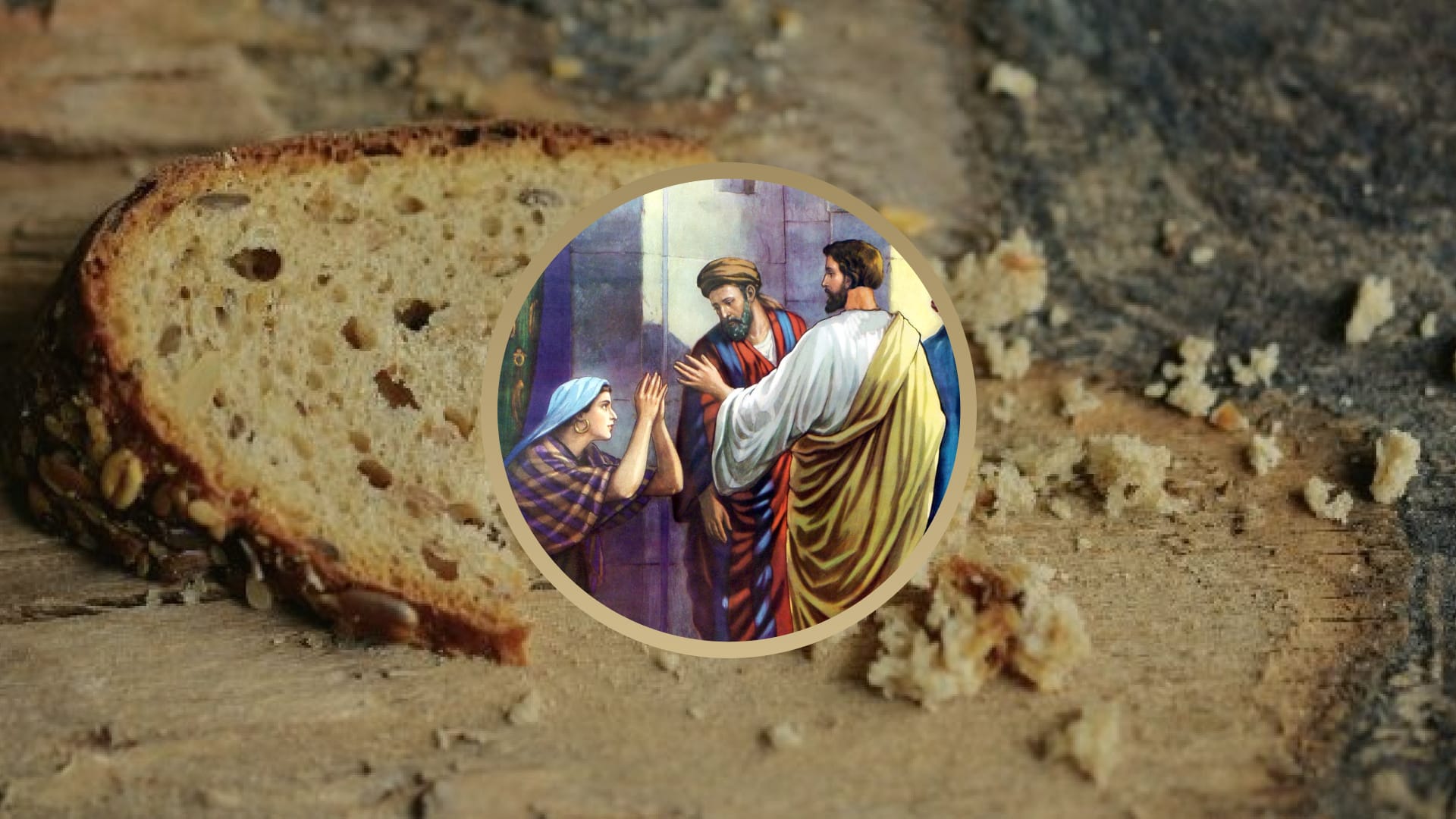
This New Testament widow came to Jesus with a cry for pity: “Have mercy on me, O Lord, thou son of David; my daughter is grievously vexed with a devil. But he answered her not a word. And his disciples came and besought him, saying, Send her away; for she crieth after us” (Matthew 15:22–23).
Christ is never in a hurry. He is always ready to hear the faintest cry for help. In this account, however, Jesus answered His disciples, saying, “I am not sent but unto the lost sheep of the house of Israel” (verse 24). Jesus had not come primarily to have a ministry among the Phoenicians. He was the Jewish Messiah.
In the wider scope of the grand plan of redemption, Christ was the Seed through Whom all the families of the earth would be blessed. In Isaiah 60, the prophet had foretold that the Gentiles would come to the light of the Messiah.
But that spreading of the Gospel to the Gentiles was not to come until the acts of the apostles, as recorded in the Book of Acts. The Gospel proclamation happened after the Resurrection, after there was indeed a Gospel to proclaim and a risen Christ to preach. For this moment in His earthly ministry, prior to His atonement for the sins of the world and His subsequent resurrection and defeat of death and hell, Christ was sent, as He told the disciples, “unto the lost sheep of the house of Israel.”
But the Syrophoenician woman spoke up again. “Then came she and worshipped Him, saying, Lord, help me” (Matthew 15:26). This second request was more personal, more pathetic, and much more direct. At first, perhaps she sought to impress Jesus with her use of titles. Now, she discarded all of that. “Lord, help me,” she pleaded.
“But he answered and said, It is not meet to take the children’s bread, and to cast it to dogs.” On the surface, this response seems extremely rude, blunt, and proud. However, Christ was using a term that would have been highly offensive to most people. Jesus was not referring to a cute, cuddly, well-groomed lapdog. These dogs that He was alluding to were the half-wild, mangy, flea-ridden curs of the streets and sewers. A derogatory term, Sodomites and whores were called “dogs” in the books of Moses.
Christ was subjecting the woman of Syrophenicia to a test of faith. Would she be willing to seek and keep on seeking, to ask and keep on asking, and to knock and keep on knocking?
Often, the path to blessing requires a downward step of humility. Christ sometimes must strip away every remaining vestige of pride and get us to admit what we really are—dogs, undeserving of the least of His mercies.
Consider this woman’s response in verse 27. “And she said, Truth, Lord.” She owned the term that Christ had used in reference to her. She was not offended. She knew that it was true. Christ was a Jew. She was a Gentile. Christ was divine. She was human. Christ was pure. She was impure. She humbly agreed with Him: “Truth, Lord.”
“Truth, Lord.” Have you ever said that to God about your sinfulness? The Bible tells us in Isaiah 64:6 that “all our righteousnesses are as filthy rags.” Have you admitted to God that all that He says about you is true?
The woman continued with one more plea for mercy, “Truth, Lord: yet the dogs eat of the crumbs which fall from their masters’ table.” At last! This was the response that Christ was waiting for. “Then Jesus answered and said unto her, O woman, great is thy faith: be it unto thee even as thou wilt. And her daughter was made whole from that very hour” (Matthew 15:28).
Another example of genuine repentance is given in the Old Testament. According to Genesis 45, when Joseph of Egypt was testing his brothers to see if their repentance was genuine, he initially put on a front that was cold, haughty, and extremely rude to his brothers. But when the purpose for the testing was done, compassion and love burst forth from Joseph’s generous heart. Suddenly he burst into tears and wept like a child, saying to them, “I am Joseph” (verse 3).
In a similar way, Christ put on a cold, aloof front before this woman of Syrophenicia. But once she was willing to own her true condition—that she was a dog, an outcast, worthy only of crumbs that fell from the table—once she was truly humble, Christ’s mercy and love were poured out on her behalf. She had asked. She had sought. She had knocked. As a result, Christ answered by healing her daughter “that very hour.”