
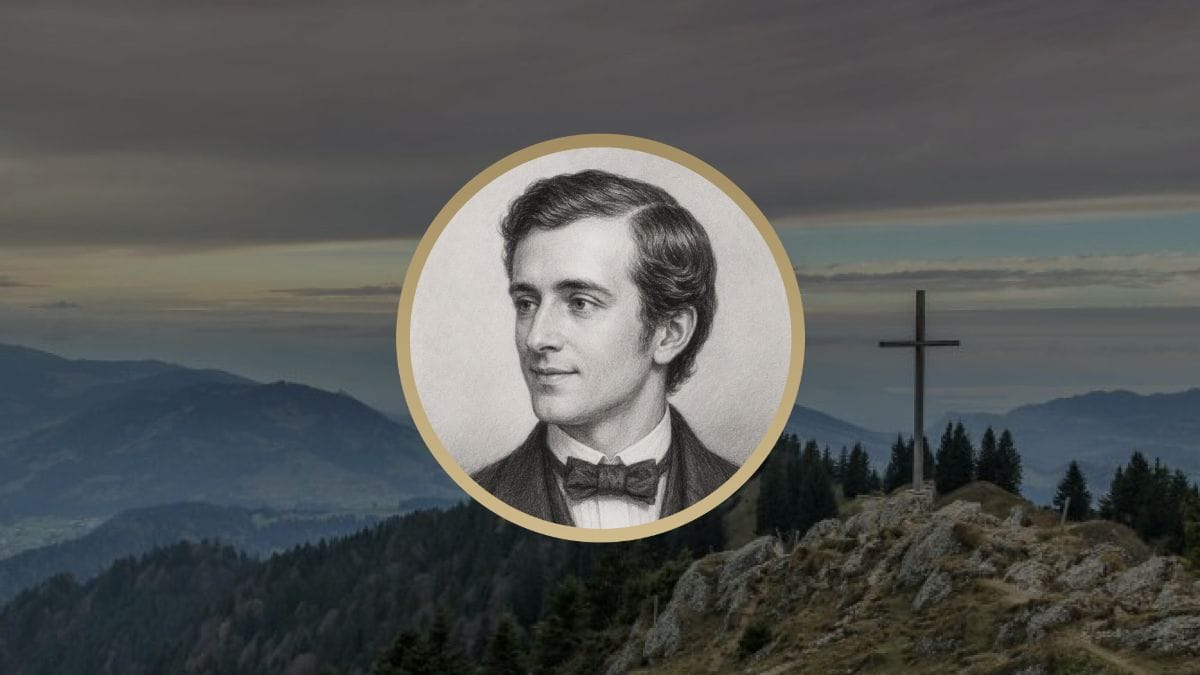
Henry Moorhouse is best known to history as “Harry.” This British evangelist loved the Lord with all his heart, soul, mind, and strength. He realized that our love for God is rooted in the great Scriptural truth recorded in I John 4:19—“We love him, because he first loved us.”
Henry “Harry” Moorhouse was born in Manchester in northwest England on September 27, 1840. He grew up in a Godly home under the influence of parents who loved the Lord. However, Moorhouse was a rebel in his youth. He learned to drink alcohol and gamble with his friends. The young man found out what the Bible says about rebels: “The way of transgressors is hard” (Proverbs 13:15). He ran afoul of the law, and spent several nights in a jail cell.
Similar to the prodigal son, Moorhouse became more and more miserable as friends forsook him, and his money ran out. On several occasions, the despairing rebel sought to take his own life, but the gracious hand of God always kept him from the evil of suicide.
Harry Moorhouse joined the British army, but he was miserable under the discipline and regulation of army life. Nothing could tame the rebel, except one needful thing.
On a dark winter night in 1861, during a time of widespread revival in England, Moorhouse ventured along Hyde Street in Manchester. As he walked along, he heard singing. It was coming from a small room where some believers were gathered to sing and to pray. The young prodigal was compelled to step inside and see the source of the joyful singing.
After the hymns, the Scripture was read. In the providence of God, the Scripture passage chosen was that of the prodigal son. Harry Moorhouse left that night with the name of Jesus pressed upon his heart. For several weeks, he wrestled against the truth that he was as the sinful prodigal and that God was the loving Father calling him back.
Finally, Moorhouse was confronted with the truth in Romans 10:9–10. “That if thou shalt confess with thy mouth the Lord Jesus, and shalt believe in thine heart that God hath raised him from the dead, thou shalt be saved. For with the heart man believeth unto righteousness; and with the mouth confession is made unto salvation.” Harry Moorhouse responded in repentance and faith: “Oh, I see it! I am saved.”
Almost immediately, Moorhouse began sharing with others the saving Gospel that he had found. He preached in parks, on street corners, and wherever he could find anyone to listen. He proclaimed the great truth that God loves sinners and calls prodigals unto Himself.
His favorite text became the simple message found in John 3:16. “For God so loved the world, that he gave his only begotten Son, that whosoever believeth in him should not perish, but have everlasting life.”
Moorhouse supported himself by working as an auctioneer. He had a gift for convincing people to buy wares, and he could have had a very successful career as an auctioneer. But he had a more valuable gift to offer than any earthly goods, and it was free! One day, while he was on his auctioneer stand and calling for bids, a fellow preacher said to Harry Moorhouse, “You ought to have your Bible in your hand out amongst the people, and not that hammer for the devil.”
Moorhouse dropped his hammer at once and took up the message of free salvation through Jesus Christ. Like the apostles who abandoned their fishing boat and their tax collecting booth to become fishers of men, so Harry Moorhouse the auctioneer began to give the Gospel cry of Isaiah 55:1, “Ho, every one that thirsteth, come ye to the waters, and he that hath no money; come ye, buy, and eat; yea, come, buy wine and milk without money and without price.”
In theaters, at races, in the slums, and even at public executions, Moorhouse preached, telling men of the love of God that is revealed in Jesus Christ. In 1870, Harry Moorhouse was united in marriage to Mary, a young lady who had known him as a rebellious youth. She had prayed for him and witnessed to him before his conversion.
The Lord gave the couple one child, a baby girl they named “Minnie.” Little Minnie was paralyzed from her infancy. Moorhouse realized that, just as he carried his little girl around on his shoulders, so the love of God carried him, a helpless child.
The Gospel that Moorhouse proclaimed locally, he soon began to proclaim in other places. He was invited to preach in towns and cities, near and far. Harry Moorhouse had a special burden for the many Roman Catholics in Ireland. He went there and passed out Gospel tracts that extolled the saving grace of God in Jesus Christ. One night in Dublin, Harry Moorhouse met the famous American evangelist, D. L. Moody.
Moorhouse expressed his desire to Moody to come over to America and preach. D. L. Moody said of him at the time that Moorhouse “did not look over seventeen.” Doubting the young man’s ability to preach in America, D. L. Moody tried to be polite but demurred by telling Moorhouse to call on him if he really did cross the Atlantic.
Persisting, Harry Moorhouse did exactly that! A few weeks later, he wrote Moody a letter saying that he had arrived in New York and would come and preach at Moody’s church. Moody replied with what he himself called “a cold letter,” saying that Moorhouse could call on him if he came west. Sure enough, Harry Moorhouse headed for Chicago!
Moody was going to be out for a few days, but he told the officers of the church that they could give the young man an opportunity to preach. When Moody returned to his church, he asked his wife how the people liked the young English evangelist. She replied that everyone liked Harry Moorhouse very much. She continued, “He preaches a little different from what you do. He tells the people God loves them. I think you will like him.” Moody was skeptical.
But Moody went to hear Moorhouse. He was amazed by what he heard. The young man preached seven consecutive sermons on John 3:16. Moody said, “He preached a most extraordinary sermon from that verse . . . I never knew up to that time that God loved us so much. This heart of mine began to thaw out, and I could not keep back the tears. It was like news from a far country. I just drank it in.”
Harry Moorhouse has been called “the man who moved the man who moved the world” because of his influence upon D. L. Moody. Moody said of that series of sermons, “I have never forgotten those nights. I have preached a different Gospel since, and I have had more power with God and man since then.”
Harry Moorhouse died at the age of forty in December 1880. Although he died young, he had lived well. On his simple gravestone is inscribed the testimony of his life: “God so loved the world.”
Sources and Further Reference:
Macpherson, John. Henry Moorhouse, the English Evangelist. London, UK: Morgan and Scott, 1881.

 31:24
31:24