Biographical Sketch

Get these articles delivered right to your inbox.

Matters of Life & Death is a free teaching series looking at the nature & character of God revealed in Scripture and bringing inspirational stories of people who, with Christ’s power, held fast to God’s Word in their daily lives.

After signing up, we’ll send you emails on the days you choose with teachings from our Matters of Life & Death teaching series. Occasionally there may be a few updates on other events or resources that may be relevant to you.

"*" indicates required fields
Tuesday - Commands of Christ
Every Tuesday you'll get a teaching article that focuses on the Commands of Christ as seen in the lives of His disciples.
Thursday: Biography
Every Thursday you'll get a short biographical sketch of a hero or heroine from Christian history who lived out the command of Christ under consideration.
Saturday - Covenant Marriage
Every Saturday, you'll get an article that will delve into practical areas that affect every Christian marriage.

Topics

Character Qualities

Commands of Christ

Basic Life Principles

Attributes of God

Soli Deo Gloria—“glory to God alone”—was the testimony of Johann Sebastian Bach. Three centuries have not diminished the influence or the legacy of Bach. As recently as 2019, a poll was taken among almost 200 living musical composers, asking who they considered to be the greatest composer of all time. The winner was Bach, setting him above all other greats, such as Handel, Mozart, Hayden, and Beethoven. Bach’s masterpieces have stood the test of time, and his concertos, fugues, counterpoints, and magnificent cantatas are still studied and performed the world over.
It was a risky, daring mission. B-25s had never taken off from an aircraft carrier before. But high command deemed it important to show the people of Japan and Emperor Hirohito that Japan was not too far away for the United States to give payback for attacking Pearl Harbor! Knowing that it would be impossible to return to their carrier and land, the one-way mission would bomb targets inside Japan, fly over Japan and beyond, in hope of having enough fuel to make it to friendly airfields in China.
It was a cold winter morning. Outside, the snow was falling steadily. A fifteen-year-old boy slowly made his way through the streets of Colchester in the southeastern part of England. Being Sunday, all the shops were closed. Here and there, the lad saw small groups of men and women struggling through the snowdrifts to attend the various church services in town. Such a blizzard had not been seen by the city in a long time!
John Williams would be the instrument of God to open the islands of the South Pacific to mission work. The first island upon which Williams and his wife labored was the beautiful island of Tahiti, in what is now French Polynesia. A small mission work had already been founded there, and the young couple learned how to operate a mission station among cannibals.
On October 6, 1918, World War I—the greatest and most devastating war that the world had as yet known—was only a month away from the cessation of hostilities. But on that day, a baby was born in Dallas, Texas. That baby, Henry Madison Morris, was destined to grow up and serve as a soldier in a much greater spiritual battle, a battle that spans every age and every generation and which later would be referred to as the “long war against God.”
The sheep grazed quietly as the sun slowly sank behind the Scottish hills. The sixteen-year old shepherd boy named John gazed at the sunset. His eyes brightened as he thought about the mission that lay before him that night. He would leave his flock in the care of a friend so he could embark on his mission. The lad slipped his hand into his homespun knapsack and felt his hard-earned money. With his funds that had been carefully saved up for a long time, soon he would set out on his long overnight hike.
Florence was a center of art and culture. Here lived Michelangelo and other famous artists of the Renaissance. The powerful Medici family ruled this opulent city, and their palace was stunningly adorned with all that money could buy. Silks, jewels, paintings, art, theater, and literature made this one of the preeminent cities in all of Europe. Into this city Savonarola had arrived in the plain black robe of a Dominican friar.
Have you ever felt that you were the only one standing for truth? Has it ever seemed that the pull of error was stronger than the pull of truth? There was a time in early Christian history when the doctrine of the eternal divinity of the Lord Jesus Christ was under tremendous attack throughout the world. In that day of error and compromise, one man, a faithful pastor from Alexandria, stood boldly against heresy to defend the cause of truth. His name was Athanasius.
Our dating system in Western Civilization is undeniably linked to the incarnation of the Lord Jesus Christ. As much as modern scholars may try to deny or belittle the fact, B.C. stands for “before Christ” and certainly does not merely mean “before the common era.” A.D. is the abbreviation of the Latin phrase “anno Domini,” which is translated “in the year of our Lord.”
Even as a young boy, Kepler loved gazing at the heavens. In later life, he recalled distinctly the day that his mother took him to a high hilltop to observe a great comet in 1577. When he was nine years old, he also observed a lunar eclipse. Despite physical weakness and impaired vision, young Kepler showed signs of great intellectual power. He studied Latin as well as philosophy and theology. As a young man, he was a strong advocate for the Copernican system of interpreting the heavenly bodies. He saw no contradiction between a heliocentric universe and the Bible. He almost became a Lutheran pastor but became convinced that he could serve God faithfully as a mathematician and astronomer.
Robert Edward Lee suffered many disappointments in life. Near the end of his life, Lee wrote a letter to a close friend and former staff officer, Colonel Charles Marshall. The letter reveals how Lee’s hope was anchored in his understanding of the eternal nature of God. Lee wrote: “The truth is this: The march of Providence is so slow, and our desires so impatient; the work of progress is so immense and our means of aiding it so feeble; the life of humanity is so long, that of the individual so brief, that we often see only the ebb of the advancing wave and are thus discouraged. It is history that teaches us to hope.”
Rare are the men of history that are able to rise above their own time and generation and see their own battle in the context of the grand scheme of eternity. The Lion of the North was such a man. Although he himself was a king, his ultimate allegiance was to the King of kings and Lord of lords, and he dedicated himself to advancing the everlasting Kingdom of Jesus Christ.
Adam is the father of us all. No matter our language and nationality, we are all descendants of Adam and Eve. We inherit from Adam the curse of sin, the sting of death, and the certainty of the grave. But from Adam we also inherit the image of God, the hope of eternal life, and the promise of redemption.
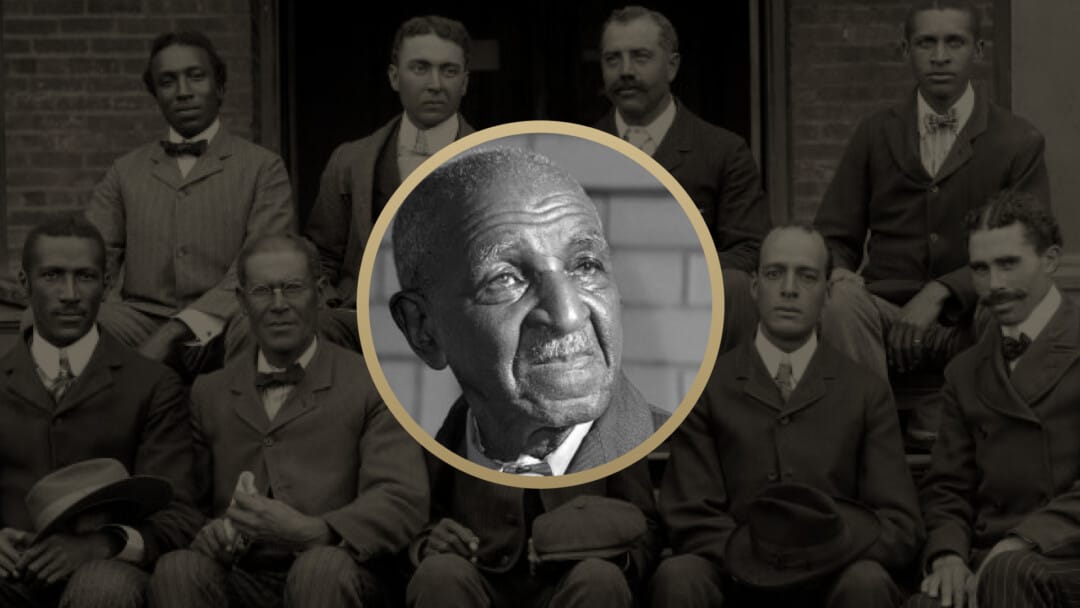
George Washington Carver is most famous for discovering many remarkable uses of the sweet potato and the peanut. But Carver’s influence was far beyond these two commodities. His greatest legacy was his life of loving service to his fellow man.
Throughout his realm, Duke Wenceslas I earned the nickname “The Good” for his deeds of piety and charity. He strived to defend his borders from the invasions of the Hungarian clans called the Magyars. The duke also promoted the expansion of Christianity throughout his dominions. His leadership had a positive impact upon his people; after his death, many stories and legends would spread in remembrance of him. Some of the reports surely are true, while others are questionable.
The Brewsters took a bold step when they left the established church to unite with a small, persecuted body of believers known as Separatists. William Brewster knew that he was risking his status, his livelihood, and perhaps his own life by uniting with these despised Christians, but he saw the justice of their cause and he loved the truth more than his own life.
Stephen, the first Christian martyr, was a man of God who consistently and faithfully loved his neighbor. His name is of Greek origin and means “crowned one.” When Stephen first became a believer in the Lord Jesus Christ is uncertain. He was probably a Hellenistic (Greek) Jew from Jerusalem who came to trust and follow the Lord Jesus during His public ministry.
The hills of Scotland have afforded a lovely playground for many generations of young Scottish lads and lasses. In the midst of the heather growing on the wind-swept hills, the lowing of the Highland cattle, the bluebells dotting the land, and the craggy ruins of ancient castles inciting curiosity, all provide an enticement to exploration that is irresistible for a little boy.
The French nobleman opened again the book he held in his hands. The nobleman was a prisoner of war, taken captive by the Spanish while defending Saint Quentin (France) in 1557. His brother had sent the book for him to read in his captivity. In the eyes of many, it was a forbidden book—a French Bible. Admiral Gaspard de Coligny was about to read that forbidden book! How might that book change his life?
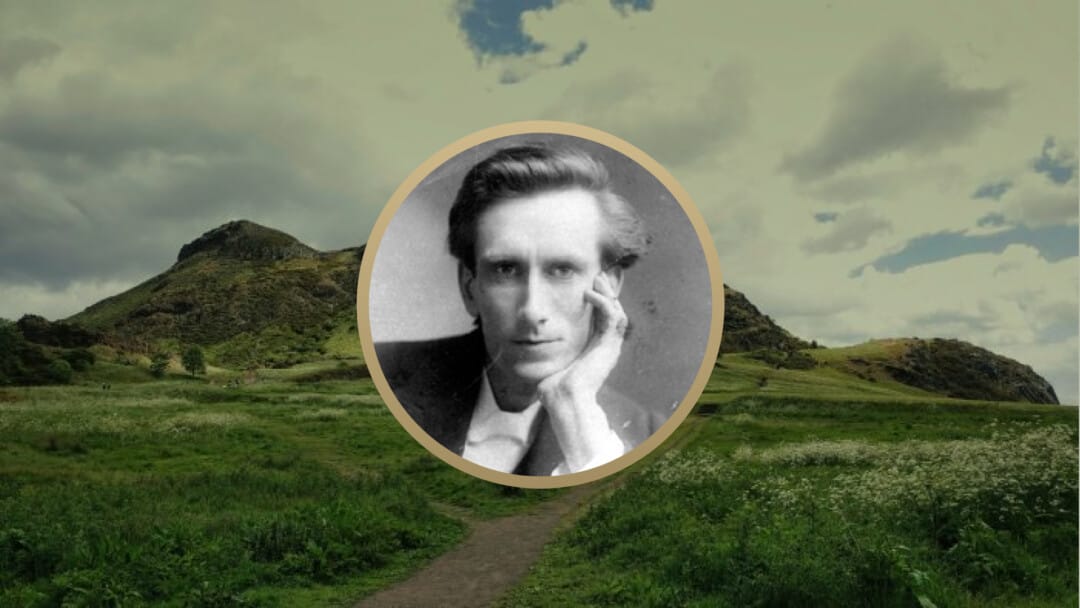
Many of us recognize the inspiring title of this famous book of selected Scripture meditations: My Utmost for His Highest. However, fewer people are familiar with the life of the man who made these words his testimony. Although Oswald Chambers lived to be only forty-three years old, his life after his conversion at age fifteen was characterized by a desire to love the Lord with all his heart, soul, and might.
Loading...