

One of the greatest evidences of the truth of Christianity is the transforming power of God to change any human life through the Gospel of the Lord Jesus Christ. The infinite power to save that our Lord Jesus possesses extends to every corner of the globe and every era of time.
The Apostle Paul wrote to Timothy, “And the things that thou hast heard of me among many witnesses, the same commit thou to faithful men, who shall be able to teach others also” (II Timothy 2:2). The fervent prayer of every man of God is that the Lord would enable him to pass on the truth of God to the next generation. Moses had his Joshua, David had his Solomon, Elijah had his Elisha, and Paul had his Timothy.
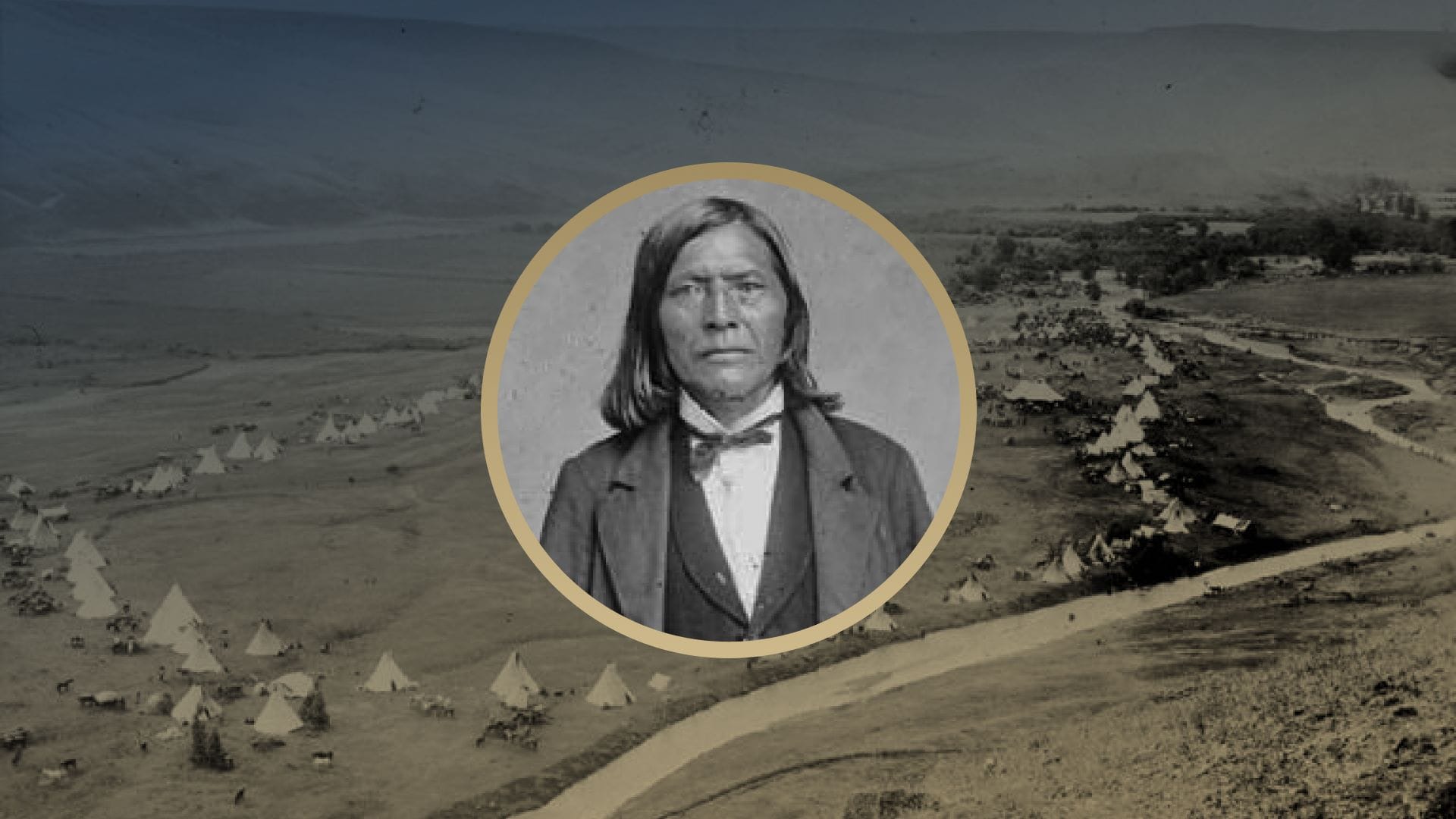
Tamootsin was a chief of the Nez Perce tribe who lived and hunted over the territory which is now part of northern Idaho. This land was marked by its sparkling rivers, blue lakes, and rugged mountains.
In his youth, Tamootsin grew up ignorant of the true, living God. But one day, a group of pioneer missionaries penetrated into his native hills, bringing with them the Book of God.
The origins of the missionary efforts in the Northwest can be traced back to a visit that was made by a party of four Indians to St. Louis in 1831. These Indians, among them at least one Nez Perce, came to see William Clark, governor of the western territories. They asked Governor Clark if he would give them the Book of God. The governor, who was the same William Clark that was the great explorer of the American continent, took the Indians to church.
However, the native guests were unsatisfied with what they saw there. It is reported that one of the Indians spoke these words: “I am to return to my people beyond the mountains of snow, at the setting sun, with both eyes in darkness and both arms broken. I came for teachers and am going back without them. I came to you for the Book of God. You have not led me to it.”
The Indian continued. “You have taken me to your big house (theater) where multitudes of your children assemble and where your young women dance as we do not allow our women to dance, and you have taken me to other big houses (cathedrals) where people bow down to each other and light torches to worship pictures. The Book of God was not there. And I am ready to return to my people to die in darkness.”
This “Macedonian call” was heard by various men whose heart God touched with the needs of the western Indians. Samuel Parker and Marcus Whitman went on an exploratory trip into the mountains in 1836. The following year, Whitman set out with his new bride, Narcissa, and with Henry and Eliza Spalding. While the Whitmans settled among the Cayuse in what is now the state of Washington, the Spaldings settled among the Nez Perce in what is now northern Idaho.
Tamootsin was one of the very first converts to the Gospel at the Idaho mission. His name first appears in Spalding’s diary on December 23, 1838. There, Spalding recorded that the chief was “overtaken with grief and cried aloud.” Humbly confessing his darkness, his idolatry, his adulteries, and his manifold sins, the young chief renounced his former life and purposed to live a life of Godliness. The newly baptized Christian chief took the name Timothy. His wife took the name Tamar, and this firstfruits Christian family began to set an example for their tribe.
The best linguist of the mission couple was Eliza Spalding. It is believed that it was actually Eliza who led Chief Timothy and his wife Tamar to find salvation in the finished work of Jesus Christ. Chief Timothy always carried a special loving regard toward Mrs. Spalding.
The newly converted chief soon began to be pressured by those in his tribe who resisted the “new ways” of the missionaries. Some wanted the chief to return to his former ways, which included his sins and his sorceries. Chief Timothy steadfastly refused. When he was mocked as being a weak man, Chief Timothy always proved that God strengthened his hands for the hunt. He could face grizzly bears, mountain lions, and enemy tribes even more courageously as a Christian!
The chief’s wife Tamar lived as a faithful Christian at his side. She too was tough and bold. One day, as the Nez Perce tribe was traveling to a new hunting ground, Tamar went into labor with their new son. She calmly stepped into the bushes along the side of the path, and returned a short time later with her new papoose. Immediately and with her newborn, she took her place in the line of march. No, the Gospel did not make Chief Timothy and Tamar weak! Rather, the Gospel of Christ gave purpose and direction to their courage.
Chief Timothy was a faithful friend to the Whitmans and Spaldings, defending them in the face of threats and even massacre. The Whitmans were eventually martyred in 1847. Yet, it was largely due to the influence of Chief Timothy that the Spaldings were spared a similar fate.
Henry and Eliza Spalding’s ten-year-old daughter, also named Eliza, was in the care of the Whitmans when the massacre occurred that claimed the latter missionary couple’s lives. Immediately, Chief Timothy mounted his horse and made a hard 120-mile ride to the Whitman mission station to make sure nobody touched the missionaries’ child. When Chief Timothy galloped into the clearing, young Eliza stretched out her hands and ran to the chief, who quickly dismounted and took the girl into his arms. Mingling his tears with hers, he assured the little girl that he would protect her.
Chief Timothy did protect Eliza Spalding. He led the warriors of his tribe into the Blue Mountains to track, hunt down, kill, and capture all the perpetrators of the massacre. The Gospel had not made him weak. As a true warrior, Chief Timothy could “endure hardship as a good soldier of Jesus Christ.”
As the years passed, Chief Timothy proved more and more faithful to the Gospel. Eventually, Henry Spalding’s wife Eliza went on to her Heavenly reward in 1852. Because she was the one who had led Chief Timothy to the cross, the memory of Mrs. Spalding was always precious to the chief. To the end of his days, Chief Timothy always closed his prayers with the words, “in the name of Jesus Christ and Mrs. Spalding.” We do not have to agree with Chief Timothy’s words to appreciate his sincere love for the memory of the lady who had crossed the mountains to give him the Gospel.
There is a memorable story also connected with the life of the younger Eliza Spalding, the girl Chief Timothy had protected from the Cayuse. After Eliza had married and moved away from the mission, she and her husband, A. J. Warren, built a house and kept cattle in what is today the northwestern state of Washington. One day, Eliza was outside hanging clothes on the line when she saw a cloud of dust in the distance. As she watched, Eliza realized that these were Indians approaching, mounted on powerful horses and riding fast.
Her husband was not home, and she was alone with their two babies. Her heart began to pound as she remembered the massacre she had survived when she was younger. She dashed inside and quickly hid her babies. She rushed to the door to block it for defense against intruders.
Imagine the young mother’s surprise and relief to discover that the fast-approaching Indian party was led by Chief Timothy! He was coming to pay her a visit. Chief Timothy met Eliza’s husband later that day, and when they asked the chief to ask God’s blessing on the meal, he tearfully prayed, closing with, “in the name of Jesus and Mrs. Spalding.”
Chief Timothy lived to a ripe old age. He and his wife Tamar were faithful to the last. In 1874, the elderly chief was present at the bedside of Henry Spalding. He encouraged the dying missionary with these words:
“You are my great interpreter. You were sent by God to me and to this people, to teach us life, the Word of God. You are going first. God only is good and great. Jesus alone gives life. Now don’t be concerned. I will never turn back. My wife will never turn back. This people will never turn back.”
Sources and Further Reference:
Drury, Clifford M. Henry Harmon Spalding: Pioneer of Old Oregon. Caldwell, ID: The Caxton Printers, Ltd., 1936.