

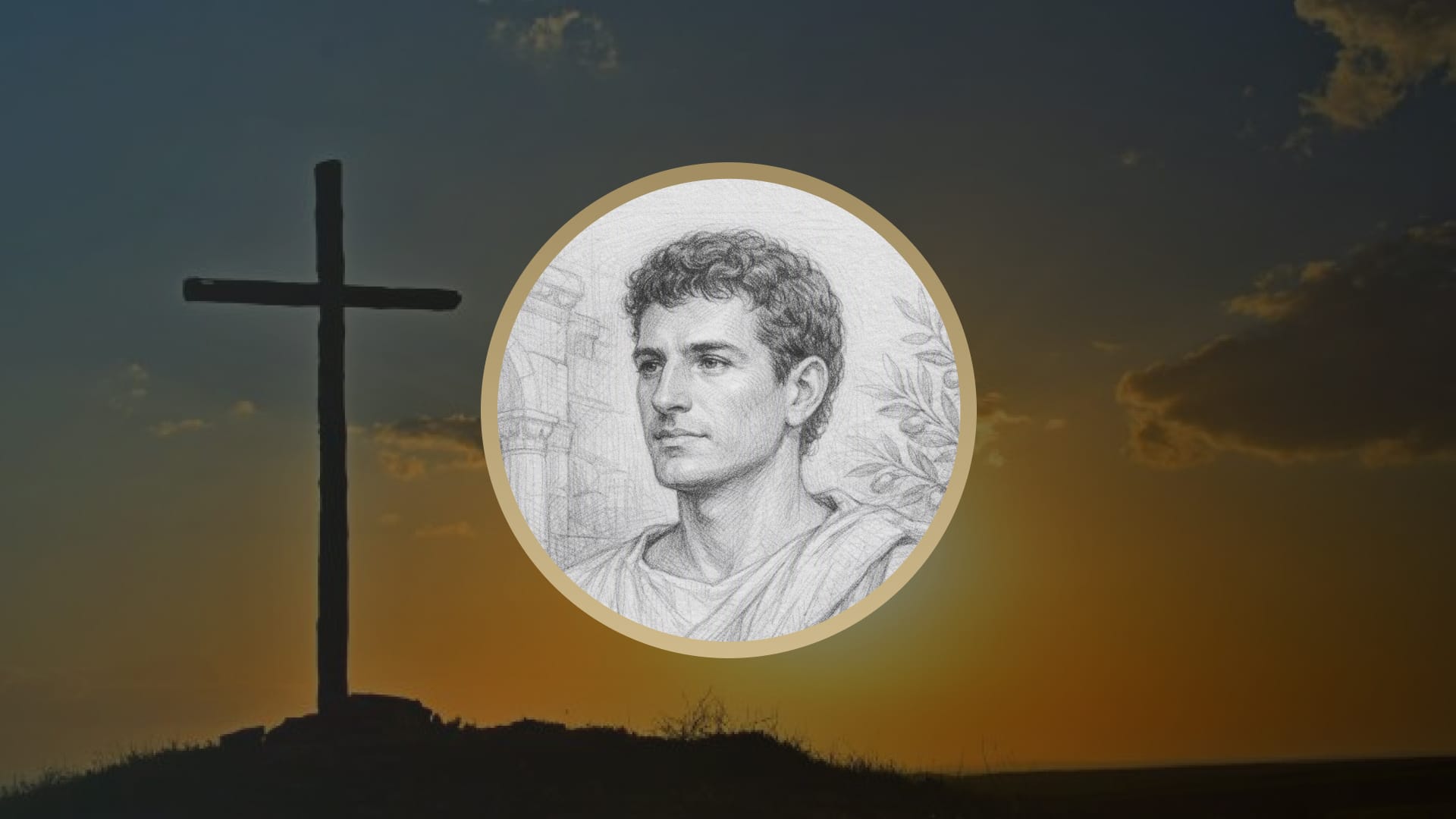
In the life of Epaphroditus of Philippi we have a splendid example of a selfless Christian. The Apostle Paul said of this man: “Because for the work of Christ he was nigh unto death, not regarding his life, to supply your lack of service toward me” (Philippians 2:30). Epaphroditus demonstrated the command of Christ to deny ourselves, take up our cross, and follow Him. The testimony of this man is recorded in Philippians 2.
The epistle to the church at Philippi was written around A.D. 61, during Paul’s first Roman imprisonment. The letter was written approximately ten years after the church had been founded, following the conversion of Lydia and the Philippian jailer. During those ten years, the church had prospered. It had become a faithful and generous church.
In Philippians chapter 2, Paul wrote to the church to urge Christlikeness. He said, “If there be therefore any consolation in Christ, if any comfort of love, if any fellowship of the Spirit, if any bowels and mercies, Fulfil ye my joy, that ye be likeminded, having the same love, being of one accord, of one mind. Let nothing be done through strife or vainglory; but in lowliness of mind let each esteem other better than themselves. Look not every man on his own things, but every man also on the things of others” (Philippians 2:1–4).
The apostle then gave the ultimate example of humility, that of our Lord Jesus Christ. He wrote, “Let this mind be in you, which was also in Christ Jesus: Who, being in the form of God, thought it not robbery to be equal with God: But made himself of no reputation, and took upon him the form of a servant, and was made in the likeness of men: And being found in fashion as a man, he humbled himself, and became obedient unto death, even the death of the cross” (Philippians 2:5–8). We are given a very difficult injunction here: to actually be of the same mind as that of our Lord Jesus Christ, to think not on our own things but on the things of others.
Such a man was Epaphroditus. Paul used the life of this man as an example of the type of humility that he was describing. The Holy Spirit had laid it upon the heart of the members of the Philippian church to send Paul a love offering. The church had sent one of their own, a man named Epaphroditus, with this gift to Paul. In addition to the gift, the church had asked Epaphroditus if he would stay awhile with Paul in Rome to minister to the apostle’s needs.
For this purpose, Epaphroditus had embarked on the long journey to Rome. The journey was dangerous, filled with hazards. People during Bible times feared sea travel. Epaphroditus probably traveled by sea down the Grecian coast, through the Aegean Sea, around the southern tip of Greece, and then on open waters across the Ionian Sea to the Italian Peninsula. If he had traveled by land, the journey would have been less hazardous but more fatiguing. More dangers existed along the land route due to highway robbers.
Epaphroditus did what he was commissioned to do. He delivered the church’s gift and ministered to Paul. Unselfishly, he laid down his own life and health for Paul’s sake, giving an illustration of what the apostle was describing to the church in Philippians 2.
In his letter, Paul commended Epaphroditus. He wrote, “Yet I supposed it necessary [the Greek word used here implies “a careful decision”] to send to you Epaphroditus, my brother, and companion in labour, and fellowsoldier, but your messenger, and he that ministered to my wants” (Philippians 2:25).
In his commendation of the representative sent by the Philippian church, the apostle referred to six notable qualities of the man. Paul first called him by his personal name, Epaphroditus. This name is a pagan one, derived from the goddess Aphrodite. It seems that Epaphroditus’s parents were worshippers of this pagan deity. Yet, he was no longer pagan but a follower of Christ.
But somewhere along the way, this pagan Philippian man became the second title by which Paul addressed him, “my brother.” It is interesting that Epaphroditus did not sense the need to change his name after he became a Christian. The same was true with Apollos, who bore a name that was associated with the god Apollo. Yet Apollos continued to use his given name. So it was with Epaphroditus.
Next, Paul called Epaphroditus his “companion in labour.” Their labor was the same—the cause of Christ. As Paul sat in prison, witnessing about Christ to his guards, corresponding with churches, and ministering to needy souls, Epaphroditus was his constant companion and an encouragement and blessing to him in his labors.
Fourth, Paul called him his “fellowsoldier.” Indeed, Epaphroditus was not entangled with the affairs of this life, but rather lived to please Him who had chosen him to be a soldier. With the courage and fortitude of a soldier, Epaphroditus shared the hardships of prison with Paul.
Fifth, Paul called Epaphroditus, “your messenger.” This was a reference to the fact that the man was entrusted by his church to bear a monetary gift to the hands of the Apostle Paul. Since the entire church could not go to Rome to serve Paul, they had sent Epaphroditus as their envoy, their representative.
Sixth, Paul called Epaphroditus, “he that ministered to my wants.” The apostle was sending Epaphroditus back to the church, but he wanted the Philippians to know that their messenger had fulfilled his duty. All that they had entrusted him to do he had done. He had ministered to the wants and needs of Paul. This word minister is an unusual and interesting word, and not often used in the New Testament. The Greek word is λειτουργόν (leitourgov). This word is used of service in an official capacity, either as a government official or as a religious servant, such as a priest or a Levite. Our word liturgy comes from the same root. The word used in the Epistle to the Hebrews is of priests ministering in the Temple.
This information leads to the realization that Epaphroditus’s menial service—bringing Paul food, washing pots, taking dictation, bringing him a cloak, bearing messages from Paul to other Christians—was regarded by Paul and regarded by God as official and sacred service. So it is with your Christian service when you deny yourself and serve the believers in Christ about you.
Paul clarified why he was sending Epaphroditus back to Philippi. He was not sending him back due to any failure. The apostle explained, “For he longed after you all, and was full of heaviness, because that ye had heard that he had been sick” (Philippians 2:26). While Epaphroditus was in Rome ministering to Paul, apparently he became ill. News had filtered back to Philippi that their messenger was sick, and Epaphroditus was sad that his church would be worried about him. His deepest concern, as we shall see, was that his home church might think that he had failed in his assignment.
So, Paul wrote an epistle to graciously assure the church that Epaphroditus had not failed. The apostle reported that the church’s faithful messenger, “indeed he was sick nigh unto death: but God had mercy on him; and not on him only, but on me also, lest I should have sorrow upon sorrow. I sent him therefore the more carefully, that, when ye see him again, ye may rejoice, and that I may be the less sorrowful” (Philippians 2:27–28).
Then Paul sent Epaphroditus home with the letter of rejoicing so that he might be reunited with his church in Philippi. According to Philippians 2:29–30, Paul encouraged the church to “Receive him therefore in the Lord with all gladness; and hold such in reputation. Because for the work of Christ he was nigh unto death, not regarding his life, to supply your lack of service toward me.” Paul exhorted the Philippians to hold their brother in reputation and honor. Epaphroditus was returning not in defeat but in victory!
Just as Epaphroditus endured the trials of prison with Paul, so also he disregarded his own life to provide service. Here again the same term λειτουργίας (leitourgias) is used, meaning Temple service, priestly service, holy service! Performing menial service for Paul was regarded by God as the holy service of priests. Here is a splendid example of exactly what Paul was writing about in Philippians 2. Epaphroditus had let “this mind” (Philippians 2:5) be in him which is also in Christ Jesus. He had learned in lowliness of mind to esteem others better than himself. He had not looked on his own things, but also had concern for the things of others. He even disregarded his own life for the sake of those he loved!
Do you follow the example of Epaphroditus? How might you serve the Christians whom God has placed around you? If you minister to the wants of the Christians about you, then your service, similar to Epaphroditus’s, will be esteemed as religious service, a holy service, the service of the priesthood. You will be learning, as Epaphroditus did, to lay down your life for others, and thus following the pattern of Christ Jesus Who, as Paul wrote in Philippians 2:8, was “obedient unto death.”


 23:24
23:24