

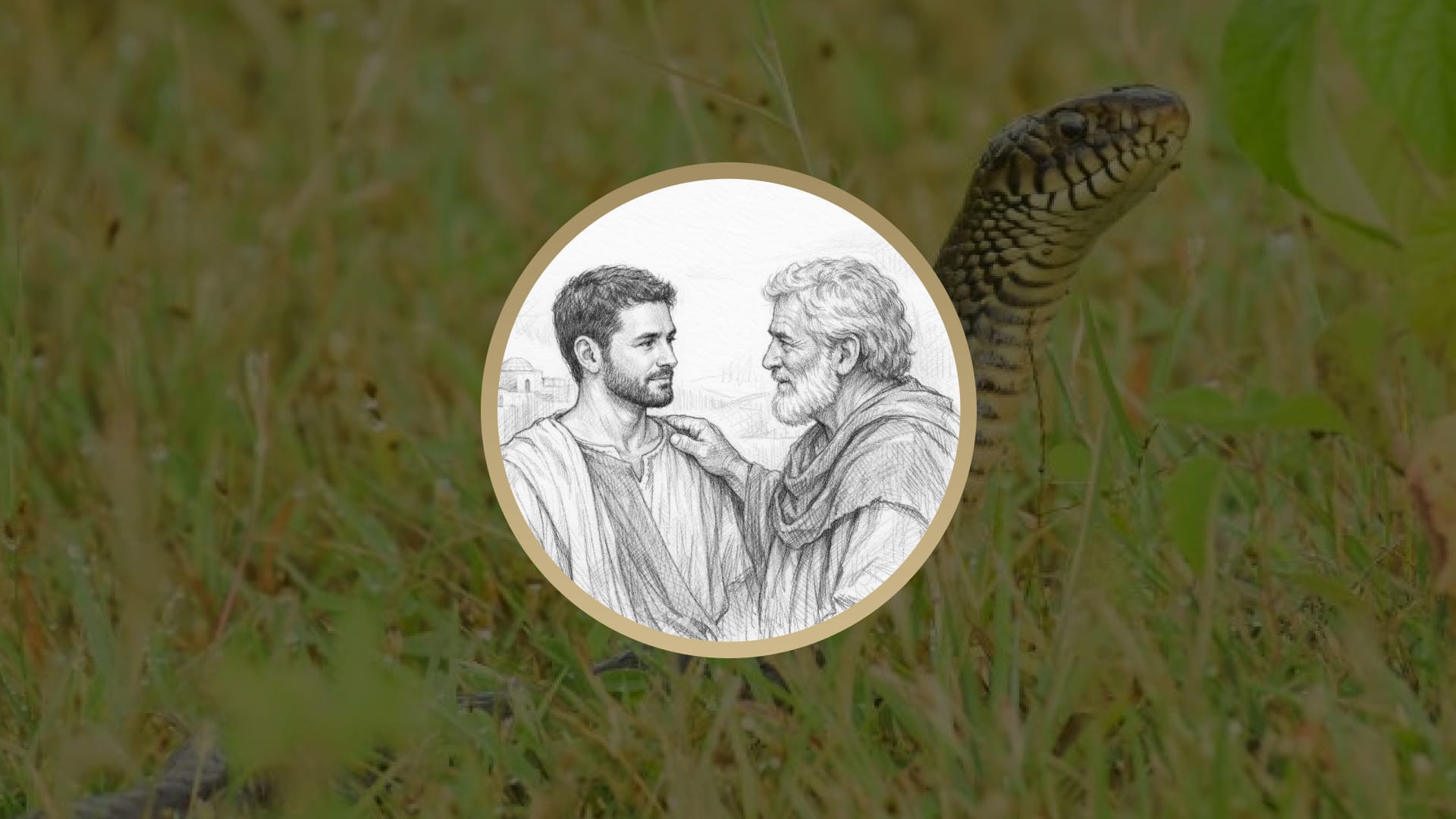
Jesus instructed His disciples, “Behold, I send you forth as sheep in the midst of wolves: be ye therefore wise as serpents, and harmless as doves” (Matthew 10:16). Before a generation had passed, error and schism had already begun creeping into the church. One man spotted doctrinal error and gave a timely warning to the early church. He was Epaphras, a leader in the church at Colosse.
Epaphras is only mentioned three times in the New Testament. Yet in those three passages, the Apostle Paul bestowed upon him these worthy titles: “our dear fellowservant,” “a faithful minister of Christ,” “a servant of Christ,” and “my fellowprisoner in Christ Jesus.”
We first read about Epaphras in the Book of Colossians. In Paul’s letter, he affirmed the believers in the church at Colosse. In Colossians 1:5–6, Paul commended them for their faith and spiritual growth. He also endorsed their leader, Epaphras, as one who had taught them truth in Christian matters: “As ye also learned of Epaphras our dear fellowservant, who is for you a faithful minister of Christ” (Colossians 1:7).
Who were the Christians of Colosse? How had they heard the Gospel and believed? As far as the record goes, until the time of this letter, Paul had never personally traveled to Colosse on any of his three missionary journeys. The town of Colosse was located on a ridge overlooking the Lycus River in central Asia Minor, now modern-day Turkey. Colosse was approximately 75 miles east of Ephesus and the Aegean coast.
In the same Lycus Valley were two other cities, Hierapolis and Laodocia. Yet we find further on in the Book of Colossians that there were churches in those cities too. How did three flourishing churches get 75 miles inland into the mountains of Asia Minor? The answer to that question may be this man, Epaphras.
It seems that Epaphras was saved under the ministry of the Apostle Paul. Epaphras apparently was not Jewish; Epaphras is a pagan name. According to Colossians 4:12, Epaphras was a native of Colosse, as Paul wrote to the church, “Epaphras, who is one of you, a servant of Christ.” Perhaps Epaphras was saved elsewhere, such as in Ephesus where Paul ministered for three years. Then, as a new Christian, the Lord laid a burden upon Epaphras’s heart for his own people in the Lycus Valley, and he returned with the Gospel to evangelize his own home area.
In the opening of his epistle, Paul continued to say of Epaphras, “Who also declared unto us your love in the Spirit” (Colossians 1:8). Apparently, Epaphras had journeyed from his hometown of Colosse all the way to Rome, where Paul was imprisoned. Also at this time, Paul wrote his epistle to the churches, and specifically to Colossae, to report on the state of the churches in the Lycus Valley.
Why had Epaphras traveled to Rome to see Paul? Apparently, he went to Rome to seek the help of the Apostle Paul, his spiritual father. About this time, the heresy known as Gnosticism was being taught. As Paul concluded his third missionary journey, he had warned the assembled elders in Miletus that “after my departing shall grievous wolves enter in among you, not sparing the flock” (Acts 20:29).
Just as Paul prophesied, so the deceitful danger had arisen. In the churches of Asia Minor, Gnosticism had surfaced. While the heretical teaching varied somewhat from case to case, all its forms held three unbiblical common tenets. First, the Gnostics claimed to have special revelation given only to them. (The term “gnostic” means knowledge.) Second, Gnostics claimed that the only ones who could know these mysteries were those who were initiated into their secrets. Third, Gnostics denied the deity of Christ and His supreme authority over the Church.
Epaphras, from a pagan background, was perhaps limited in his knowledge of the Scripture. But he knew by the Holy Spirit that this teaching was false. He also may have been burdened for the people of his valley, that this false teaching might come to them and cause them to stumble. Who better to seek out for counsel than his spiritual mentor?
In his visit with Paul in Rome, Epaphras faithfully reported on the good work happening in the Lycus Valley. Epaphras spoke of the people’s “love in the Spirit” (Colossians 1:8). Epaphras also told Paul about the Gnostic heresy. On the basis of the timely warning of Epaphras, Paul was stirred to action; under the inspiration of the Holy Spirit, he wrote the Epistle to the Colossians.
In his letter to the Colossian Christians, Paul warned them, “Beware lest any man spoil you through philosophy and vain deceit, after the tradition of men, after the rudiments of the world, and not after Christ” (Colossians 2:8). The apostle exalted Christ in His triumphant deity in one of the grandest discourses on the deity and authority of the Son in the entire New Testament: “For by him were all things created, that are in heaven, and that are in earth, visible and invisible, whether they be thrones, or dominions, or principalities, or powers: all things were created by him, and for him: And he is before all things, and by him all things consist” (Colossians 1:16–17).
Besides in the opening of his letter, Paul mentioned Epaphras again at the close of his epistle. After exposing the Gnostic heresy and carefully using Scriptural truth to correct human error, Paul sent a greeting to the Colossians from their own church leader and friend. “Epaphras, who is one of you, a servant of Christ, saluteth you, always labouring fervently for you in prayers, that ye may stand perfect and complete in all the will of God” (Colossians 4:12). The word “servant” is the word δοῦλος (doulos), meaning “bondslave,” such as Epaphras certainly was of the Lord Jesus Christ.
Then, in the next verse, Paul testified of Epaphras, “For I bear him record, that he hath a great zeal for you, and them that are in Laodicea, and them in Hierapolis” (verse 13). The record of Epaphras should cause us to pause and consider these questions: How is my zeal? Am I zealous for the souls around me? How am I seeking daily to be “wise as a serpent,” so as to be able to detect error and falsehood, yet also striving to be “harmless as a dove”?
Epaphras is mentioned one more time in Paul’s epistles. In Colosse was a church member named Philemon. Possibly, he was one of the leaders of the Colossian church when Epaphras was away.
Paul addressed Philemon regarding the man’s runaway slave, Onesimus. The apostle was sending Onesimus back to Philemon with the request that Philemon receive Onesimus as a brother in the Lord. Onesimus, accompanied by Tychicus, made the long journey from Paul in Rome back to Colosse in the Lycus Valley.
Near the end of the Epistle to Philemon, there is a reference to Epaphras; here we also see perhaps why Epaphras did not make the return trip right away along with Tychicus and Onesimus. “There salute thee Epaphras, my fellowprisoner in Christ Jesus” (Philemon 23). The description “fellowprisoner” is very significant. Paul wrote this epistle while he was imprisoned and awaiting trial. The word fellowprisoner seems to indicate that Epaphras was in prison with him! Aristarchus was also given this same title. Thus, it has been suggested that perhaps Epaphras and Aristarchus shared Paul’s imprisonment with him for a time, maybe alternating with each other in this duty.
Possibly this bondage was rendered voluntarily? Or, perhaps it was forced upon them? Either way, possibly Epaphras shared some of the trials of bondage with the Apostle Paul. Paul could not preach much at the time. He could not travel, nor could he visit others. But he could pray intercessory prayers for the church and the people that he loved.
On this final mention of Epaphras’s status as a fellowprisoner, the Biblical record concerning this faithful man ends.
May we purpose to follow the example of Epaphras. May God help us to recognize erroneous teaching so that we can warn, encourage, educate, and strengthen the believers about us. Following the command of Christ and the worthy example of Epaphras, may we also become wise as serpents and harmless as doves.

 27:22
27:22