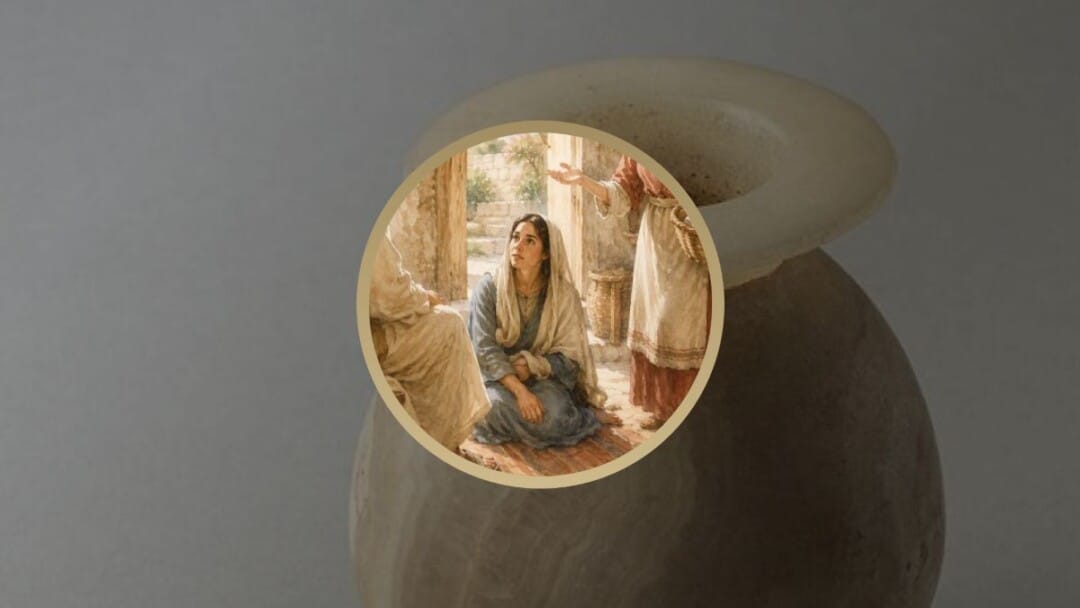


The prophet Isaiah effectively combined both the transcendence and the immanence of God: “For thus saith the high and lofty One that inhabiteth eternity, whose name is Holy; I dwell in the high and holy place, with him also that is of a contrite and humble spirit, to revive the spirit of the humble, and to revive the heart of the contrite ones” (Isaiah 57:15). According to this Scripture, God dwells in the “high and holy place.” This is His transcendence. Yet, He the “high and lofty One” stoops to draw nigh to the “contrite and humble spirit.” This is His immanence.
In the historical and prophetical accounts of the Old and New Testaments, it is striking that God stooped very low to attend to the needs of His humble servants and His “contrite ones.”
Let’s consider a few of the many times that our high and lofty God saw fit to care for the needs of those who were of contrite (sorrowful over one’s sin) and humble spirit.
God provided food to Elijah
After the prophet Elijah’s bold announcement to King Ahab that God was going to send a devastating drought upon the land of Israel, the Lord gave Elijah a promise of provision. “And the word of the LORD came unto him, saying, Get thee hence, and turn thee eastward, and hide thyself by the brook Cherith, that is before Jordan. And it shall be, that thou shalt drink of the brook; and I have commanded the ravens to feed thee there” (I Kings 17:2–4).
The “brook Cherith” is a narrow little wadi that drains into the Jordan River. The name of the narrow valley simply means “cut.” This isolated, narrow valley provided an ideal place of concealment for a prophet whom the king hated and sought to destroy. Right across the Jordan Valley from Cherith was the hilly region of Gilead, Elijah’s homeland.
Here in this wadi, the Lord graciously provided food daily for His servant by means of ravens. As the drought settled upon the Israelite countryside, many sheep and other livestock must have died in alarming numbers. However, the ravens brought Elijah “bread and flesh” every morning and every evening, “and he drank of the brook” (I Kings 17:5–7). When the brook dried up, the Lord provided for His servant by other means.
God supplied provisions for the widow of Zarephath
Next, the Lord sent Elijah to the village of Zarephath, which was in the land we now call Lebanon. This little Phoenician village was located near the prosperous city of Zidon. The wicked queen Jezebel was from this region. King Ahab and Jezebel, his queen, would never have suspected that their archenemy was taking refuge near Zidon!
The “high and lofty One” stooped very low again to meet the needs of a humble Phoenician widow. Upon Elijah’s request, she gave her last little bit of bread to him. After this act of selfless generosity, Elijah promised the widow, “For thus saith the LORD God of Israel, The barrel of meal shall not waste, neither shall the cruse of oil fail, until the day that the LORD sendeth rain upon the earth” (I Kings 17:14).
As God promised, so it was. However, Jehovah did not fill up the barrel of meal to the brim nor did He supply a full cruse of oil. Rather, the provisions simply never failed. Every morning, there was “just enough” for the day. In this way, the Lord provided for Elijah and the widow and her son their daily bread, literally!.
Does God care for matters as small as oil and flour? Absolutely! This is His immanence at work. The God of Heaven stoops low to attend to our daily, earthly needs.
God caused an ax to float for Elisha
What about an axe? Does God care when we lose a borrowed item? In the Book of II Kings is the account of one of the “sons of the prophets” who was cutting timber. However, as he was using the axe, the axe-head flew off the handle and fell into the Jordan River! The distraught young man said to Elisha, the man of God, “Alas, master! for it was borrowed” (II Kings 6:5).
The mighty God of Heaven, the God Who formulated the periodic table of the elements and the atomic properties of iron and water, cared enough to meet this young man’s practical need. “And the man of God said, Where fell it? And he shewed him the place. And he cut down a stick, and cast it in thither; and the iron did swim. Therefore said he, Take it up to thee. And he put out his hand, and took it” (II Kings 6:6–7).
Have you ever seen our immanent God stoop down from Heaven to meet your practical needs? He does so on a daily basis. Because God gives us our daily bread, we ought to give thanks every time that we sit down at the table for a meal. The immanent God Who made “iron . . . swim,” Who supplied enough oil for bread for another meal, and Who sent a raven with “bread and flesh” to feed a man is still in the business of showing His power to those who are “of a contrite and humble spirit.”