

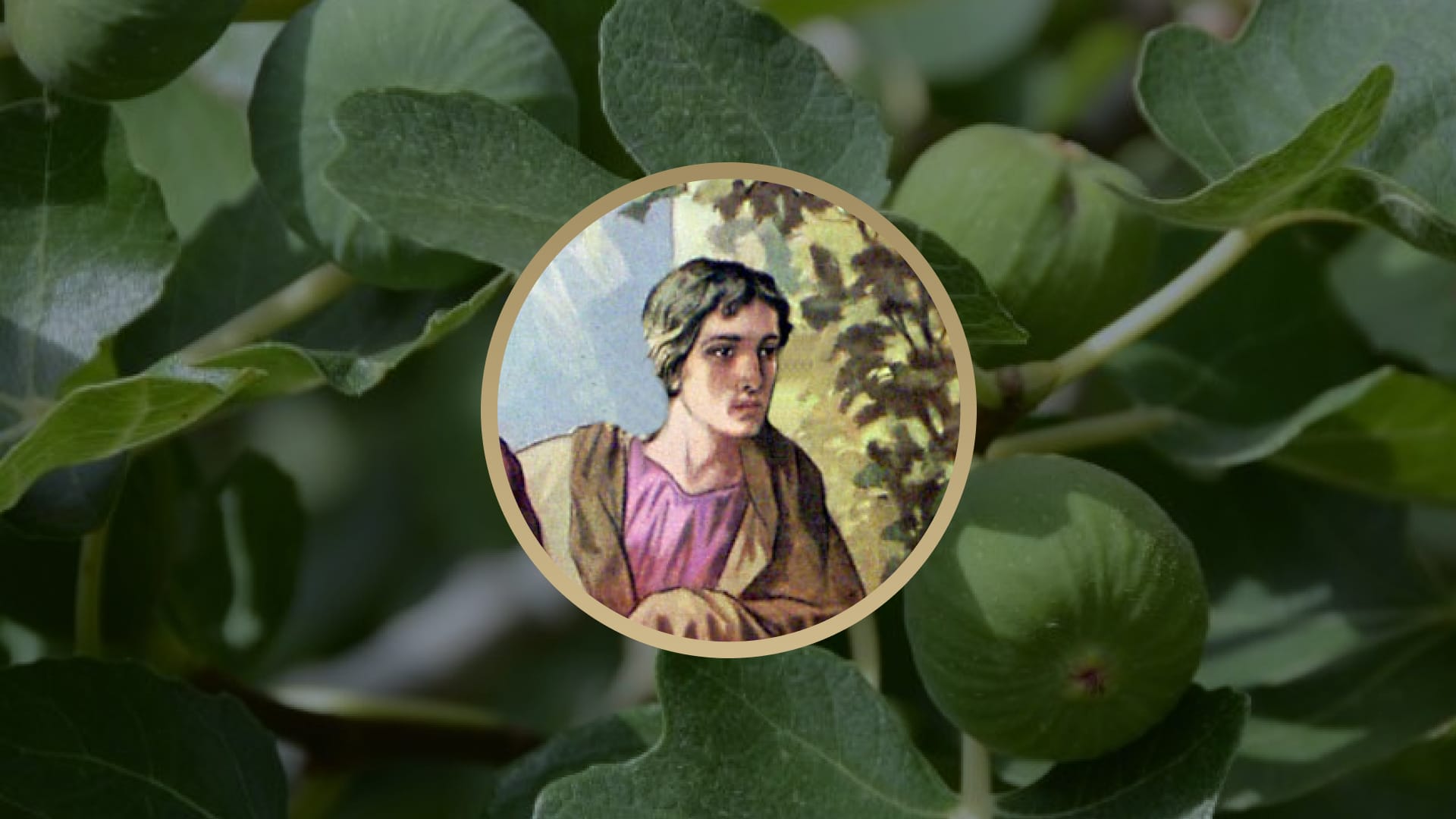
God often uses friendships to point men and women to the narrow way. Good friends encourage one another to follow Jesus. The friendship between Nathanael and Philip apparently existed before these two men became followers of the Lord Jesus.
Philip was a native of Bethsaida, while Nathanael was from the village of Cana. Philip was a Hellenistic Jew with a Greek name that meant “lover of horses.” Nathanael had a Hebrew name which meant “gift of God.”
We do not know how Nathanael and Philip’s friendship began. However, the first person whom Philip wanted to tell about his newly found Messiah was his friend, Nathanael. Perhaps as Jesus and His followers neared the town of Cana, Nathanael’s hometown, Philip ran ahead down the road to go and tell Nathanael the good news! The account of their conversation is given in John 1:45.
“Philip findeth Nathanael, and saith unto him, We have found him, of whom Moses in the law, and the prophets, did write, Jesus of Nazareth, the son of Joseph.” This would have been shocking news to Nathanael! Nathanael was apparently a Galilean himself, and he would have known well the derision heaped upon Galileans, especially those from Nazareth.
According to John 1:46, Nathanael replied to Philip, “Can there any good thing come out of Nazareth?” If Galileans were considered uneducated and backward in their habits, dress, culture, and dialect, then residents of Nazareth were a step lower than that! Even residents of other Galilean cities scorned Nazareth.
Nathanael was apparently very familiar with the Hebrew Scriptures. Thus, he would have been aware of Micah 5:2 which prophesied that the Messiah would come from Bethlehem. At this moment, hearing Philip’s announcement, Nathanael was shocked that his friend would suggest Nazareth, only eight miles south of his own village, as the hometown of the Messiah of Israel!
From the words both parties used in their dialogue, it is certain that Jesus the Messiah and Nathanael had never met before. Nathanael must have wondered that if the Messiah of Israel was a native of Nazareth, why would the news not have spread to Cana? Why should his friend Philip have to tell him about a carpenter’s son from the next agricultural village down the road?
Philip’s answer showed patience and confidence in his friend. He knew that Nathanael, even if unconvinced by his words, would be convinced by the truth itself. Philip encouraged his friend Nathanael to lay aside his misgivings and give his allegiance to the Lord Jesus Christ. “Philip saith unto him, Come and see” (John 1:46).
Thus, Nathanael followed Philip back down the road to meet the Teacher. As the two men neared, the Gospel writer John noted that Christ saw Philip and another man by his side approaching.
We do not have to form our own opinion of the character and virtues of Nathanael. Jesus Himself told us what we need to know. Upon seeing Nathanael, Christ gave him an amazing commendation: “Jesus saw Nathanael coming to him, and saith of him, Behold an Israelite indeed, in whom is no guile!” (John 1:47).
What did Christ mean when He called Nathanael “an Israelite indeed.” Israel means “prince with God.” The Angel of the Lord bestowed upon Jacob this name after the Angel had wrestled with him on the banks of the Jabbok River in Genesis 32.
Much of this conversation between Christ and Nathanael reflected back upon the life of the patriarch Jacob. Soon in this passage, Christ would speak to Nathanael of angels ascending and descending. Christ openly acknowledged that Nathanael had the same quality that Jacob had—he desired the blessing of God above all else.
Christ then added, “in whom there is no guile.” This comment is a very remarkable addition. Jacob, the original Israel, had failed on this very point. Jacob had desired the blessing of God, but he had used guile, deception, and deceit to obtain it. Nathanael, by contrast, was a true Israelite in whom there was no guile!
Naturally, Nathanael was astonished that Christ would give such a glowing pronouncement to a man He had never before physically laid eyes upon. Nathanael responded to Jesus, asking “Whence knowest thou me? Jesus answered and said unto him, Before that Philip called thee, when thou wast under the fig tree, I saw thee” (John 1:48).
Apparently, Nathanael had been under a fig tree when Philip had come to him with the news that he had found the Messiah. Perhaps Nathanael had been, at that very moment, meditating upon Jacob, the vision with the angels of God on the ladder at Bethel, and the wrestling match at the ford of the Jabbok. This is one explanation among several possibilities suggested as to why our Lord said what He did to Nathanael.
Perhaps Nathanael realized, to his complete astonishment, that just as the Angel of the Lord could know the mind of Jacob, so this Man before him could know his thoughts under the fig tree. The conclusion was obvious. The Angel of the Lord and this Teacher were one and the same. The Angel of the LORD Who had named Israel was now standing before him, the embodiment of the covenant given to Israel (Jacob and his descendants) that day at the Jabbok River.
A moment earlier, Nathanael had said, “Can any good thing come out of Nazareth?” Now consider Nathanael’s response to Jesus: “Nathanael answered and saith unto him, Rabbi, thou art the Son of God; thou art the King of Israel” (John 1:49). Up to this point in the Gospel narrative, there had not yet been such a clear statement of Who Christ is. Not even Peter or John had said as much.
First, Nathanael pronounced Jesus Christ to be “the Son of God,” God in the flesh, fully man and fully God. Second, he pronounced Christ to be “the King of Israel.” Christ was wearing no crown nor clothed in purple. But Nathanael did not need a robe or a crown to recognize the King of Israel. If this Man could see him under a fig tree, if this Man could know his thoughts, this Man must be the One promised long ago. If Nathanael was an Israelite indeed, then this Man was the King of Israel indeed!
“Jesus answered and said unto him, Because I said unto thee, I saw thee under the fig tree, believest thou? thou shalt see greater things than these. And he saith unto him, Verily, verily, I say unto you, Hereafter ye shall see heaven open, and the angels of God ascending and descending upon the Son of man” (John 1:50–51).
Indeed, Nathanael would see greater things than these. From the moment that he chose the narrow way, he became a lifelong follower of this Man Whom he had called “the King of Israel.” The fig tree was left far behind, and Nathanael faithfully followed his King to the point of death.
Nathanael was not mentioned again in the Gospel record except in the lists of Christ’s followers. He is the same disciple who was sometimes called Bartholomew, which in Aramaic means “son of Tolmai.” Men in Bible times were often known by the names of their fathers. Simon Peter was sometimes called “Simon Barjona” (Matthew 16:17). Bartimaeus is known simply as “the son of Timaeus” (Mark 10:46). So, Nathanael sometimes went by the name of his father.
Bartholomew (Nathanael) is mentioned in the annals of early church history. His ministry to the Lord Jesus took him to one of the most fascinating people groups in history. Situated between the Black Sea and the Caspian Sea, just to the north of present-day Iran, lies a land of rugged volcanic mountains interspersed by beautiful valleys. This is the land of the Armenians.
Church history records that Bartholomew was crucified upside down in Armenia. While in this position, he was first brutally flayed alive and then beheaded. The cross became for Bartholemew a ladder to heaven. He had chosen the narrow path and gained the martyr’s crown.
In A.D. 310, Armenia became the first kingdom in the history of the world to openly embrace the Gospel of the Lord Jesus Christ. There can be little doubt that one of the chief reasons for this kingdom’s conversion to Christ was the lasting testimony of the faithful martyr, Nathanael.




 21:37
21:37