
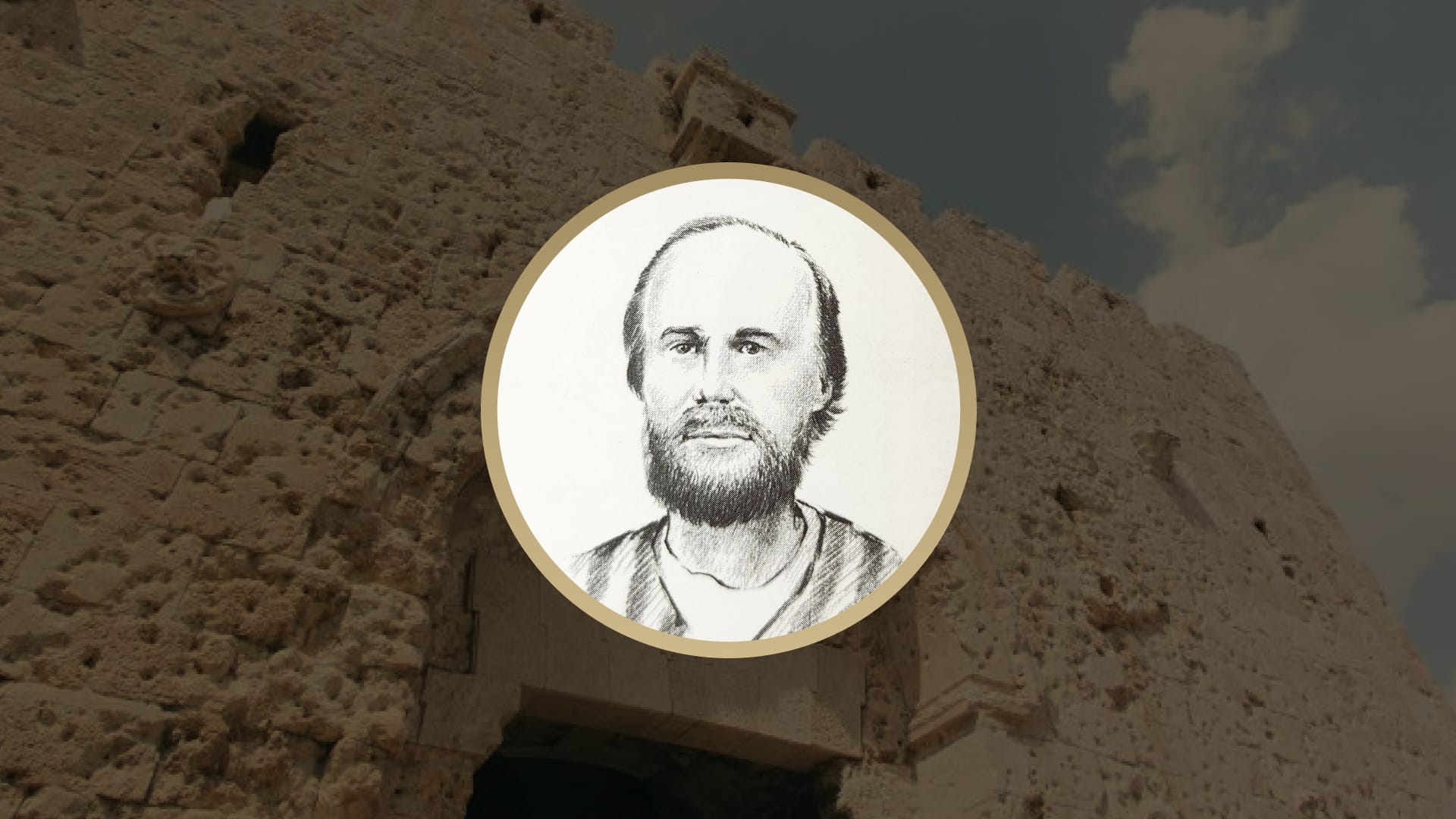
Stephen, the first Christian martyr, was a man of God who consistently and faithfully sought first the Kingdom of God and His righteousness. His name is of Hellenistic (Greek) origin and means “crowned one.” We do not know when or how Stephen first became a believer in the Lord Jesus Christ. He was probably a Hellenistic Jew from Jerusalem who came to trust and follow the Lord Jesus during His public ministry.
The Book of Acts first mentions Stephen in chapter 6. As the early church grew in maturity and in numbers, the burden of caring for widows quickly became a source of contention between Hellenistic and Hebrew Jews. It is no new thing that Satan uses man’s natural inclinations towards selfishness and bitterness to rob local churches of love, unity, and power.
In first-century Jerusalem, Hebrew Jews had a deep cultural distaste for Hellenistic Jews. Although both were descended from Abraham, the Hebraistic Jews gave their children Hebrew names, preserved the Hebrew language, and viewed their Greek counterparts with suspicion and distrust.
Hellenistic Jews were Jewish people who had grown to accommodate Greek ideas and culture since the days of the Maccabees. They often gave their children Greek names, spoke the Greek language, and adopted Greek customs in matters of education and business. Some of the disciples of Jesus were obviously of Hellenistic background. Andrew, the brother of Peter, had a Greek name. Philip also had a Greek name that means “lover of horses.”
At times, Jesus ministered Hellenistic Jews. On one occasion He was approached in Jerusalem by these Jewish people. They came first to Philip and Andrew, possibly because these two disciples shared the same cultural background of these particular Jews. The visitors said to Philip, “Sir, we would see Jesus” (John 12:21). It is possible that Stephen himself was in this Hellenistic delegation who wanted to meet the Lord Jesus.
As the church in Jerusalem grew, the Hellenistic Jews complained that their widows were being neglected in preference for the Hebraistic Jewish widows. The apostles decided, under the leadership of the Holy Spirit, that their important work of preaching and evangelizing could not be interrupted in order to resolve such disputes. So they appointed seven deacons—a Greek word that simply means “minister” or “servant”—to take care of the matter.
Then the apostles charged the congregation: “Wherefore, brethren, look ye out among you seven men of honest report, full of the Holy Ghost and wisdom, whom we may appoint over this business” (Acts 6:3). Stephen was named as the first of these seven deacons. Along with the other deacons, his duty was to collect the offerings and then distribute these funds equitably among all the widows in the church, regardless of a widow’s cultural background. As a Hellenistic Jew, Stephen could allay the fears of the suspicious complainants. His duties required a selfless spirit of sacrifice to put aside personal interests and preferences to serve the needs of all the members of the congregation.
As a result of the work of Stephen and the six other deacons, “And the word of God increased; and the number of the disciples multiplied in Jerusalem greatly; and a great company of the priests were obedient to the faith” (Acts 6:7).
But the great enemy of the Church did not stop his attacks. Unable to divide the Jerusalem church from within, Satan launched another attack from without. Stephen soon attracted the enmity of the Jewish sects that did not believe in the Lord Jesus as the Messiah of Israel. According to Acts 6:8, “And Stephen, full of faith and power, did great wonders and miracles among the people.”
As a result, certain synagogue leaders disputed with Stephen but “they were not able to resist the wisdom and the spirit by which he spake” (Acts 6:10). Thus, they hired false witnesses to give untrue testimonies against Stephen, to accuse him of uttering “blasphemous words against Moses and against God” (Acts 6:11).
Under the charge of blasphemy, Stephen was taken before the same Sanhedrin that had condemned the Lord Jesus only a few months earlier. The Bible describes the scene as the Sanhedrin looked with bitter hatred upon an upright, humble deacon who did his best to obey the teachings of his Master. “And all that sat in the council, looking stedfastly on him, saw his face as it had been the face of an angel” (Acts 6:15).
When accused by the high priest, Stephen skillfully and respectfully made his defense. The man was not an orator by nature. Nor was he a Hebrew of the Hebrews as was the young rabbi in the room, Saul of Tarsus. Stephen had not trained at the feet of Gamaliel.
As a Hellenistic Jew, he would have been despised by the Sanhedrin. But his earnest sermon proved that he had a deep, powerful knowledge of Holy Scripture. Jesus had promised that His Holy Spirit would be with His disciples in the hour of persecution and would give them the words to say. Christ was faithful to His promise.
Stephen began his defense. He opened regarding God’s covenant with Abraham, and he traced the history of God’s people through the days of the patriarchs to the days of Joseph. The falsely accused deacon made a point of emphasizing that Joseph was despised by his brothers, yet he was the one God used to save the very brothers who hated him.
Stephen continued. He described Moses as the deliverer of his people, and yet Moses also was hated by the people that he loved and delivered. Stephen next traced the apostasy of God’s people and how they had rejected their own deliverance.
He compared the Jewish Sanhedrin sitting before him with the brothers who had hated and despised Joseph and with those Jewish rebels who had rejected the authority of Moses. At the climax of his sermon, Stephen boldly proclaimed to an astonished Sanhedrin, “Ye stiffnecked and uncircumcised in heart and ears, ye do always resist the Holy Ghost: as your fathers did, so do ye” (Acts 7:51).
The enraged Sanhedrin bristled under this powerful condemnation! According to Acts 7:54, “When they heard these things, they were cut to the heart, and they gnashed on him with their teeth.” Yet, in the face of their hatred, Stephen manifested a spirit of confidence and Spirit-filled meekness.
“But he, being full of the Holy Ghost, looked up stedfastly into heaven, and saw the glory of God, and Jesus standing on the right hand of God, And said, Behold, I see the heavens opened, and the Son of man standing on the right hand of God” (Acts 7:55–56). In that hour of sacrifice, Stephen was given the privilege to see his Lord and Master standing at the portals of Heaven to receive him into glory—the Lord’s first New Testament martyr!
Upon hearing Stephen’s testimony, “Then they cried out with a loud voice, and stopped their ears, and ran upon him with one accord, And cast him out of the city, and stoned him: and the witnesses laid down their clothes at a young man’s feet, whose name was Saul. And they stoned Stephen, calling upon God, and saying, Lord Jesus, receive my spirit” (Acts 7:57–59). The young man Saul would remember the scene he had just witnessed for many years to come.
The dying martyr, suffering the humiliation, pain, and agony of death by stoning, followed the example of His Master. With no word of reproach, Stephen loved his enemies and prayed for them aloud with his final breath. “And he kneeled down, and cried with a loud voice, Lord, lay not this sin to their charge. And when he had said this, he fell asleep” (Acts 7:60).
The hymn, “The Son of God Goes Forth to War,” was written by Reginald Heber. In the second stanza, he recounted the martyrdom of Stephen in these inspiring words:
The martyr first, whose eagle eye could pierce beyond the grave;
Who saw his Master in the sky and called on Him to save.
Like Him, with pardon on His tongue in midst of mortal pain,
He prayed for them that did the wrong!
The stanza ends with this question, calling upon us to follow Stephen’s example:
Who follows in His train?