
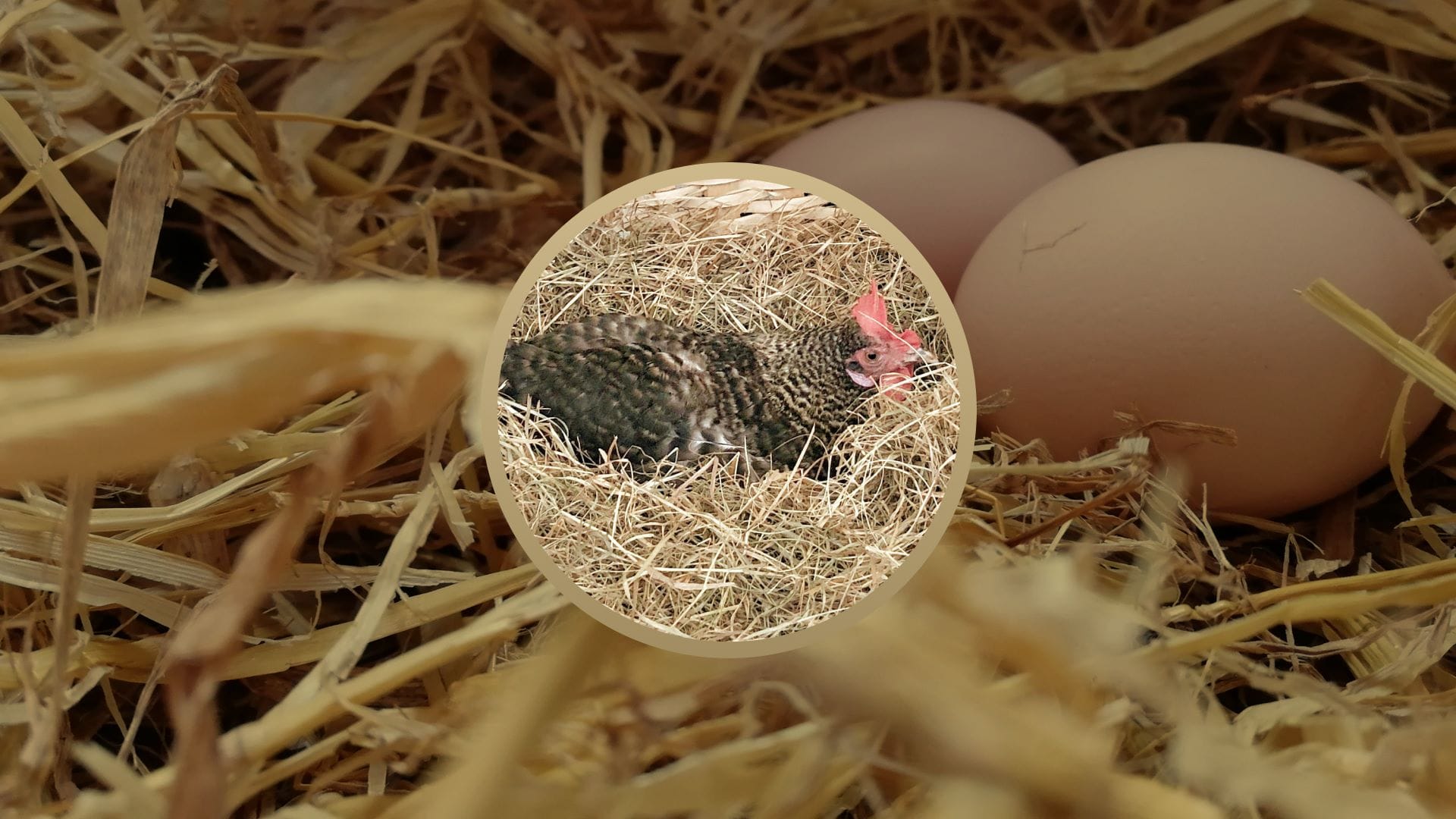
A hen clucked as she stirred about on her nest in the hayloft of a Parisian stable. She gently turned the one egg she was guarding. Satisfied, the hen then settled down to continue her rest for the remainder of the summer night.
It was 2:00 in the morning on August 24, 1572. Those familiar with the history of the Huguenots of France will shudder at the mention of the date. For the inhabitants of Paris on that fateful night, there was no apparent cause of alarm. All seemed well. True, there was always a rumor of bloodshed between Protestants and Roman Catholics. However, the wars seemed to be at a lull, and open hostilities had ceased. Besides, the Roman Catholic daughter of Catherine de’ Medici had just been given in marriage to the Protestant son of Jeanne d’Albret. Would not this alliance produce peace in France?
To celebrate the marriage, Admiral Coligny and the Prince de Condé, the two Huguenot leaders, had been invited to Paris to rejoice in the peaceful settlement. Religious toleration had been promised, and Huguenots were to be free to worship God as they desired.
In Paris in his bedchamber that night on August 24, Admiral Coligny rested peacefully. He had led the Huguenot armies to victory on many bloody fields, and it seemed that the most recent military victory had bought him and his fellow Huguenots the toleration they had sought. Coligny was still in the prime of life, and although he was past fifty years of age, he could endure any hardship of the battlefield and hours in the saddle with no apparent fatigue. He was admired by friend and foe alike for his courage, humility, determination, and steady integrity.
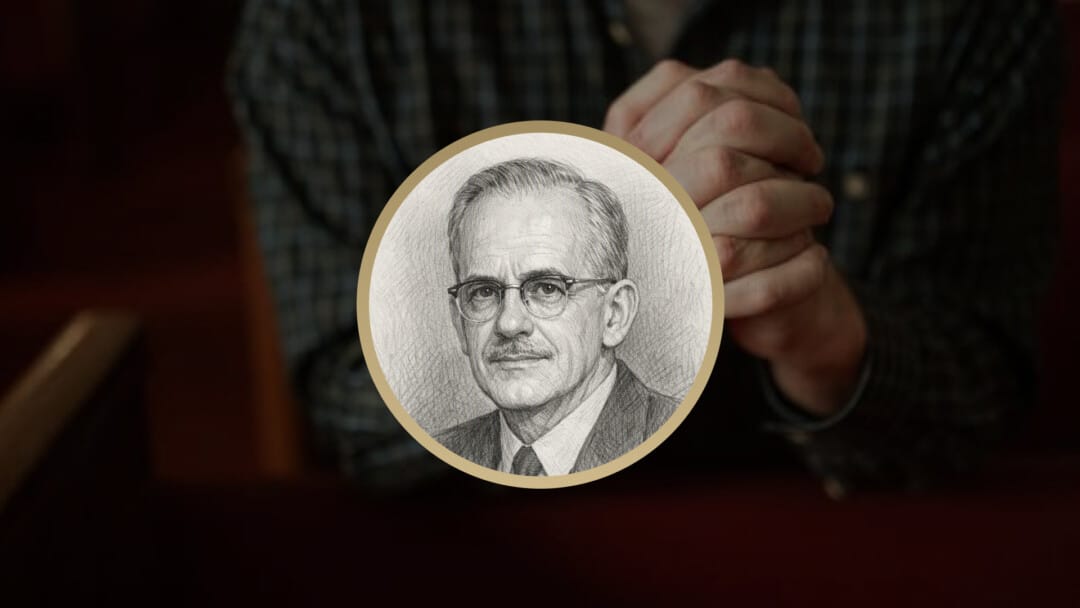
Nearby on a cot slept the admiral’s chaplain, a Huguenot pastor named Pierre Merlin. Merlin had long served Admiral Coligny as a military chaplain in all his campaigns and also as the pastor of the Admiral’s castle church.
A beloved pastor, Merlin was a faithful friend of Admiral Coligny’s family and a trusted leader of the Huguenot church. Daily at the great table in the dining room of the castle, Coligny would call on his chaplain to read a chapter of the Bible and then lead the family in a psalm. Coligny’s wife and children loved Pastor Merlin! The clergyman was respected even by the servants and peasants surrounding Coligny’s castle at Châtillon-sur-Loing.
That night, however, in Paris, the Protestant pastor was out of place. He had accompanied Coligny here to lead in the Huguenot worship services and to be the Admiral’s faithful counselor.
Suddenly, the early morning stillness was broken by the tolling of the great bell in the tower of the church of Saint-Germain l’Auxerrois. It was the sounding of matin chimes, the usual early morning call to prayer. Pastor Merlin was unfamiliar with the Papist matin chimes, so his only response was to turn over in his bed at the sound. Outside in the hayloft, the nesting hen turned the egg nestled beneath her, and then calmly tucked her beak back into her feathers.
Meanwhile, this was no ordinary matin chime. It was a prearranged signal for a band of determined, desperate murderers! Quietly, the Roman Catholic Duke of Guise buckled on his sword. Sworn to secrecy, the duke’s men-at-arms silently tucked their daggers into their girdles and assembled in the street.
King Charles IX, the young son of Catherine de’ Medici, broke out into a cold sweat as he heard the bell toll. His heart pounded within him—he knew what the sound signaled! His mother, the real power in the kingdom, had convinced him to go along with the plot hatched by the Duke of Guise. Now, sweating profusely, the young king sent one of his servants to call off the planned massacre. But it was too late!
The intended first target of the attack would be the great Huguenot leader, Admiral Gaspard de Coligny. With him dispatched, the general massacre could begin. Stealthily in the early morning darkness, Besme, a Bohemian servant of the Duke of Guise, led a small party of determined assassins to the door of the house where the Admiral was lodging. The men knocked loudly, demanding admission in the name of the King! The servant who answered the knock was instantly killed, and the armed ruffians streamed into the courtyard, butchering all those who stood in their path.
Upstairs, the Admiral and the pastor both sat up, and their eyes met. Coligny was a man of war. His trusty sword lay at his side. If his wife and his children had been in the house, the Admiral would have most certainly resisted to the death. But the Admiral was alone with a few of his most faithful retainers and men-at-arms. These faithful servants nobly stood at the top of the stairs and constructed a hasty barricade to buy their master some time at the price of their own blood. One after one, they were cut down after ferocious resistance.
Meanwhile, redeeming the time his servants were affording him, Coligny quickly arose from his bed and stood in his chamber. Looking at his faithful pastor, he asked Merlin to pray. Merlin arose from his cot and immediately sought God’s grace upon themselves, their families, and the people of France.
Next, a servant, panting and bleeding, rushed into the room and cried out to Coligny that the enemy was near! The Admiral said to Merlin, his retainers, and his men-at-arms, “I have long been prepared to die. Save your lives, if you can. You cannot save mine. I commend my soul to the mercy of God.”
Admiral Coligny realized that France needed Pastor Merlin. If the Admiral were to die and if the massacre were to become general, as in beyond a few targeted attacks, then France would need her pastors. As he considered the cost, he knew it was his duty to die, and it was Merlin’s duty to live.
The pastor and the Admiral had only a brief moment to say their goodbyes. Merlin grasped the hand of Coligny and took a last look at the man he had so long served. Then, as Besme and his men slashed their way into the room, Pastor Merlin leaped out the window into the dark courtyard below.
Upstairs, Besme burst into the room and demanded, “Are you the Admiral?” As did his Lord in the Garden of Gethsemane, Coligny answered his interrogators simply and calmly, “I am he.” With a fiendish laugh, Besme drew his sword and vehemently plunged it into Coligny’s body. Then Besme pulled his sword from the Admiral’s body and dealt a horrific blow to the Admiral’s head. Coligny fell without a cry and almost without a shudder. The servants of the Duke fell upon the corpse and mutilated it cruelly, then fiercely threw the lifeless body out the window.
The terror of that tragic day—St. Bartholomew’s Day—has been told often. Coligny was only the first of 10,000 Huguenots slain in Paris alone. That Sunday, August 24, 1572, was a day of gruesome bloodshed. Women and children were also butchered in the general massacre. For several days, the massacre continued across France until about 60,000 of France’s best citizens were killed.
During those long, agonizing days, God preserved Pastor Merlin in that stable hayloft in the courtyard outside Coligny’s lodging. To venture from his place of concealment would be certain death. The God Who had preserved the prophet Elijah at the brook Cherith providentially preserved Pierre Merlin in that hayloft.
Similarly, as God used the ravens to bring provision for Elijah, so now God used that hen for Pastor Merlin. There in the hayloft where Pastor Merlin sought refuge, the hen faithfully laid one egg each day. The egg contained just the amount of daily water and nutrition he needed to sustain life for several days until the bloody massacre ended.
Merlin’s preservation was not an isolated event. Two other Huguenot pastors, de Luce and Breng, were preserved in the same way—by means of a single, daily egg. Another Huguenot pastor, Du Moulin, was providentially preserved by a spider after the pastor had taken refuge in a large baking oven! Upon his seeking shelter in the oven, a spider immediately came and wove a dense web over the door handle of the oven. From his hiding place, the pastor could hear his persecutors outside declare that he could not be in the oven chamber as the spider’s web indicated that the door had not been opened in a long time! Similar stories of God’s provision and protection abound from those dark days of intense persecution and martyrdom.
Indeed, France would need her pastors in the days to come. Merlin lived on to shepherd the widow and orphans of Admiral Coligny. He also guided the Huguenots of France through the following few stormy years, serving as moderator of the next National Synod. In that role, he provided needed comfort and stability to the Huguenot cause.
The God of Elijah was also the God of Pierre Merlin, and that God is still our God today! He can use a hen, a raven, and even a tiny spider to preserve His people. We ought to give thanks for the manifold acts of His providential care, even in the little details of life!
Sources and Further Reference:
Foote, William Henry. The Huguenots, or Reformed French Church. Harrisonburg, VA: Sprinkle Publications, 2011.