
According to Genesis 17:7, God Almighty promised the patriarch Abraham, “And I will establish my covenant between me and thee and thy seed after thee in their generations for an everlasting covenant, to be a God unto thee, and to thy seed after thee.”
God has never forgotten His promise, nor has He ever been unfaithful to His covenant. By sending His Son, the Lord Jesus Christ, Jehovah has truly become our Emmanuel, a God to us, with us, for us, and among us. He is an immanent God Who stoops low to meet the needs of His children.
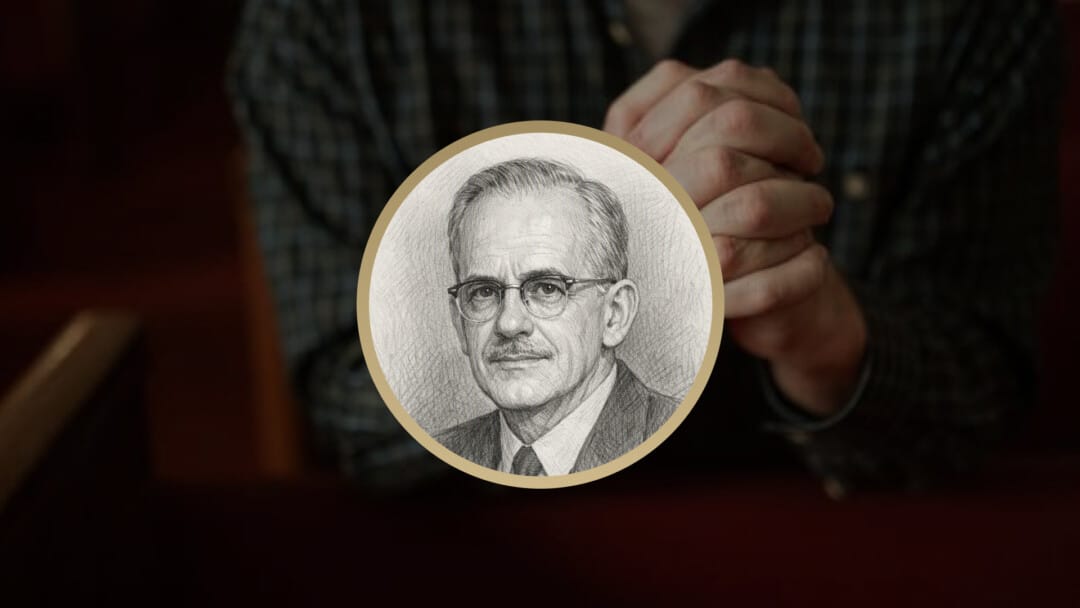
Pastor Andrew Duncan described himself in his last will and testament in this way: “a sinful wight [creature or human being], Christ’s unworthy minister in His glorious gospel.” Andrew Thomas Duncan was a minister of the Kirk (Church) of Scotland in the little fishing village of Crail, in the shire of Fife. Fife lies on the east coast of Scotland.
Born during the time of John Knox, Duncan faithfully preached the truth in his own generation. He was an uncompromising, bold preacher of the Gospel. As a result, throughout his long ministry, he and his family suffered much for the cause of righteousness.
In 1606, Pastor Duncan was tried and found guilty of high treason for participating in the famous Assembly of Aberdeen. At this assembly, a few bold Scottish ministers had assembled in defiance of the will of King James I. By resisting the royal prerogative of the monarch to rule on ecclesiastical matters, they had brought down the wrath of the king.
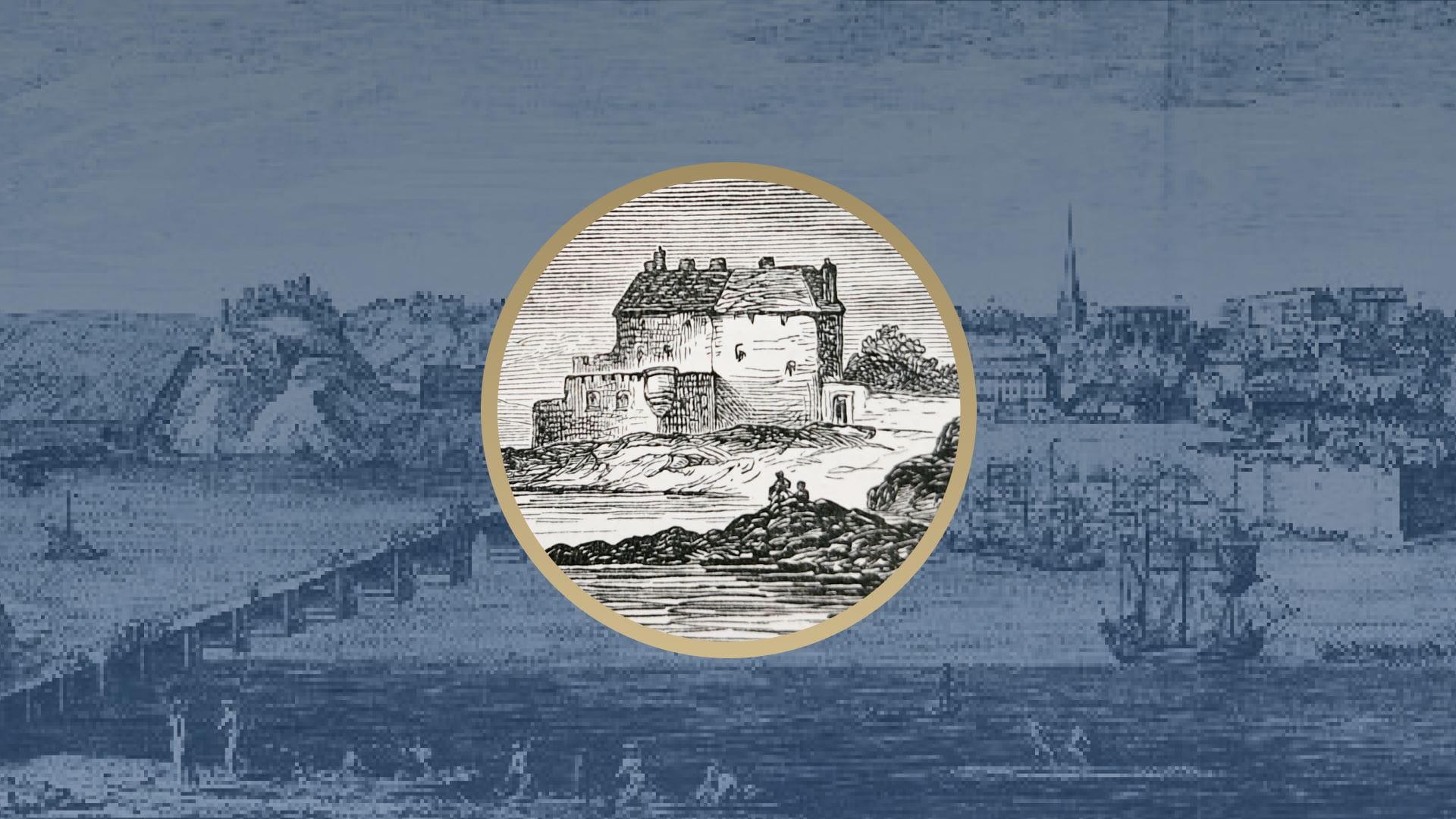
For participating in the protest at Aberdeen, Duncan was sentenced to be confined in Blackness Castle, a bleak fortress on the southern shore of the Firth of Forth. After a fourteen-month imprisonment, Pastor Duncan was banished to France. After a brief sojourn there, he boldly returned to his native Scotland to continue ministering God’s Word.
For many years, Pastor Duncan traveled from place to place and preached the Gospel of Christ. He was united in marriage to a Godly young Scottish lass, and together the Duncans raised six children. On several occasions during these hard years, Pastor Duncan was arrested. He often very narrowly escaped with his life.
In 1619, Duncan joined with other faithful Scottish ministers in opposing the Five Articles of Perth, in which the Scottish Church was required to conform to the forms and ceremonies of the English episcopal system. For his opposition, Duncan was summoned to appear before the High Commission Court at St. Andrews. There at his trial, he boldly likened the prelates, who accepted the English ceremonies, to three Biblical characters: Esau who sold his birthright for a mess of pottage; to Balaam, who loved the wages of unrighteousness; and to Judas, who betrayed the Lord for thirty pieces of silver. For this audacious speech, the Archbishop of St. Andrews deposed Duncan and commanded him—on pain of death—to leave Scotland forever.
Pastor Duncan dearly loved his wife and six children; he could not bear the thought of separation from them. Boldly, he decided to take them with him across the River Tweed to Berwick, in the extreme northern tip of England. There, just across the river from his beloved Scotland, he was still under the rule of King James, but outside the reach of the Archbishop of St. Andrews.
Shortly after arriving in Berwick, Duncan’s wife was close to delivering another child. The labor was difficult, and the lonely father despaired for the life of his wife and unborn child. The banished minister had no friends in Berwick. To search for a midwife to assist her would make himself known and to risk discovery by those who sought his life.
Andrew Duncan had no other recourse than to call upon Jesus, the Prince of life, to send deliverance in their hour of need. Slowly and reverently, the pastor knelt on the ground, took off his Scottish bonnet, and laid it on the bed. His wife, far progressed in her labor, took hold of her husband’s hand as he bowed his head to pray. The older children stood solemnly around the bed, joining in their father’s petition.
It was after midnight, and the streets of Berwick were silent. As the father finished his prayer, he encouraged his wife saying, “We serve a gracious Master.” His wife acknowledged God’s goodness, expressing the hope that the God Who had never forsaken them before would stand by them now.
Suddenly, a horse snorted outside! The family froze in momentary fear at the thought of discovery. But Duncan advanced to the door and opened it. There stood a woman, clad in the neat, plain garment of a country gentlewoman.
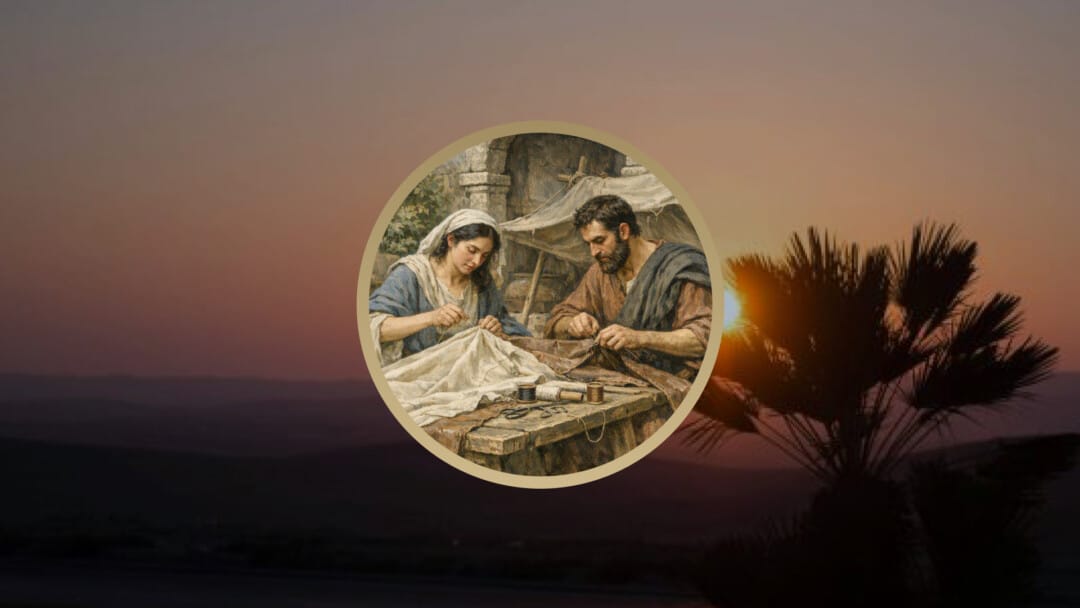
Not knowing what else to do, Duncan cautiously admitted the stranger into his wife’s bedchamber. The visitor sent the boys, John, William, and David, scurrying to stoke the fire. The older daughters assisted as the visitor directed them. Duncan sat by the side of his wife and prayed. A few short minutes later, the visitor delivered the baby with no complications. Once the newborn infant was washed and nestled contentedly in the weary mother’s bosom, the lady produced a basket containing provisions and an abundance of fine linen. She then handed the grateful father five pieces of gold, telling him to be of good comfort, that he and his wife should not lack anything they needed.
The visitor then bade the Duncans farewell. The father and children accompanied her to the yard. Andrew Duncan took her hand and asked her what her name might be, in order that they might know how to thank their Heavenly Father for her kindness. The lady smiled, gently shook her head, and then turned and mounted her horse. Their eyes streaming with tears of gratitude for their Heavenly deliverance, the Duncans watched her ride off into the night. They never saw the gentlewoman again.
Amazingly, the man who was willing to be a martyr was not destined to die a martyr’s death. He had rebuked both king and archbishop, and had, similar to Elisha of old, always eluded their grasp.
In 1626, Andrew Duncan died in his bed, surrounded by his wife and family. The pastor who dearly loved his family left a last will and testimony that is still treasured by his grateful descendants. Here is an excerpt from that testimony:
I, Andrew Duncan, a sinful wight, Christ’s unworthy minister in His glorious Gospel . . . set down the declaration of my will: First, as touching myself, I leave my soul to Christ Jesus who gave it, and when it was lost, redeemed it, that He may send his holy angels to transport it to the bosom of Abraham. As for the children whom God hath given me, I leave them to His providence, beseeching Him to lead them by His gracious spirit through this evil world and make them profitable instruments, both in kirk and commonwealth, beseeching them on the other part to set God before their eyes, to walk in His ways, holding their course to that glorious and fair-to-look-on heritage, which Christ hath conquered for them, and all them that love him.
The children and grandchildren of Andrew Duncan did indeed “hold their course.” One of his sons was privileged to shed his blood as a martyr. Others of the Duncan children and grandchildren were banished from their homeland to faraway Virginia. From Virginia, many of the Duncans traveled over the mountains into Kentucky. To this day, Andrew Duncan has descendants who continue to give thanks for their goodly heritage and for the tokens of God’s immanent goodness.
Sources and Further Reference:
Howie, John. The Scots Worthies. Edinburgh, Scotland: Johnstone, Hunter, and Company, 1870.