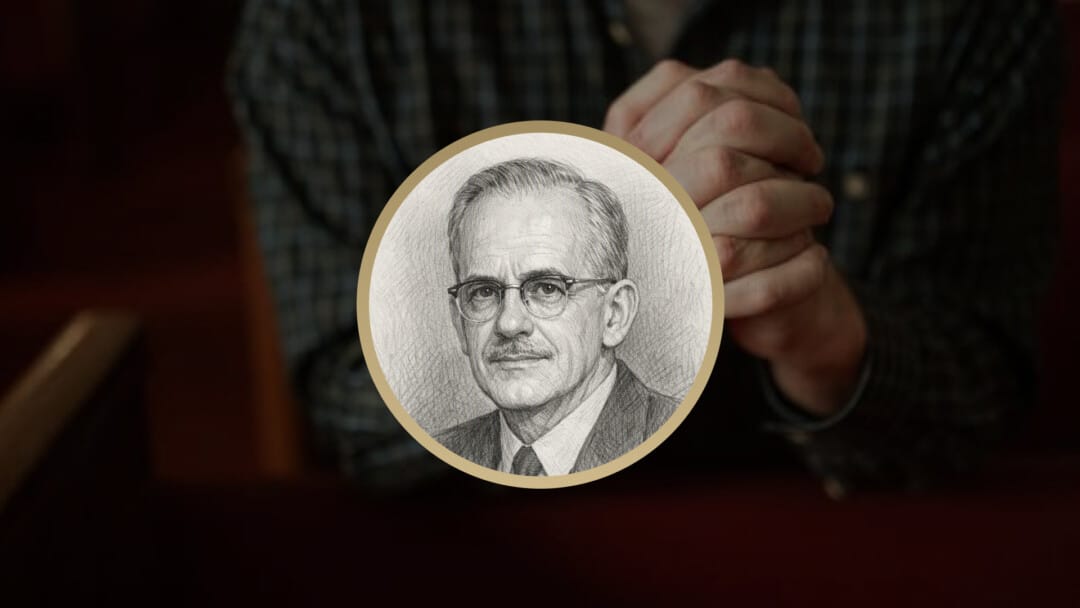

In 1570, a boy named Henry Ainsworth was born to a farmer and his wife in Norfolk, England. Very little is known of the boyhood days of this lad. His family, though not of the wealthy class, did have the means to send their son to Cambridge University. Henry studied first at St. John’s College and then moved to Caius College.
During his university days, he applied himself diligently to the study of ancient languages. His attainments in Greek were good. Yet it was particularly in Hebrew that he distinguished himself, studying independently under a rabbi and eventually gaining a reputation as one of the foremost Hebraists of his day. Henry Ainsworth was destined to render the Hebrew psalms into the English vernacular so that God’s people could sing His Word in their own language.
It is not known when Henry Ainsworth first began to associate with the Separatists. What we do know, however, is that he left Cambridge before finishing his degree. He began meeting with the Separatists in London where a Separatist church formed in 1592. This church was congregational in government and simple in worship. It rejected many of the forms and ceremonies of the State Church of England. There Ainsworth, at the young age of twenty, was given opportunities to present expository teaching from the Scripture.
Queen Elizabeth and her court viewed the Separatists as troublemakers and dissenters. The Separatists’ pastor, Francis Johnson, was imprisoned. Under severe government opposition, this particular gathering of Separatists began to gradually leave England and seek refuge in Holland, similar to what the famous Pilgrims would do several years later.
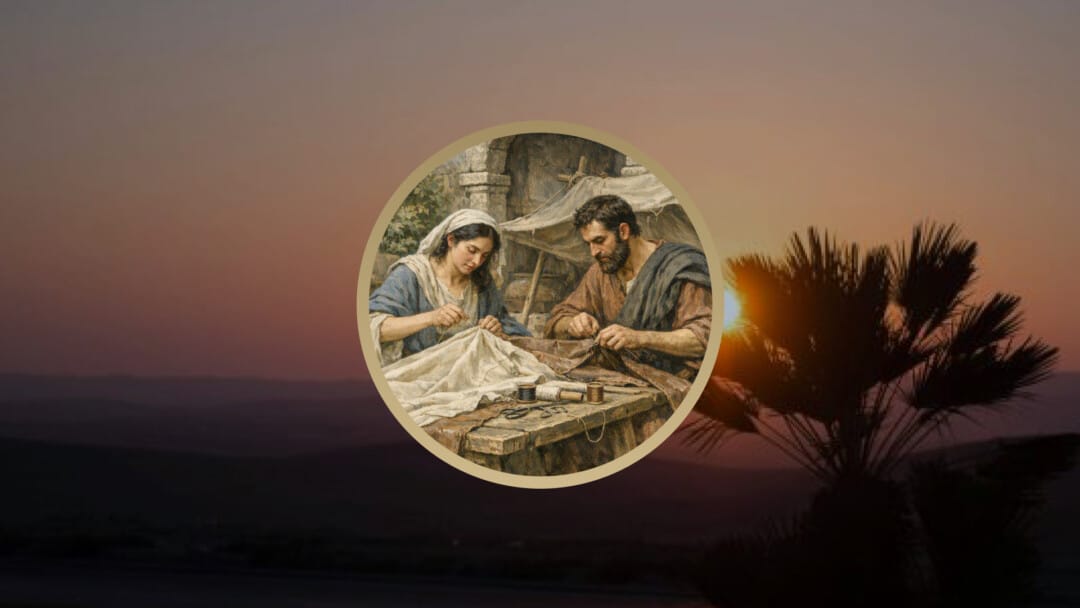
Henry Ainsworth left England in 1593 when he was twenty-three years old. He found refuge in Amsterdam with the other Separatists who had come here from England before him. In Amsterdam he found employment as a porter to a bookseller. At first, he was given the ordinary tasks of a porter, which was making deliveries, and was he paid barely enough to keep him from starving.
Soon the bookseller was astonished to discover that his young English porter was familiar with the Hebrew language. As a result, he introduced Ainsworth to the circle of scholars in Amsterdam. This introduction set Ainsworth about translation work, starting him down the road in which he would find his life’s work.
While the pastor of the Separatist church, Francis Johnson, was in prison, the church appointed Ainsworth as their doctor, or teacher. At this time, Ainsworth was regarded as a mild-mannered man, and his sermons were edifying to the saints who sat under his preaching.
Throughout several stormy years of controversy in Amsterdam, Ainsworth continued to teach. His sermons were expository and very sound. It was said that he “taught well without tossing and turning the book.” He was always at his best as an expository teacher.
Ainsworth was also very direct, and sometimes his direct, sharp style offended others around him, especially when he tried to settle controversy. Described in person as “very modest, amiable, and sociable,” yet, as the Pilgrim William Bradford wrote, Ainsworth was “something smart in his style” in his writings. During this period, without an ordained minister in the pulpit, the church went without taking the Lord’s Supper or administering the sacrament of baptism.
In 1597, Francis Johnson returned from prison to take up his role again as pastor of the Separatist church in Amsterdam. For several years, Pastor Johnson and teacher Ainsworth worked together well. In 1607, Ainsworth wrote a work titled The Communion of Saints. This outlined his strong belief in congregational church polity.
As the years passed, tensions slowly grew in Amsterdam. Complete religious liberty allowed all men everywhere to worship God as they saw fit, with little or no authority at all. Johnson’s church was the first Separatist one in the city and was thus called the “Ancient Church.” Another congregation of English Reformed believers was established in 1605. This church was governed after the presbyterian system and was led by a pastor named John Paget. Two years later, in 1607, English Separatist minister John Smyth led a group of Separatists to Amsterdam, and these believers started worshipping with the Ancient Church.
Soon, Smyth left the church due to Ainsworth and Johnson using English translations in their preaching rather than preaching directly from the original text. Smyth’s group later became Anabaptists and joined the Mennonites in the city.
In 1608, the men and women we know as “Pilgrims” came to Amsterdam and began worshipping at the Ancient Church. They stayed only about nine months. As William Bradford noted in his journal, “When they had lived at Amsterdam about a year, Mr. Robinson, their pastor, together with the most discerning of the others, seeing that Mr. John Smyth and his followers had already fallen out with the church which was there previously, and that nothing could avail to end the quarrel, and also that the flames of contention were likely to break out in the parent church itself (as afterwards, alas, came to pass); they thought it best to move.”
Eventually, Pastor Johnson saw that the Ancient Church had little order and was a collection of strongly opinionated individuals. By 1610, the church had grown to approximately 300 members. Pastor Johnson saw the need to give more authority to appointed elders in the church. However, to Henry Ainsworth, this suggestion sounded like presbyterianism, and he reacted strongly to such a proposition.
On December 16, 1610, Ainsworth led some of the members away from Pastor Johnson’s church. The group who seceded formed their own congregation and took an extreme congregational stand on the matter of church polity. He led this group which comprised the larger part of the former church’s congregation to an old synagogue two doors down the street. This synagogue became their meeting place.
Not content with the church split, Ainsworth and his followers filed a lawsuit against Pastor Johnson and the other believers, declaring that the ownership of the original building should properly belong to them. This accusation added fuel to the “flames of contention” that Pilgrim William Bradford had noted. Henry Ainsworth and his group eventually won the lawsuit and were awarded the original building. Pastor Johnson and his followers left Amsterdam and went to Germany.
Henry Ainsworth led what remained of the Ancient Church until his death in 1622 at the age of fifty-two. During his last years on earth, he published his famous Annotations, expository works on the first five books of Moses and also on the Song of Solomon and the Psalms. These works commanded respect for the scholarship of Ainsworth and gave him a lasting place in the scholarly tradition of English dissenters.
However, another work was before him. Believing that God wanted to commune directly with His children, Henry Ainsworth saw the value of giving his fellow believers a vernacular psalter that was faithfully translated, clear, accessible, and enjoyable to sing.
Although the Pilgrims spent only nine months with Henry Ainsworth, he made a lasting contribution to their lives and worship. Ainsworth, sharing the Pilgrims’ opinion that the Sternhold and Hopkins psalter was of “so harsh and hard a phrase that they knew not what they meant, neither could they sing them with understanding,” composed his own metrical version of David’s psalter.
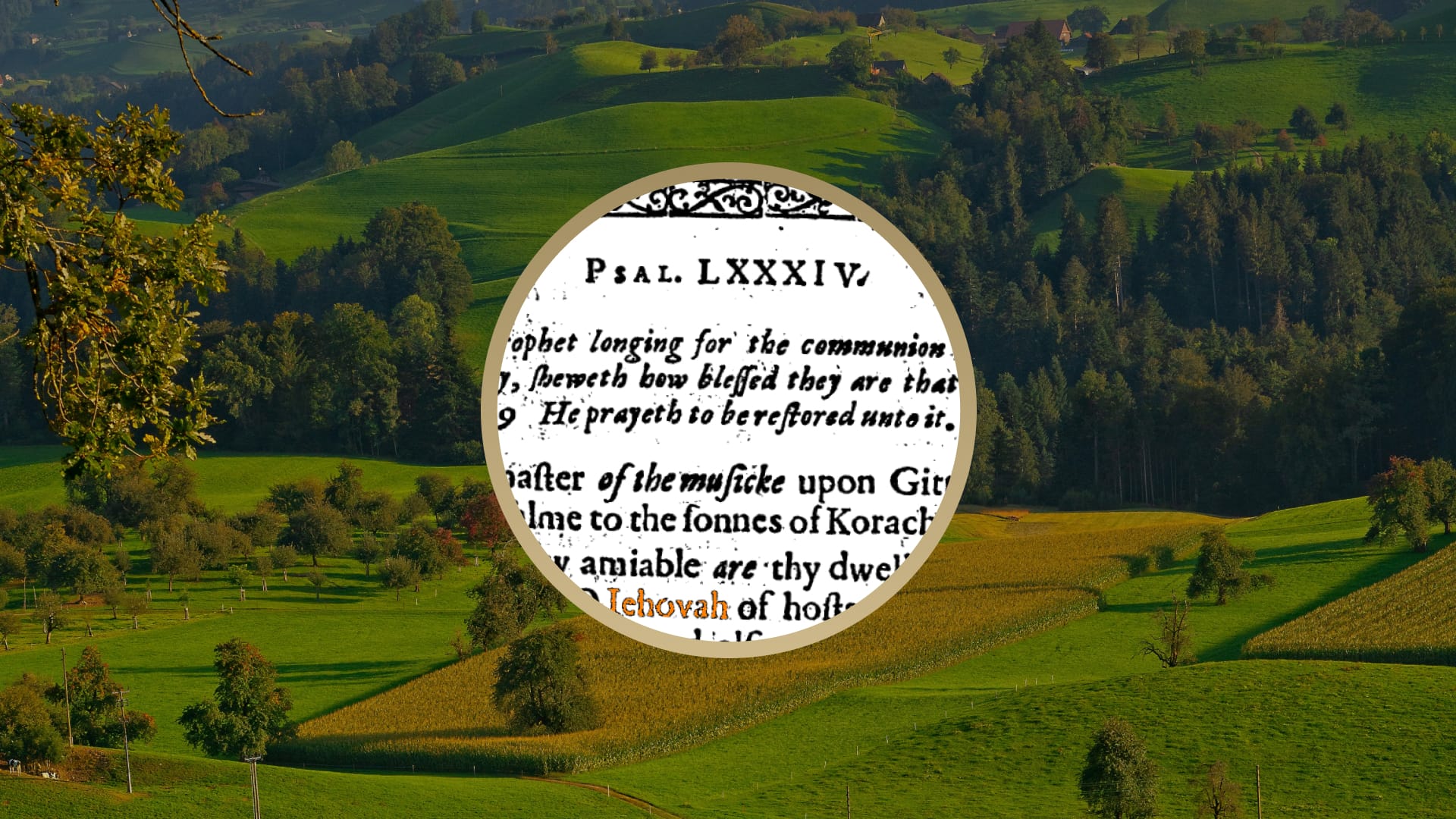
Ainsworth titled his version The Book of Psalmes: Englished both in Prose and Metre. The Pilgrims readily adopted this psalter for their use in worship and carried it with them to the shores of America. Ainsworth’s knowledge of Hebrew, his love for the Scriptures, and his penetrating vocabulary make this psalter one of the most accurate metrical psalters, even while it lacks something in poetic polish. The Pilgrims loved the powerful and plain language of Ainsworth’s psalter, and it was this book of accurately translated psalms from the Bible that gave them courage as they crossed the Atlantic on the Mayflower and established their colony in Plymouth.
Sources and Further Reference:
Bradford, William. Of Plymouth Plantation. San Antonio, TX: Vision Forum, 2011.