

What a privilege it must have been to grow up in the home of Mary and Joseph! According to Matthew’s Gospel, Jesus had brothers and sisters. This information was noted in a response of the people when Jesus visited His hometown of Nazareth.
After Jesus had taught in the synagogue in Nazareth, a confused response arose from the residents of the village. “And when he was come into his own country, he taught them in their synagogue, insomuch that they were astonished, and said, Whence hath this man this wisdom, and these mighty works? Is not this the carpenter’s son? is not his mother called Mary? and his brethren, James, and Joses, and Simon, and Judas? And his sisters, are they not all with us? Whence then hath this man all these things?” (Matthew 13:54–56).
Clearly, the residents of Nazareth were well acquainted with the family of Joseph and Mary. Five boys were in the family: Jesus, James, Joses, Simon, and Judas. The couple also had an unspecified number of daughters.
Several confusing and unnecessary theories obscure the best and most natural reading of the text in order to accommodate a Roman Catholic view of the perpetual virginity of Mary, the mother of Jesus. The most natural reading of the Scripture is that Mary and Joseph had other natural children born after the birth of Jesus. Indeed, Matthew 1:25 suggests that Joseph did not know his wife in the normal intimate way until after the birth of the Lord Jesus.
Mary and Joseph seem to have had a happy, vibrant home, filled with the sound of many pattering little feet. In the family, Jesus was firstborn, and He was unique as the virgin-born son. The other children, however, seem to have filled the home in rapid succession! James and Jude were two of these sons, half-brothers of Jesus because all came from Mary’s womb, but Joseph was physically the father of James and Jude while he was not the biological father of the Lord Jesus.
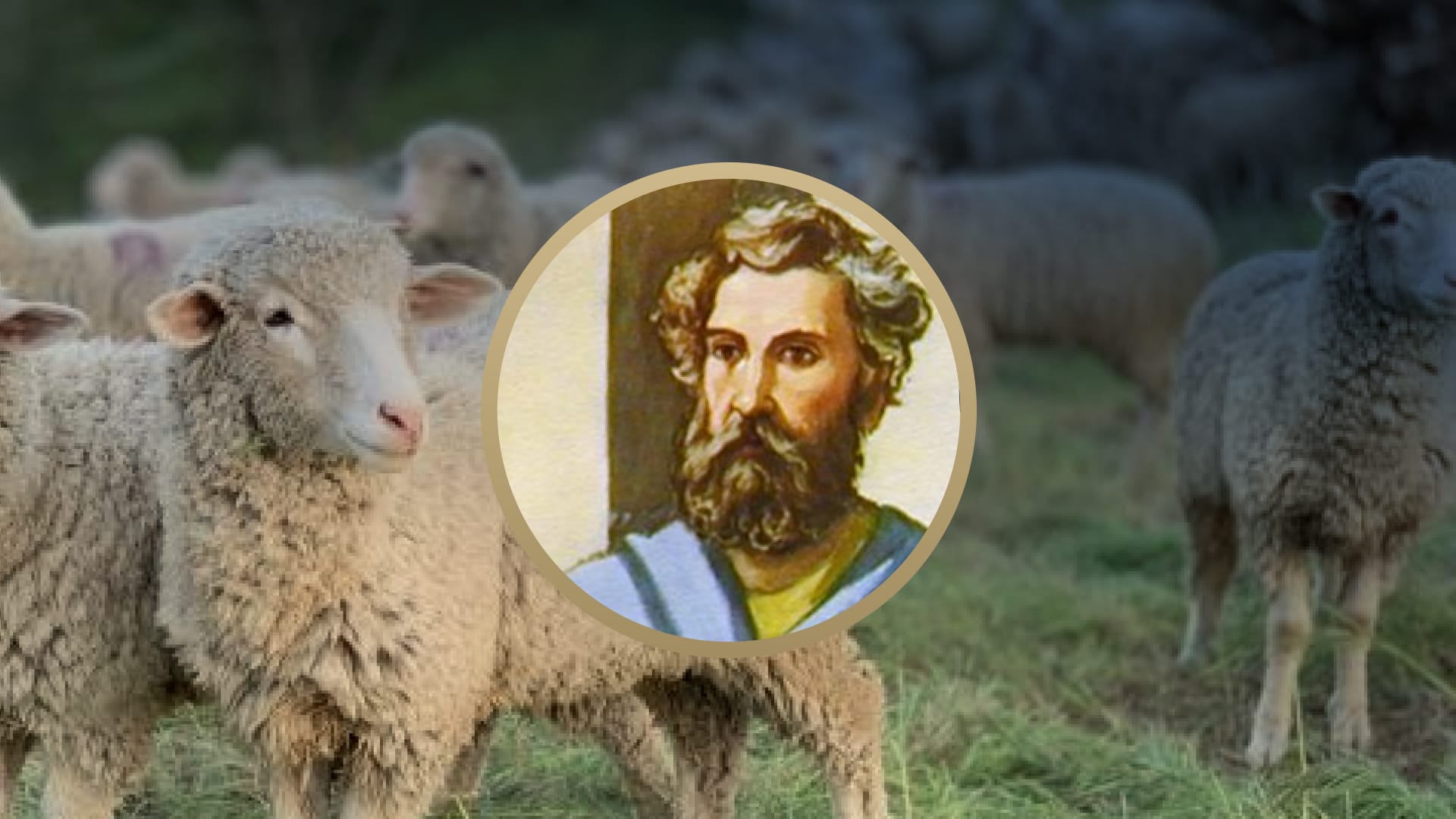
Leaving consideration of James for another time, in this article we are going to consider specifically the life of Jude, one of the younger half-brothers of Jesus. Jude grew to become a man who believed in and wholeheartedly followed the teaching of his divine older Brother to “beware of false prophets.”
In the New Testament, three prominent men were named Jude. First, there was Jude the Apostle, sometimes called Thaddaeus or Lebbaeus; second, Judas Iscariot, the betrayer of the Lord; and third, Jude, the half-brother of the Lord Jesus.
In God’s providence, there were two “brother teams” who were called James and Jude. Many have suggested that Luke 6:16 acknowledges that James the Less and Judas Thaddaeus were brothers. These brothers were apostles of the Lord. James and Jude, the Lord’s half-brothers, were the authors of the epistles that bear their names. The fact that there were two sets of brothers named James and Jude has given rise to the many difficulties in tracking their identities.
According to John 7:5, James and Jude, the half-brothers of the Lord Jesus, did not at first believe in Him. The two men as boys had been reared in the same home with Jesus. They had seen the perfect, complete obedience Jesus had rendered to His mother Mary and to Joseph. They had observed His sinless decorum toward His half-brothers and half-sisters. The siblings had witnessed His perfection in His every word and deed. Probably and naturally, some measure of jealousy, anger, and bitterness arose in the fleshly, sinful hearts of His siblings.
James and Jude initially did not believe in Jesus and His claims. According to John 1:5, “And the light shineth in darkness; and the darkness comprehended it not.” Furthermore, darkness has always resented the light since “men loved darkness rather than light, because their deeds were evil. For every one that doeth evil hateth the light, neither cometh to the light, lest his deeds should be reproved” (John 3:19–20).
In the Old Testament, Cain slew his brother Abel because “his own works were evil, and his brother’s righteous” (I John 3:12). Similarly, Jesus’ public ministry work was not appreciated by His natural half-brothers and half-sisters. They may have been among those who “went out to lay hold on him: for they said, He is beside himself” (Mark 3:21, 31).
Only after the resurrection of Jesus did His half-brothers, James and Jude, come to trust in His Messianic work. In the Book of Acts, some information is gleaned about the life and testimony of James; however, less is known about the Lord’s other half-brother, Jude.
The little that is known about Jude is that he was the author of the epistle that bears his name. Like James, Jude introduced himself in a humble way: “Jude, the servant of Jesus Christ, and brother of James, to them that are sanctified by God the Father, and preserved in Jesus Christ, and called: Mercy unto you, and peace, and love, be multiplied” (Jude 1). Also, like his brother, in his salutation Jude also called himself the “servant of Jesus Christ.”
While the Epistle of James is a warm exhortation to obedience written for believers, Jude’s epistle is a strong warning against false teachers. Jesus had warned that “wolves” would come disguised as “sheep.” Jude wrote to warn the early church of the dangers of heresy and subtle errors creeping into doctrine and practice. His stated purpose for writing his epistle is in verse 3: “Beloved, when I gave all diligence to write unto you of the common salvation, it was needful for me to write unto you, and exhort you that ye should earnestly contend for the faith which was once delivered unto the saints.”
In both form and substance, the Epistle of Jude is very much like the Second Epistle of Peter. It is forceful. It is terse. It is direct. His letter draws heavily upon Old Testament history. Some scholars believe that either Peter or Jude drew from the other, but it is uncertain which letter was written first.
Jude’s letter ends with a stirring and hopeful doxology. This closing was the prayer of Jude the Lord’s half-brother for the rising future of Christianity. Jude’s burning passion was that we, the followers of Christ who would come after Him, would preserve untarnished the pure and unadulterated Christianity that the Lord’s Apostles left us as our legacy. In verses 24–25, Jude prayed for believers then and for us now: “Now unto him that is able to keep you from falling, and to present you faultless before the presence of his glory with exceeding joy, To the only wise God our Saviour, be glory and majesty, dominion and power, both now and ever. Amen.”
Jude’s common name led to a confusion with Judas Thaddaeus, which somewhat obscures any record of his public ministry. However, knowing who this apostle was is not his intention for writing his epistle. Jude wrote in order that believers then and now might be very watchful for the insidious danger of false prophets.
Jude certainly would not have hoped that we would emulate him, but that we would emulate his Master, his own half-brother, Whose life he had observed minutely from childhood and in Whom Jude had found no fault. To that Savior, Jude gave “glory and majesty, dominion and power, both now and ever.” His epistle invites us to join him with our own affirming “Amen!” to that doxology.