

When our Lord Jesus read from the scroll given to Him in the synagogue in Nazareth, He opened to Isaiah 61:1. The passage is where the prophet Isaiah spoke of the coming of the Messiah. Thus, Jesus read to the people: “The Spirit of the Lord GOD is upon me; because the LORD hath anointed me to preach good tidings unto the meek; he hath sent me to bind up the brokenhearted, to proclaim liberty to the captives, and the opening of the prison to them that are bound.”
“Proclaiming liberty to the captives.” Human slavery is one form of captivity and has had a long and troubled history. Oftentimes, the topic has been oversimplified. Slavery also has been colorblind in mankind’s history. White men have enslaved white men and women. Black men have enslaved black men and women. Black men have enslaved white men and women. And white men have enslaved black men and women.
Into the mix of human slave history, we must include Arabs, Jews, and the cultures of the Far East. Slavery has existed in one form or another since the fall of mankind in the Garden of Eden. Similar to the ugly reality of war, slavery is one of the consequences of sin and death.
In God’s Word, slavery was a recognized part of ancient culture, both in the Old Testament as well as the New Testament. Abraham owned slaves. Philemon, a church leader in Colosse, also owned slaves. In passages such as Ephesians 6, the Apostle Paul carefully instructed masters to treat their slaves well, and to slaves he wrote that they were to honor their masters with a respectful and obedient attitude.
Wherever the Gospel triumphs in culture, pagan practices are put away, women are exalted to stations of domestic happiness, warfare is regulated by Biblical boundaries, children are loved and valued, and the evils of slavery are mitigated.
One of the darkest cultural ills in eighteenth century England was the African slave trade. Instead of seeing Africa as a mission field, many Europeans selfishly sought to enrich themselves by profiting at the expense of their fellow men. On the dark continent, petty tribal kings and African warlords began to realize that if they raided other tribes and enslaved their enemies, they could sell these men and women to European traders on the African coast!
Selfishness and greed often begets more selfishness and greed. Ship masters and merchants realized immense profits by exploiting these tribal rivalries for their own interests. Sugar cane and indigo plantations in the Caribbean depended upon manual labor. Thus, the cycle of the African slave trade was perpetuated by this intensely selfish cruelty.
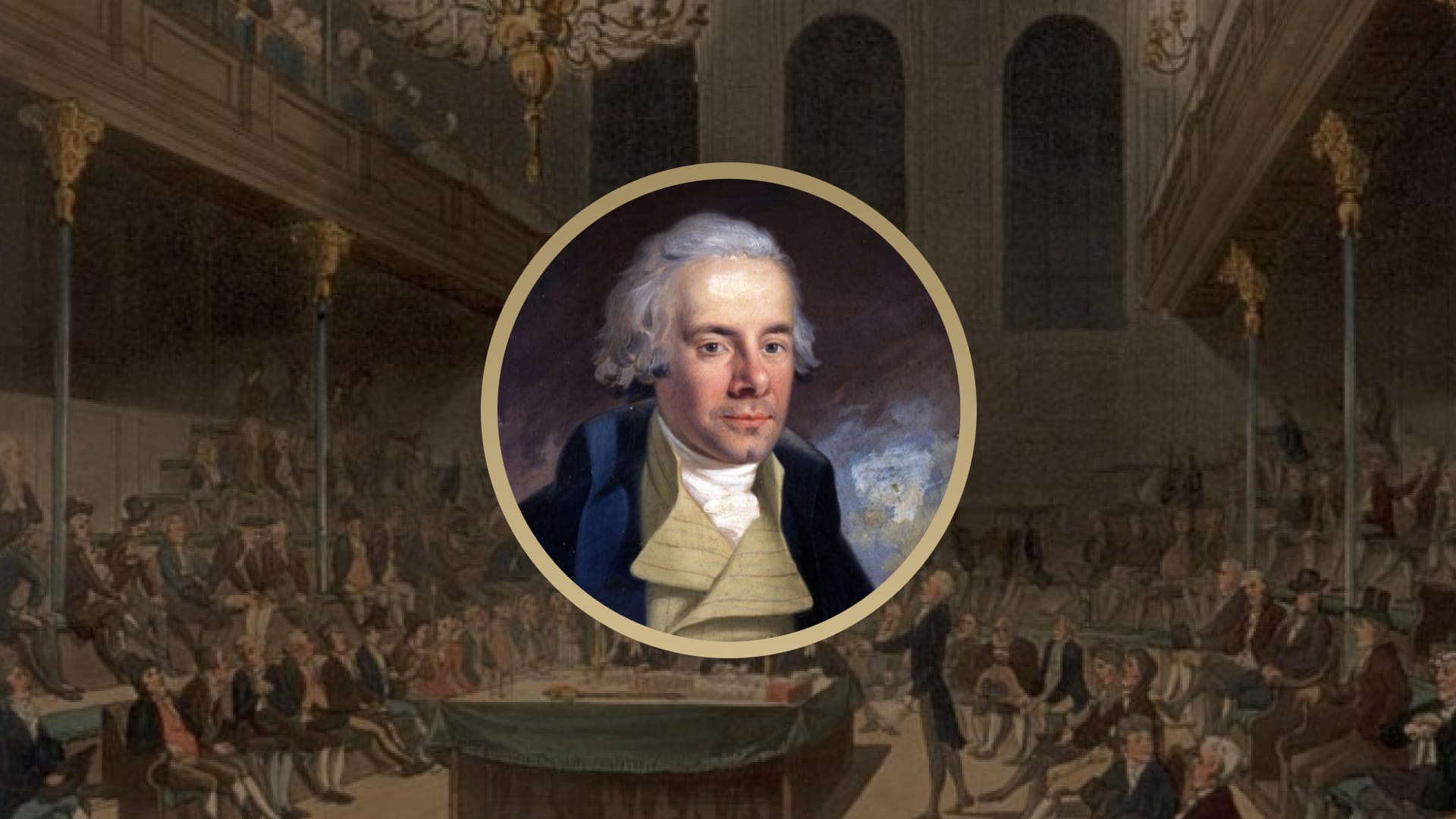
More than any other one man, a British politician named William Wilberforce was raised up as an instrument in the hands of God to put an end to the human-enslaving practices of the British Empire.
William Wilberforce was born on August 24, 1759. In the generation before his birth, the Great Awakening had swept through the British Isles and the American colonies, bringing men to Christ and triggering many positive changes in British culture and society. Taverns closed. Brothels ended their illicit business. Crime dropped dramatically. Yet, the African slave trade continued to maintain its hold upon British merchants who were unwilling to give up such a lucrative enterprise.
Many Christians at the time justified slavery as an opportunity to “Christianize” the Africans by bringing them to British colonies, such as Georgia and South Carolina, where they could be exposed to the Gospel. But others realized that it is never right to do wrong in order to do right. Regardless of whether or not owning slaves is itself sinful, we know from the Word of God that man-stealing is always wrong.
William Wilberforce grew up in the Church of England. His father was a wealthy merchant. As a boy, William struggled with poor health and bad eyesight. His Aunt Hannah and another relative, John Thornton, had been financial supporters of George Whitefield in the previous generation. Their influence upon young Wilberforce created in him a hunger for the Gospel.
However, by the time Wilberforce entered Cambridge, these pious influences had been all but forgotten. He indulged in the pleasurable social life at Cambridge. He played cards. He drank alcohol late into the night. He gambled his lavish inheritance. He indulged in immorality.
During these college days, William Wilberforce formed a deep friendship with another student named William Pitt, who would become the future Prime Minister of Great Britain. After graduation from Cambridge, Wilberforce and Pitt set out to enter politics. At the age of twenty-one, Wilberforce was elected to Parliament. He was a small, sickly man, but he had a large voice and could speak with authority. One who witnessed him in Parliament compared him to a little shrimp! But when he rose to speak, the eyewitness noted that “the shrimp became a whale”!
While on a trip to continental Europe in 1785, William Wilberforce read a short book by Philip Doddridge that was titled, The Rise and Progress of Religion in the Soul. The book changed his life. The truths of the Gospel, planted in his heart as a boy, germinated and bore fruit.
After his salvation, Wilberforce began to read his Bible with burning interest. He formed new friendships with Christians. John Newton, the author of the hymn “Amazing Grace,” became a close friend. Wilberforce considered leaving Parliament to enter the ministry, but men such as Newton convinced him that he could serve the Lord effectively using his God-given talents and connections in Parliament.
Wilberforce increasingly grew to see the evil effects of the African slave trade upon British culture. His friend John Newton had experienced it firsthand. But slavery was an uncomfortable subject! Such a controversial topic would require great skill and statesmanship to end the African slave trade. Wilberforce would need to become, as Christ had instructed His disciples, “wise as serpents, and harmless as doves” (Matthew 10:16).
In 1797, Wilberforce met a young lady named Barbara Spooner. He was almost forty years old. Until now, he had shown little interest in marriage. But very soon he was deeply in love! After only eight days of courtship, he proposed to Miss Spooner, and she accepted! The two were married a month later. The Lord blessed their marriage richly. William and Barbara Wilberforce had six children, and their home life was a picture of domestic bliss.
Wilberforce continued to labor long and patiently for the one object that became the driving force of his life—the ending of the African slave trade. He wrote. He lobbied. He spoke. He sought to convince others. He waited. He tried again. Finally, after many years of constant, patient effort, the Slave Trade Act was passed in the British Parliament in 1807, effectively ending the British slave trade.
Afterward, Wilberforce became the champion of other righteous causes. He advocated for mission efforts in India and Africa. He worked to enforce laws against blasphemy, lewdness, cursing, and drunkenness. He sought better conditions for work animals in Great Britain. He moved on from seeking the end of the slave trade to advocating for the abolition of slavery itself.
The Slavery Abolition Act was finally passed in 1833, and Wilberforce, who was not well at the time, died only three days after its passage. He was buried in Westminster Abbey and was remembered by grateful people throughout the world.
Sources and Further Reference:
Metaxas, Eric. Amazing Grace: William Wilberforce and the Heroic Campaign to End Slavery. New York, NY: HarperOne, 2007.


 21:36
21:36