

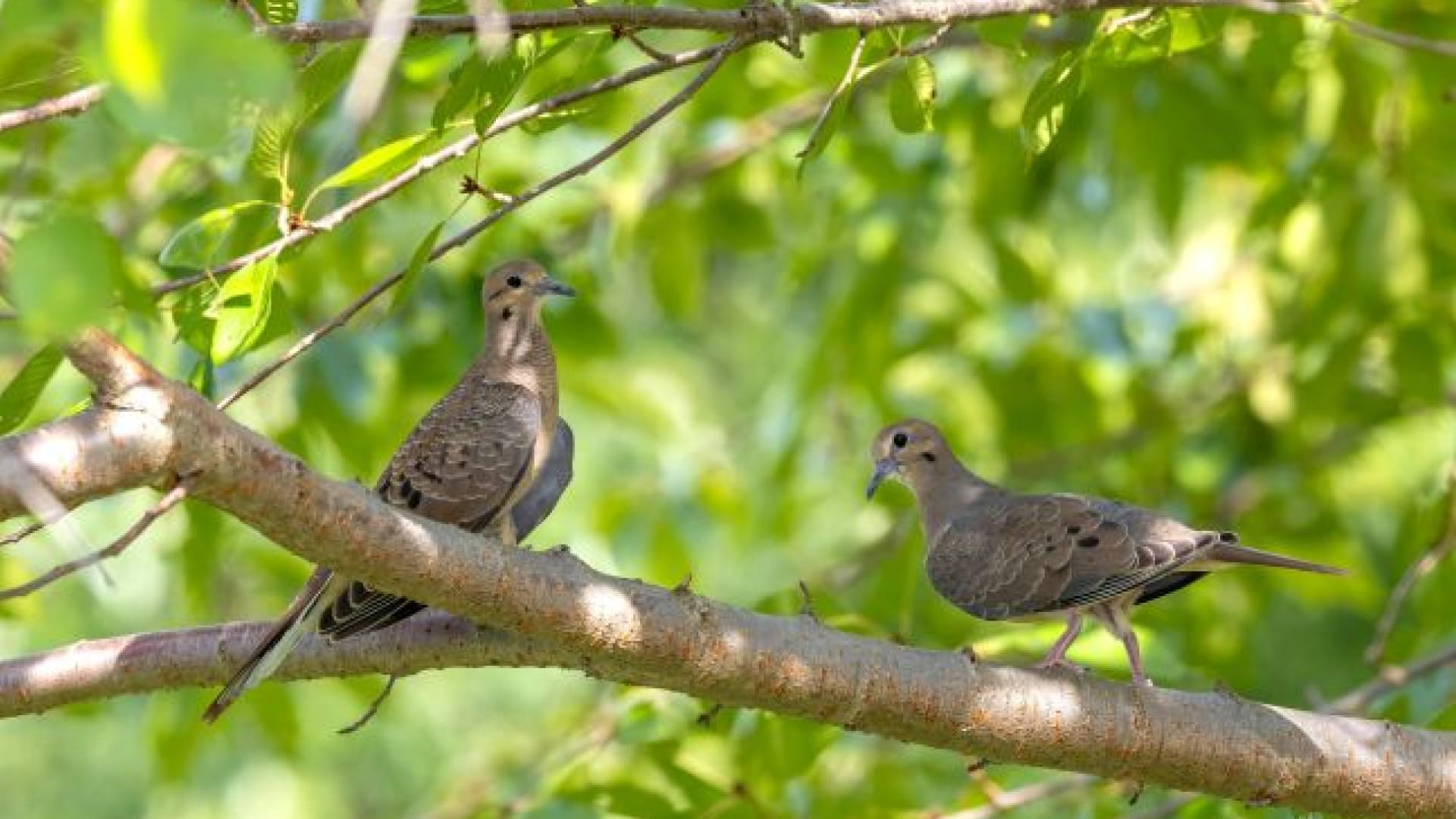
In the Song of Solomon, there is a reference to the spring and early summer as the “time of the singing of birds.” Since the dawn of time, birds have been a picture of love. Even in popular culture, we speak of “love birds,” “nesting season,” and “mother hens.”
Solomon said of the springtime, “My beloved spake, and said unto me, Rise up, my love, my fair one, and come away. For, lo, the winter is past, the rain is over and gone; The flowers appear on the earth; the time of the singing of birds is come, and the voice of the turtle is heard in our land; The fig tree putteth forth her green figs, and the vines with the tender grape give a good smell. Arise, my love, my fair one, and come away” (Song of Solomon 2:10–13).
Throughout the Bible, just as the Lord points to the ant to teach diligence, the coney to teach trust, and the lion to teach courage, on several occasions He also points to the birds to teach lessons of faithful marriage and loving parenthood. Let’s consider a few noteworthy examples.
The turtledove examples gentleness
In the context of Song of Solomon, the turtledove is specifically in view. When we read in the Bible “the voice of the turtle,” the Scripture is referring to the song of the turtledove. The European turtledove is similar in habits to the American mourning dove. The bird is gray with speckled wings and gives a low, murmuring coo. It is known for its gentleness and is a sign of peace. According to Song of Solomon 1:15, the beloved says to her lover, “thou hast doves’ eyes.” The turtledove is a creature that exhibits to us that we also are to be gentle.
The eagle examples faithfulness
According to Deuteronomy 32:11, the Lord compares Himself to an eagle: “As an eagle stirreth up her nest, fluttereth over her young, spreadeth abroad her wings, taketh them, beareth them on her wings.” Although Americans tend to think of their native bald eagle when they read these words, the species the Lord is referring to is the Eurasian griffon.
This massive bird has a nine-foot wingspan, and it nests high on rocky ledges in the mountains. Griffons usually raise only one chick at a time, and the parents spend many months feeding and caring for it. The incubation period is sixty days, and the chick will not be fledged for another 140 days. Both parents devote their energy to the care of their chick for this entire period. The eagle is a dynamic example from nature that reinforces God’s intention that husbands and wives are to be faithful to each other and to their children.
The quail examples love
When Jesus Christ wept over the city of Jerusalem according to Luke 13:34, He compared Himself to a mother hen. “O Jerusalem, Jerusalem, which killest the prophets, and stonest them that are sent unto thee; how often would I have gathered thy children together, as a hen doth gather her brood under her wings, and ye would not!” Although we mentally assume the reference is to a barnyard hen, the bird usually kept in domestication by the people in Biblical times was the common quail.
A game bird lays many eggs, sometimes over a dozen in a season. The hen (female) will gather her chicks under her wings at night for security. She will shelter them when dangers such as thunderstorms threaten. The story has been told of instances where a mother bird will sacrifice her own life by sheltering her chicks from the searing heat of a prairie fire, dying willingly so that her unfledged chicks will live. The quail, specifically the mother hen, is an example to husbands and wives of the value of Christlike sacrificial love.

 27:22
27:22