
Not all of the Apostle Paul’s companions were faithful to the end. Some, such as Timothy, started and ended well. Others, such as John Mark, started out poorly; however, as time went by and to God’s glory, he ended well.
Yet, sadly, there were some, such as Demas, who started well but ended poorly.
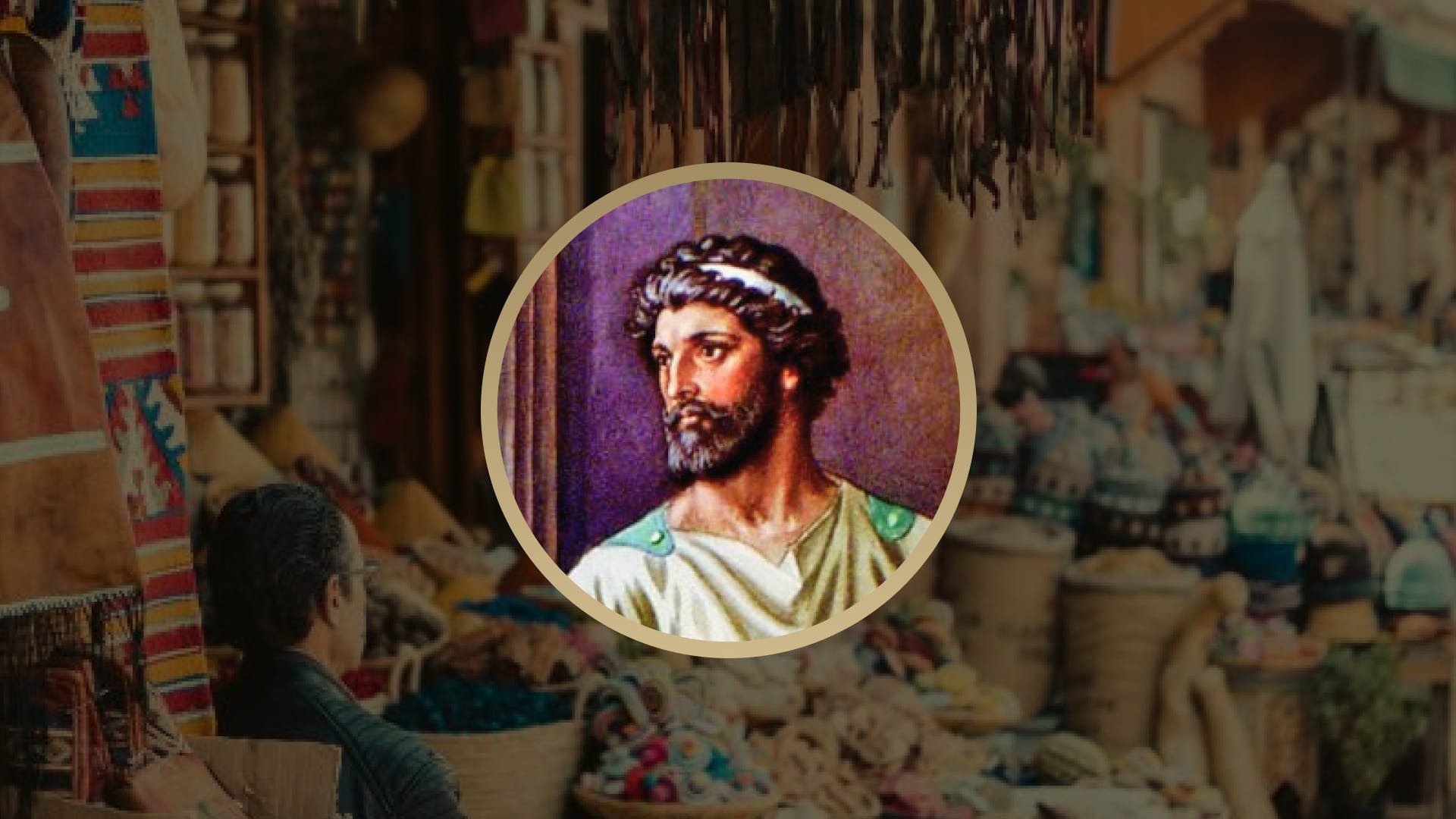
Not much is known about the life or circumstances of the man in Scripture named Demas. His name means “governor of the people,” and possibly he may have had a pagan background. At some point, Demas became a follower of the Lord Jesus Christ.
Demas is named in three places in the New Testament. Each mention was in an epistle by Paul.
In a letter that the Apostle Paul wrote to the Colossians, he mentioned Demas in a warm, friendly way: “Luke, the beloved physician, and Demas, greet you” (Colossians 4:14). When Paul wrote the letter, he was in Rome during his first imprisonment. Thus, the apostle sent greetings from his close friends and companions in Rome to the believers at Colosse.
Demas is mentioned in the letter alongside Luke, one of Paul’s most faithful friends. Indeed, Demas shared Paul’s hardships, sent love to the Colossian believers, and apparently joined Paul and his companions in earnest prayers for the health and life of the church of Colosse.
In a personal letter sent alongside this letter to Colosse, Paul also wrote to Philemon. In this other letter, he again mentioned Demas. He wrote, “There salute thee Epaphras, my fellowprisoner in Christ Jesus; Marcus, Aristarchus, Demas, Lucas, my fellowlabourers. The grace of our Lord Jesus Christ be with your spirit. Amen” (Philemon 23–25).
Once again, Demas was listed alongside some of the most loyal and dedicated Christian workers. He was specifically called a “fellowlabourer” with Paul, Aristarchus, Mark, and Luke. Apparently, Demas was acquainted with Philemon and the other Christians in the Lycus River Valley near Colosse, Hierapolis, and Laodicea.
Several years later, Paul wrote to Timothy what would be his final letter to him. The letter was written during Paul’s second imprisonment, and he mentioned Demas in his epistle to Timothy. This time the mention of Demas was not as warm or affirmative. Paul requested Timothy to come to him soon because “Demas hath forsaken me, having loved this present world, and is departed unto Thessalonica” (II Timothy 4:9–10).
As a defactor, Demas forsook Paul for the pleasures and attractions of the current age. When Paul stated that Demas “loved this present world,” he used the very terminology that the Apostle John employed when he warned believers, “Love not the world, neither the things that are in the world. If any man love the world, the love of the Father is not in him. For all that is in the world, the lust of the flesh, and the lust of the eyes, and the pride of life, is not of the Father, but is of the world. And the world passeth away, and the lust thereof: but he that doeth the will of God abideth for ever” (I John 2:15–17).
Jesus warned His disciples to “Take heed, and beware of covetousness” (Luke 12:15). Yet, Demas chose the love of the world above his love for Christ and His Kingdom. Bible scholars have called him “Paul’s Judas.”
The final end of Demas is not recorded in the Scriptures. Hopefully, he repented of his sin, saw the emptiness and vanity of this present world, and returned to the path that he so foolishly abandoned. However, we do not know how he ended. Throughout the ages of Christian history, Demas has been held up as a sobering warning to any who might covet the pleasures and attractions of the world.
When John Bunyan wanted to illustrate the danger of covetousness in his Pilgrim’s Progress, he named the deceiver Demas. In the allegorical account, Bunyan wrote, “Then I saw in my Dream, that a little off the road, over against the Silver-Mine, stood Demas to call Passengers to come and see: who said to Christian and his Fellow; Ho, turn aside hither, and I will shew you a thing.”
In the narrative, Demas called Christian and Hopeful to come and dig awhile in a certain silver mine, promising them great treasure if they would but turn aside from the pathway. Christian faithfully refused to turn aside, saying, “Not I, I have heard of this place before now, and how many have there been slain; and besides, that Treasure is a snare to those that seek it, for it hindreth them in their Pilgrimage.”
Similar to Gehazi of the Old Testament who coveted the silver of Naaman, so also Demas loved the present world and forsook the way of the Lord. The examples of both Gehazi and Demas and their similar attitudes and actions serve as a sober warning that even good, faithful men—men who were closely associated with the prophet Elisha and the Apostle Paul—were not immune to the dangers of covetousness. May God help us all to turn not to the right nor to the left, but instead obey the command of our Lord to “take heed, and beware of covetousness.”