
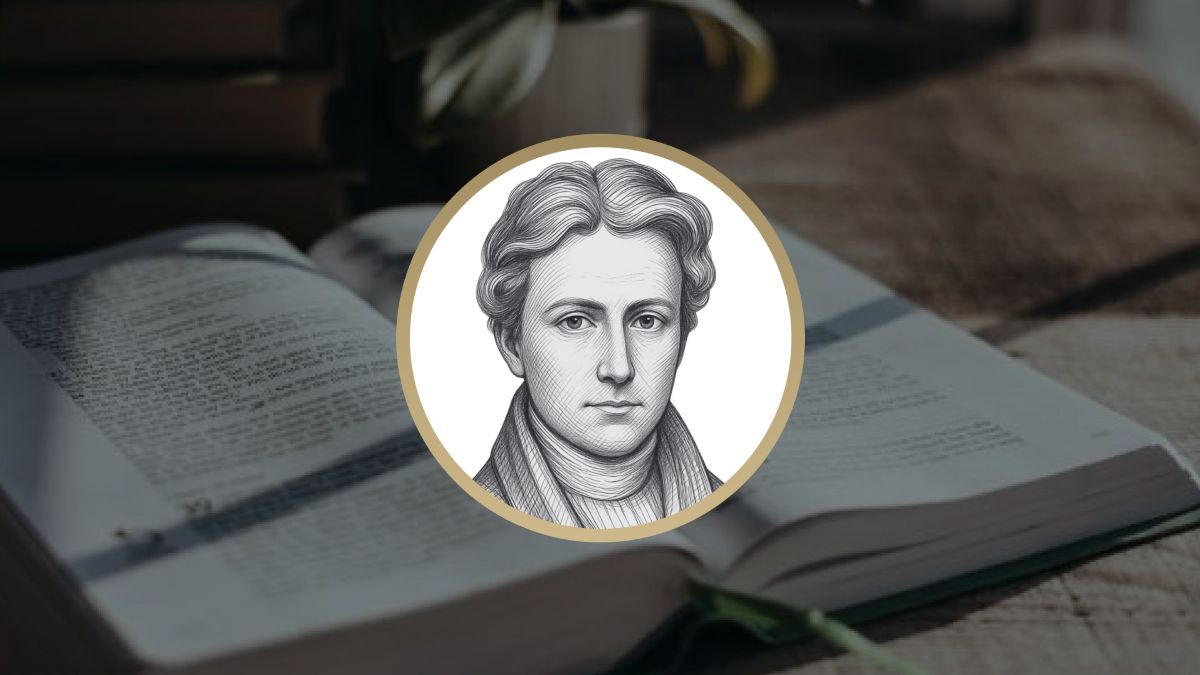
Every morning, many Christians all over the world open their Bibles and read the Scripture according to a popular reading plan developed two centuries ago. The creator of the reading plan was a Scottish pastor named Robert Murray McCheyne.
In using this plan, a Christian reads four chapters each day, two intended for family worship and two intended for private devotional reading. As one follows this reading plan, he will read the entire Bible in a year, as well as reading through the New Testament and the Psalms twice. Although many use this plan on a daily basis, few are aware of the man who created the plan.
Robert Murray McCheyne was a man of the Book. Throughout his short life of only thirty years, he loved the Bible. He read the Bible, taught the Bible, preached the Bible, and lived by the Bible.
McCheyne was born on May 21, 1813. His birthplace was Edinburgh, which was steeped in the history of the Church of Scotland. Here John Knox had lived and preached the truths of the Reformation: that salvation is by faith alone, by grace alone, in Jesus Christ alone. Here the Scottish lords had resisted the tyranny of popish prelates. Here the Covenanters had lived, preached, bled, and died for their allegiance to King Jesus, the only King of the Kirk (the word for “church” in Scotland).
McCheyne grew up in a time of revival in the Church of Scotland. The empty platitudes of the Enlightenment had failed to satisfy the soul of man. Reason had failed, and men and women throughout Scotland were turning again to the solid truths of revelation.
Adam and Lockhart McCheyne were Robert Murray McCheyne’s parents. His father Adam was a respected attorney in the Scottish capital city. His father also wanted a good education for his sons. The family’s large, stately home commanded a magnificent view across the Firth of Forth (the name of a body of water off the coast of Edinburgh) to the shores of Fife. By the time Robert Murray McCheyne was four years old—a young age when many children cannot yet read English—little Robert could already read the characters of the Greek alphabet.
The young scholar showed an early aptitude for poetry. When he was fourteen, he entered the University of Edinburgh. Similar to many young men suddenly cast into a place of temptation, McCheyne was for a time attracted by the allurements that the world has to offer: the lust of the flesh, the lust of the eyes, and the pride of life. He enjoyed dancing, music, and spent long hours playing cards with his friends.
Meanwhile, Robert Murray McCheyne had a devout older brother named David who often fervently prayed for him. When this older brother died suddenly in 1831, McCheyne was stunned. He later said of the death of his pious brother that it was “the first overwhelming blow to my worldliness.”
As a result, McCheyne turned away from the empty pleasures of the world to seek the solid truths of God’s Holy Word. He read the writings of Jonathan Edwards with great interest and spiritual profit. Led by the grace of God, he placed his faith and trust in the Redeemer of sinners, Jesus Christ.
Abandoning all trivial pursuits, Robert Murray McCheyne devoted himself to the ministry of the Gospel. He entered Divinity Hall in Edinburgh to prepare to become a minister. The Church of Scotland was experiencing a time of revival and refreshing in those stirring days. Thomas Chalmers, a Godly man of fervent piety, had a deep and profound influence upon the young divinity student.
McCheyne was licensed to preach on July 1, 1835. After preaching in several temporary assignments for a time, he was appointed to the pastoral care of the congregation at St. Peter’s Church in Dundee in November 1836. He was twenty-three years old.
St. Peter’s was considered by many to be a difficult task. The congregation was regarded as spiritually dull. The area to be covered was a large one and embraced over 1,000 souls. The burdens of ministry were immense. Yet the young man went right to work. He wrote, “Men must be brought down by law work to see their guilt and misery, or all our preaching is beating the air. A broken heart alone can receive a crucified Christ.”
Adding to the spiritual burdens faced by McCheyne were a series of physical infirmities that afflicted him. Although he had a rigorous mind, he had a frail body and simply could not endure the strain of long hours, late nights, and emotional burdens.
Doctors suggested that the young minister take a break from his pastoral duties and have a change of scenery and a period of travel. Interest had been building in the Church of Scotland concerning the ancient land of Israel. It was under the dominion of the Ottoman Turks, and new contacts with Western Europe gave new opportunities for travel in the Middle East.
The elected leaders of the church assembly decided to send a delegation on a “mission of inquiry” into the condition of the Jews scattered throughout their ancient homeland. McCheyne was seen as a man who would be ideally suited for this task. The period of travel in the fresh sunshine and away from the cold, damp Scottish weather would refresh his health and vigor. His scholarly mind, acquainted intimately with the ancient languages of Greek and Hebrew, would be suited to understand the local languages. And his familiarity with the Scriptures would make him aware of the history and geography of Bible lands.
McCheyne was accompanied to the Middle East by his good friend, Andrew Bonar. Two older experienced ministers, Alexander Keith and Alexander Black, accompanied the two young men. Keith was regarded as a scholar of prophecy and his deep interest in and knowledge of the Jewish people would help the mission work.
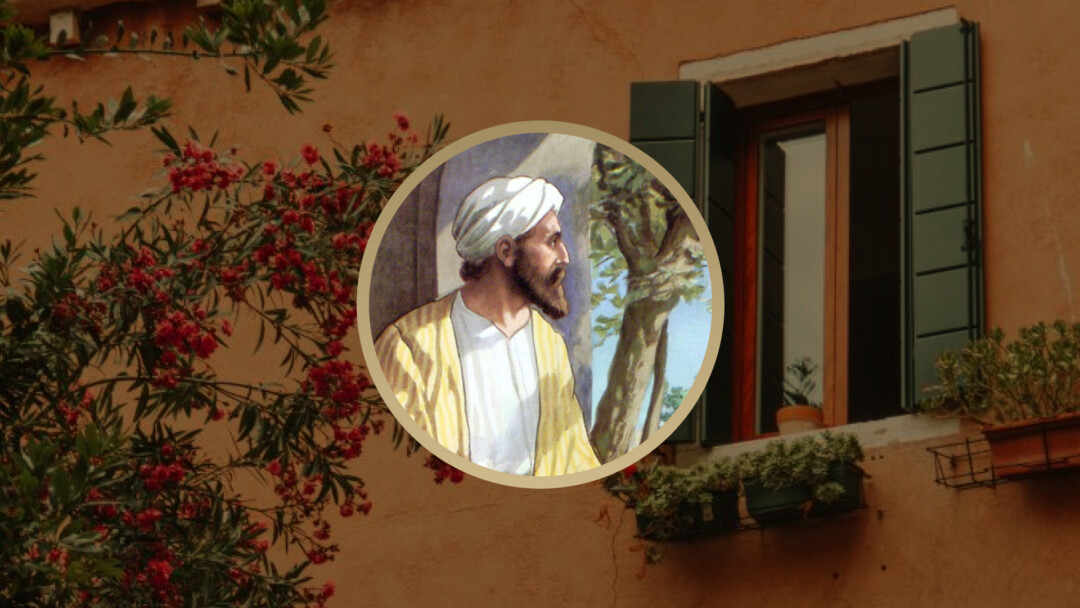
The party of four ministers embarked on their journey in 1839. They took extensive notes on their trip. They visited and gave the Gospel to the Jewish people that they met in cities, such as Safed and Jerusalem. They walked in a land unencumbered by the war and political division of later centuries. They rode wherever they wanted, although an armed guard was necessary to protect them from roving bands of robbers.
McCheyne looked out over the Sea of Galilee where Jesus had taught. He viewed the hills where Deborah and Barak had fought, where Gideon had delivered Israel, and where Elijah and Elisha had ministered in Samaria. He walked down the narrow lanes of the Old City of Jerusalem, and he climbed the Mount of Olives that overlooks the Temple Mount. Later, he and Bonar together published a narrative of their mission in the land of Israel.
When he returned to his pastoral charge in Scotland, McCheyne was refreshed and enlightened by his trip. Also, to his great delight, he found that his church had experienced a great revival while he was away and praying in Jerusalem! McCheyne began sharing with his congregation in Dundee the Bible reading plan that he had developed for his own use. He published it in a tract titled, “Daily Bread: Being a Calendar for Reading Through the Word of God in a Year.”
Not long after the publication of this tract, McCheyne was afflicted with typhus fever. After suffering with a high fever for several days, he died on March 25, 1843. Seven thousand grateful people attended his funeral. Robert Murray McCheyne never married or had children. Yet, multitudes of Christians have used his Bible reading plan and have come to love and obey the Word of God as he did.
Sources and Further Reference:
Bonar, Andrew. Memoir and Remains of Robert Murray M’Cheyne. Carlisle, PA: Banner of Truth Trust, 1966.

 24:41