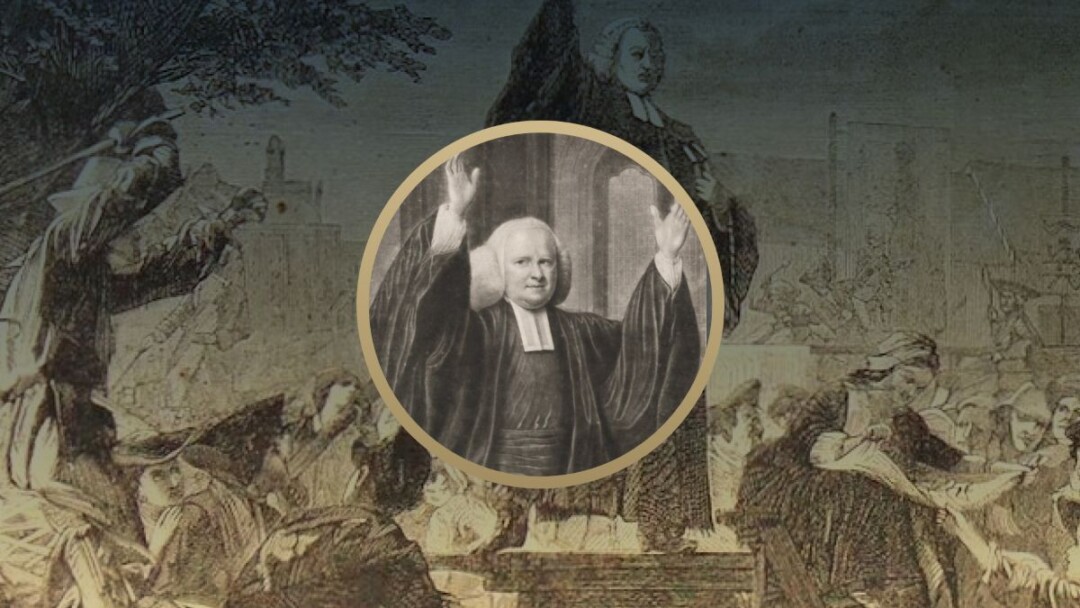


The name “Jason” is not often thought of as a Bible name. But it is! Christian parents who give their sons this name do a very worthwhile thing, as Jason is one of the quiet but splendid heroes of the New Testament.
Jason was a Thessalonian believer. He offered his home for the use of Paul and his companions. The gracious offer of his home also included all that went with it: his hometown, his friends, his extended family, his livelihood, and everything he had known and loved in Thessalonica.
This remarkable character is first mentioned in the opening verses of Acts 17. Paul was on his second missionary journey. Paul, along with Silas, Luke, and Timothy, had recently met Lydia by the riverbank in Philippi. By the time Paul left Philippi, two families were converted to Christ on the European continent: Lydia’s and the Philippian jailor’s. That small body of believers was left behind, probably under the care of Luke and Timothy, while Paul and Silas pressed forward in their missionary travels.
“Now when they had passed through Amphipolis and Apollonia, they came to Thessalonica, where was a synagogue of the Jews: And Paul, as his manner was, went in unto them, and three sabbath days reasoned with them out of the scriptures, Opening and alleging, that Christ must needs have suffered, and risen again from the dead; and that this Jesus, whom I preach unto you, is Christ. And some of them believed, and consorted with Paul and Silas; and of the devout Greeks a great multitude, and of the chief women not a few” (Acts 17:1–4).
As always, whenever the true Gospel is preached, Satan raises his opposition. “But the Jews which believed not, moved with envy, took unto them certain lewd fellows of the baser sort, and gathered a company, and set all the city on an uproar, and assaulted the house of Jason” (Acts 17:5).
Here is the first mention of Jason in Scripture. The Biblical record indicates very little about him. He was a resident of Thessalonica and was of enough means to own his own home. In the preceding passage, Jason’s home was attacked by an angry mob of unbelieving Jews, including “certain lewd fellows of the baser sort” who were enticed to join the mob. Why did the mob assault Jason’s house? Probably because Jason was one of the Greeks who believed and followed the Lord Jesus Christ.
The name Jason is Greek and means “the healer.” Jason seems to have been a prominent citizen of Thessalonica, perhaps even a medical doctor, if his name is any indication. Apparently, he had been converted to Christ. He probably also had opened his home to be a meeting place for the believers. As a result, an enraged mob was outside his door.
According to Luke, the mob “sought to bring them out to the people. And when they found them not, they drew Jason and certain brethren unto the rulers of the city, crying, These that have turned the world upside down are come hither also; Whom Jason hath received: and these all do contrary to the decrees of Caesar, saying that there is another king, one Jesus” (Acts 17:5–7). Paul and his companions were not found by the mob. Either they had been well-hidden by Jason, or else they were absent at the time of the riot. Either way, Jason himself was seized along with several other Christians.
Consider the charge of these angry Jews. They accused Paul of being a charlatan and a rebel against Caesar. The Pharisees made a similar charge to Pilate against Christ. The Jews knew full well that the city magistrates would not listen to Jewish squabbles. If the case was found to be of Jewish traditions and religion, then the case would have been thrown out of court. So, these angry Jews brought a serious and heavy charge against the believers: “These that have turned the world upside down are come hither also.”
These unbelieving Jews recognized the revolutionary nature of the Gospel message. Paul and his companions were preaching a world-changing message of eternal significance. The Jews were only wrong in one aspect, though—they had it backwards! Paul and his companions had inverted the world’s system of ethics, politics, religion, and culture; but Paul, by preaching Jesus, was actually turning the world right side up again! Nevertheless, these Jews and vulgar mob participants told the magistrates that Paul was preaching “another king” and that Jason, their townsman and a fellow Thessalonian, had received this heretical preacher. Thus, they asserted that Jason was a traitor.
Indeed, Paul was preaching another king—“one Jesus.” In doing so, Paul was asserting what the Old Testament Scripture had always asserted: that Christ Jesus is the universal King and that His dominion would stretch “from sea to sea, and from the river to the ends of the earth” (Psalm 72:8).
The Jews of Thessalonica would rather have Caesar than Jesus as king. Jason, however, was not of the same mind. He recognized that Christ was better than Caesar. He understood that true liberty, true blessing, and true prosperity were to be found under the dominion of Christ and were subject to the Law of God.
“And they troubled the people and the rulers of the city, when they heard these things. And when they had taken security of Jason, and of the other, they let them go” (Acts 17:8–9). Jason, of his own money, paid the security bond, according to Roman custom and law. Jason, as a Thessalonian citizen, bore the responsibility for the alleged crime, and he paid the security money to the city magistrates to ensure that the disturbance would not happen again. With that transaction completed, Jason disappeared from the scene and from the record of the Book of Acts.
“And the brethren immediately sent away Paul and Silas by night unto Berea: who coming thither went into the synagogue of the Jews” (Acts 17:10). The tension was too high in Thessalonica so, prudently, Paul and Silas withdrew from the city. The Christians who were left behind in Thessalonica were new in the faith, having been saved only a very short few weeks. Yet Paul and Silas departed and left the newborn sheep in the midst of the wolves, trusting that God would care for His own.
What became of Jason? In a very short time, his entire city was against him. He had fallen under the wrath of the religious leaders as well as the wrath of the city magistrates. He had been charged with sanctioning sedition and conspiring with a traitor in a plot to overthrow Caesar. The charge was a very serious one for a citizen of a Roman city. Did he crumble under the intense pressure?
Tests such as this one prove a man’s obedience to Christ. If Jason had been believing only for selfish motives, such as he had become a nominal Christian only out of interest, or he had intended only to “try out” this Christianity, or even if he had converted only to soothe his conscience, then he would have withered. He would have proved to be as the young plant without root that Jesus spoke of in His parable of the Sower and the Seed (see Matthew 13:1–9).
So, what happened to Jason? Did he compromise? Did he revert to his old ways? Or, did he make peace with the city magistrates, abjure his faith, and sever his connections with the missionaries? We would not know the answer to these questions except for a small note in Romans 16:21.
The Epistle to the Romans was written approximately five years after Jason’s adventure in Thessalonica. By that time, Paul had completed his second missionary journey. He had returned to Jerusalem and Antioch to report on the work. Then he traveled to Ephesus and labored there for three years.
At the time he wrote the Epistle to the Romans, he was wrapping up a three-month tour of Macedonia and Greece. He had recently passed through Thessalonica; by then there was a solid church in the midst of a city where the faith was not looked favorably upon. No mention was made of Jason in connection with his old hometown.
From Thessalonica, Paul moved on to the south. In the city of Corinth, he took the time to write a letter to the Roman Christians, whom he hoped to visit in the coming months. According to Romans 16:21, Paul wrote, “Timotheus my workfellow, and Lucius, and Jason, and Sosipater, my kinsmen, salute you.” This final mention of Jason reveals that he remained steadfast and obedient, still faithfully serving at Paul’s side and preaching the world-changing truth that there is another king—Jesus!

 24:41