
Two brothers raced toward their one-room schoolhouse in the flat, wide-open, rural countryside of southwestern Kansas. The older boy, Floyd, was thirteen years old. His younger brother was eight-year-old Glenn. The younger boy looked up to his brother, Floyd, with great admiration.
The two brothers loved to run. Somehow, in the vast expanse of grass and sky that made up the landscape of western Kansas, running made the road seem shorter and helped the landscape slide past more quickly. So, run they did! The boys ran to school. They ran to do their chores. They ran to the creek to fish and swim.
On this cold winter morning in February 1917, they were running to school for a specific reason. Their duty was to light the fire to warm the chilly schoolhouse. Upon arriving at the school, the boys got busy. First, they shoveled coal into the cast iron stove. Next, Floyd got the can of kerosene to pour over the coal.
In doing their task that morning, the boys were unaware of two pertinent, important pieces of information. First, a local book club had met in the schoolroom the previous evening. From that meeting some still-glowing embers were buried in the ashes. Second, for some unknown reason, the kerosene can had been refilled inadvertently with gasoline.
As Floyd poured the contents of the kerosene can on the hidden smoldering coals, an explosion of flames suddenly flashed forth from the stove! Floyd, closest to the stove, was instantly engulfed in the furious blaze. Standing nearby, Glenn’s trousers caught fire! Both brothers were stunned and dazed by the explosion from the stove, and soon the black, deadly smoke from the out-of-control fire filled the schoolhouse.
By the time help arrived, both boys were in serious condition. Somehow, the brothers had managed to get outside and roll on the ground to smother the hot flames. Yet, upon examination and medical treatment, their parents, Harry and Rosa Cunningham, were grimly informed by the local doctor that the burns on both boys were very serious and even life-threatening.
With no local hospital in the area, the severely injured boys were cared for in their own home. Their loving mother tended to them constantly. She carefully and diligently changed their bandages and tenderly applied salve to the painful, burned flesh.
Both brothers had very serious burns, although Floyd, being closer to the explosion, suffered greater extensive damage. He suffered silently, thus seeming to be in less pain. However, his burned body communicated otherwise when it shook violently at times.
The younger Glenn was in agony also. His legs received the brunt of injury; the painful changing of bandages on his extremely injured legs resulted in his crying aloud and moaning. The skin and some muscles on both of Glenn’s legs were completely burned away. The toes on his left foot were entirely gone. The transverse arch on the same foot was destroyed, and the ligaments and tendons were severely damaged. Sadly, the doctor explained to the Cunninghams and Glenn that, due to the extent of the injuries from the accident, Glenn would always be a cripple.
The faithful, older brother tried to keep his younger brother calm and hopeful. Floyd sang to Glenn, and he told his little brother stories to help distract him from his agonizing pain. On the ninth day following the tragedy, however, Floyd grew very quiet. Succumbing to his severe burns, he slipped quietly and peacefully from this life to the next. The older brother’s dying courage inspired Glenn. He wept unashamedly with his parents and siblings when Floyd, his inspiration and example, was buried in the local churchyard.
Glenn’s mother feared that she would lose the younger son also. Infection was a grave concern, and the doctor indicated that amputation was advisable. But Glenn did not want to lose his left leg. He pleaded with his parents to save his legs. Rosa Cunningham did her best to keep the wound clean with fresh bandages. Glenn was in agony with every bandage change, but he endured the pain and suffered patiently.
His mother began massaging his injured legs every day. She hoped that under the doctor’s care and with God’s healing, the massaging would help to restore the blood flow. Gathered around Glenn’s bed, the family prayed for his healing. They sang hymns and read aloud Scripture. Glenn’s favorite verse became Isaiah 40:31, “But they that wait upon the LORD shall renew their strength; they shall mount up with wings as eagles; they shall run, and not be weary; and they shall walk, and not faint.”
One day, Glenn swung his legs down off the bed. His feet touched the floor. The moment was exhilarating—to touch the floor again! He tried to stand, but he crumpled into his father’s waiting arms. Yet, tears streamed down the three smiling faces: son, father, and mother. Tears of pain—yes—but also tears of joy! Glenn had tried that day and failed, but he would try again.
Every day he made the effort. Every day he grew stronger. One day, he stood up with the help of a chair. Another day, he was carried into the yard and set down. He then dragged himself through the grass toward the picket fence. Painfully, painstakingly, he pulled himself to a standing position!
Two years after the accident, a day Glenn would never forget, he finally took a few tottering steps. From this strenuous attempt, he continued to persevere. Eventually, he was finally walking again. For a time, he slowly walked behind the family mule, clinging to the mule’s tail to steady himself.
Then the day came when Glenn stopped walking and started running! He ran everywhere—to the barn, to the house, to church, to school. The people in the small community all knew Glenn’s story, and they cheered him on whenever he ran the dusty streets. “Run, boy, run!” they would shout as he ran past. And run he did! His running progressed to the point that he declined packing a lunch for school. Instead, every day at the noon break, Glenn would sprint out the schoolhouse door and run the four miles home where he would eat lunch with his mother. Then, he would run the four miles back to school before the bell rang!
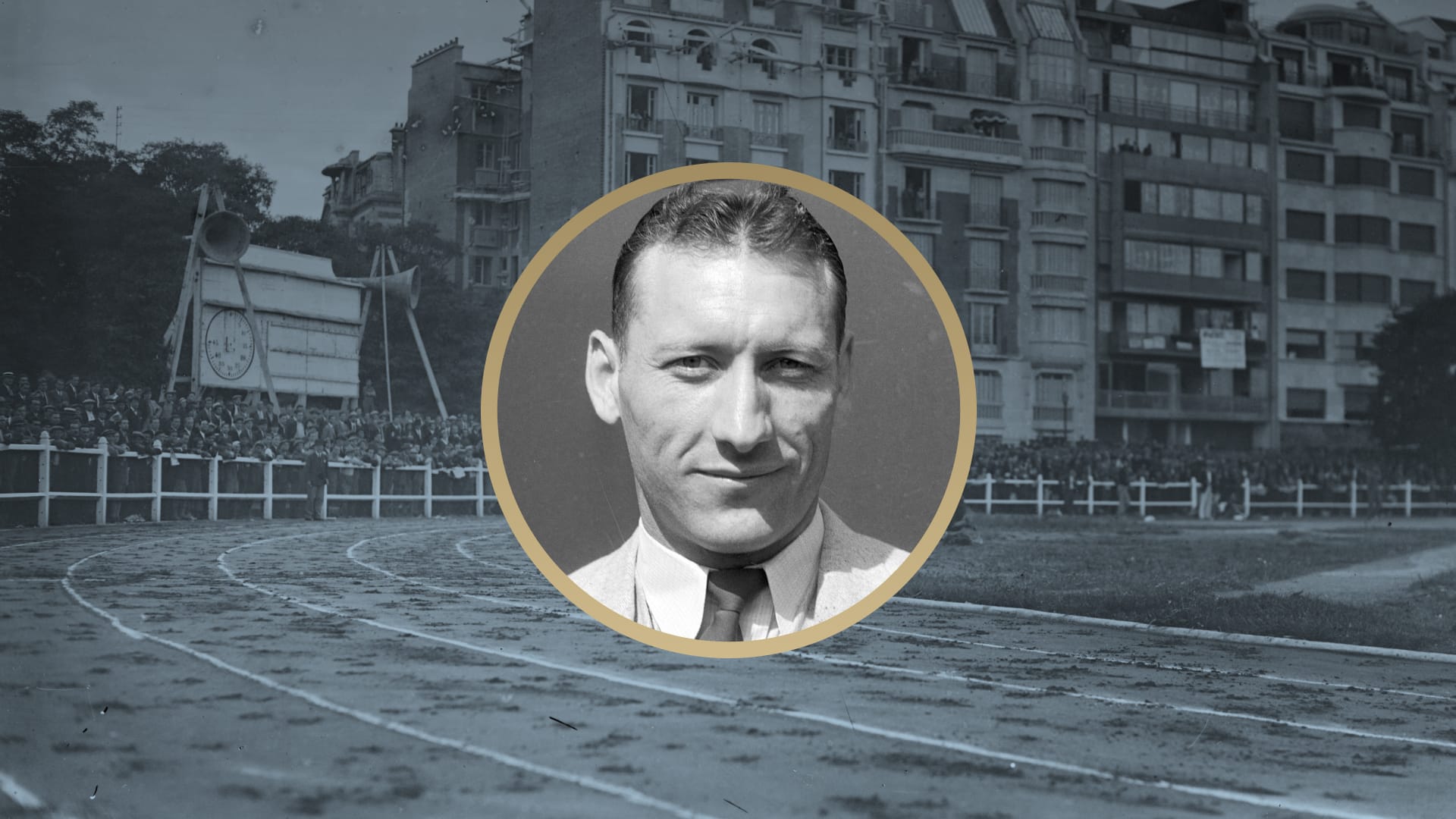
From that amazing progress, he began competing in school races. He not only competed, but he also won them all! The once severely injured boy who once could not walk soon became known as the fastest man in Kansas. In 1932, Glenn Cunningham represented the United States at the 1932 Summer Olympics in Los Angeles, California. This once crippled boy finished fourth in the Olympics’ 1500-meter run!
Glenn had earned the nickname the “Kansas Flyer.” Two years later, in 1934, the Kansas Flyer set the world record for the mile at four minutes and 6.8 seconds. Throughout his racing career, Glenn Cunningham kept up a consistent Christian testimony. He gave all glory to the Lord, Who had renewed his strength. Glenn congratulated other successful athletes and rejoiced when another man broke his record for the mile three years after it was set. He had always hoped that someone, someday, would run a mile in under four minutes!
Notably, in a day when smoking was almost universal, Glenn chose never to drink alcohol or smoke tobacco. The Kansas Flyer’s character was respected. Whenever Glenn Cunningham stepped onto the track to run, the fans in the grandstands would silently put out their cigarettes out of respect for the Christian from Kansas who had overcome all obstacles to become the fastest miler in the world.
Glenn Cunningham married and had a large family; he and his wife had twelve children. At the outbreak of World War II, Glenn attempted to join the Navy. Medical examiners, not knowing his identity, saw his scarred legs and deformed feet and informed him that he would not make it through basic training. They were astonished when they found out that they had just flunked the fastest man in the world! They corrected their mistake, made Glenn an officer, and put him in charge of the Navy’s physical fitness program. In that program, Glenn spent many hours talking to burn victims and encouraging them with his own story.
Following his years in the service, Glenn studied and earned his master’s degree from the University of Iowa, followed by a PhD from New York University. Dr. Cunningham established a youth ranch near their family’s home in Kansas; the ranch was a place where abandoned and abused boys and girls could find new hope and new strength in Jesus Christ. People often came by to look at his medals and trophies. He enjoyed telling them that one child redeemed from a life of sin and misery was more valuable than all his trophies. He often testified, “There is nothing as important as a child.” Over the course of many years, more than 8,000 children found hope and strength at the Glenn Cunningham Youth Ranch in Kansas.
In 1988, while hauling a load of hay to feed the horses on the ranch, Dr. Cunningham suffered a heart attack. His friends and family found him “asleep in Jesus”; he was behind the wheel of his truck which was by the side of the road. He was a humble servant to the very end. The boy who once was unable to walk had “run his race” to the finish line.
Sources and Further Reference:
Kiell, Paul. American Miler: The Life and Times of Glenn Cunningham. Halcottsville, NY: Breakaway Books, 2006.



 21:37
21:37