

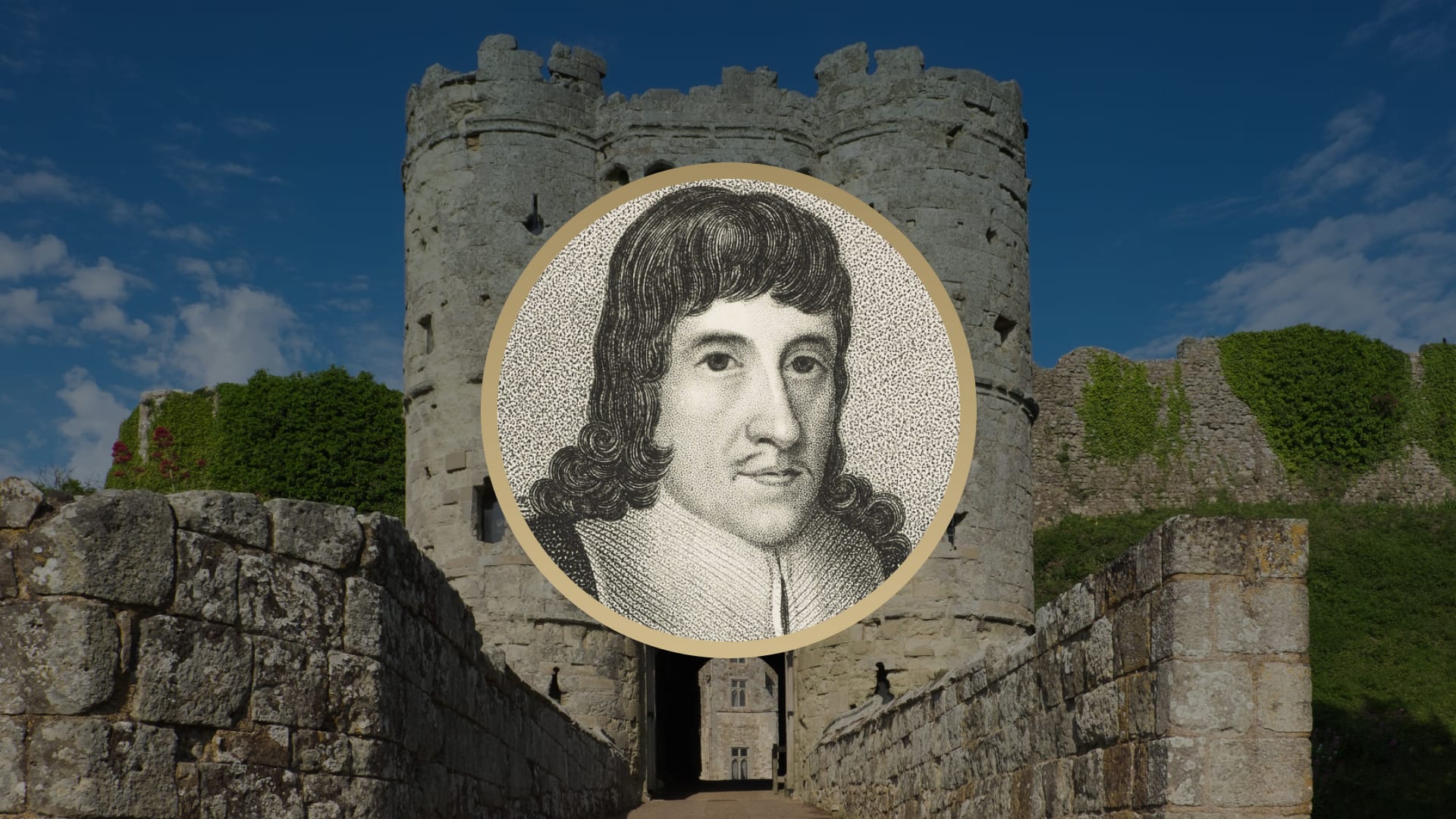
Since the time of Jesus Christ on earth, Christians have delighted to give some of their fellow believers honorable nicknames. For example, Joses was called “Barnabas” by his brethren; Barnabas means “the Son of Consolation” (Acts 4:36). Luke was called “the beloved physician” (Colossians 4:14). There was a believer in the city of Philippi whom Paul called “true yokefellow” (Philippians 4:3). Nicknames often highlight a character trait that is obvious to many.
So it was that a worthy Scottish preacher named James Guthrie was given the nickname “Sickerfoot.” This unusual nickname meant “sure of foot” in the old Scottish dialect. Guthrie lived during the dark days of the persecution of the Covenanters. He was one of those who was faithful to Christ in a day when many were compromising the truth in order to save their lives.
The Stuart monarchs had imposed their own religion upon the Kirk (Church) of Scotland. However, a band of worthy men, women, and children vowed that they would worship Christ alone as the only king over His Church. A group of courageous Scottish lords drew up a “National Covenant” in which they affirmed that Christ alone was the ruler of His people.
Following the covenant’s creation, these people were called “the Covenanters.” The Covenanters’ refused to submit to man-made regulations, ceremonies, and liturgies, which resulted in their being violently persecuted. One of the most prominent of the group was “Sickerfoot,” James Guthrie.
Guthrie was a stalwart pastor in the famous, ancient Scottish town of Stirling. From his pulpit, “Sure of Foot” proclaimed that the Bible alone was the rule of church faith and practice and that as much as he honored the office of the king, the king of Scotland had no royal authority in the matters of the Church of Jesus Christ. Pastor Guthrie wrote a series of pamphlets against the Royal Prerogative; one of them was titled “The Causes of the Lord’s Wrath Against Scotland.” Titles such as this one did not make Sickerfoot a popular man in the royal palace! Soon, the king issued arrest orders for this bold preacher of the Gospel.
The people dearly loved Pastor Guthrie for his piety and for his diligent, tender pastoral care over his flock. At the time of his arrest for his bold proclamation of the truth, he had a wife and two small children, Sophia and William, still at home. Besides these two children, he also had other children who had already gone on to fill the ranks of Christ’s service.
Alarmed at his arrest, the people of Stirling wanted to keep their pastor whom they cherished. One of his dearest friends once approached Guthrie and said, “We have an old Scots proverb: ‘Jouk [duck] that the wave may gang oure [go over] ye!’” Then the friend asked him, “Will ye nae jouk [not duck] a wee bit?”
Pastor Guthrie was touched by the concern of his friend. He knew full well that he could do what many had done—he could “duck a wee bit” by making some small compromises. He could take an oath to the king. If he did, then he would be able to retain his pulpit, his ministry, and even his life. The prelates, eager to gain the allegiance of this man, had once offered him a comfortable bishopric if he would only compromise a little!
But Sickerfoot had founded his life upon the Rock, Jesus Christ. Guthrie had not been given his nickname for no reason! Looking steadily at his concerned friend’s face, the Scottish worthy replied, “There is nae jouking [no ducking] in the cause of Christ.”
Just as his friend feared, Sickerfoot was arrested and sentenced to be hanged at Edinburgh Mercat (Market) Cross on June 1, 1661. His head was to be severed from his body, placed upon the end of a soldier’s pike, and displayed in Netherbow Port, the main entrance to the city. This particular location ensured that all those who passed by could see the price of resisting the king.
Bravely and resolutely, Sickerfoot met his death without a murmur. The soldiers and magistrates mocked the way he was, in their opinion, throwing away his life. They reminded him that he had a wife and children. One man predicted that if he died, his children would become vagabonds. But James Guthrie knew God’s declaration recorded in Psalm 68:5, “A father of the fatherless, and a judge of the widows, is God in his holy habitation.”
Entrusting his young wife and little children into the hands of God, James Guthrie was resolved to shed his blood in defense of the truth that there is no king over the Church but King Jesus. Permitted one last time to see his wife and little children, the father took his five-year-old son William upon his knee. “Willie,” the father said, “the day will come when they will cast up to you that your father was hanged. But be not thou ashamed, lad. It is a good cause.”
As Sickerfoot ascended the scaffold at the city cross, he handed his “last testimony” to a friend. It would be delivered to little William when he became of age. The faithful pastor then asked a bystander if he would take the ring from his finger and deliver it to his beloved wife. The courageous martyr then quoted the words of Simeon, “Lord, now lettest thou thy servant depart in peace, according to thy word: For mine eyes have seen thy salvation” (Luke 2:29–30). Then he calmly placed a napkin over his eyes. On the scaffold, he was just as sure-footed as he had been ensconced in his pulpit because, as he put it, there was “no ducking in the cause of Christ.”
Just before the noose tightened, Guthrie lifted the face napkin once more, looked upon this mortal world for a final time, and then cried out, “The Covenants! The Covenants! They shall yet be Scotland’s reviving.” With these words, James Guthrie entered eternity. Surely, he heard those words from the lips of the Lord he so faithfully served, “Well done, thou good and faithful servant: enter thou into the joy of thy lord.”
But this is not the end of the story. The descendants of James Guthrie still populate the world today, and some of them have proven to be just as sure-footed as their noble father. In the hustle and bustle of our modern world, where “ducking” to let the waves of modernism pass over has become commonplace, there are still direct descendants of James Guthrie who avow the message of their ancient Covenanter father, “There is nae jouking in the cause of Christ.”
Some of these descendants came to the American colonies where they took their places in the service of Christ. These children and grandchildren continued to be faithful to the crown and covenant of Jesus Christ. Churches still exist in places as widely diverse as Connecticut, New York, Illinois, and Alabama, that were established and maintained by these determined and uncompromising men.
Pastor Guthrie would be thrilled to know that the faithful generations of his progeny are still worthy of that ancient name, Sickerfoot. Indeed, his faithful posterity continues to affirm that there is “nae jouking in the cause of Christ.”
Sources and Further Reference:
Purves, Jock. Fair Sunshine: Character Studies of the Scottish Covenanters. Carlisle, PA: Banner of Truth Trust, 2003.



 21:37
21:37