

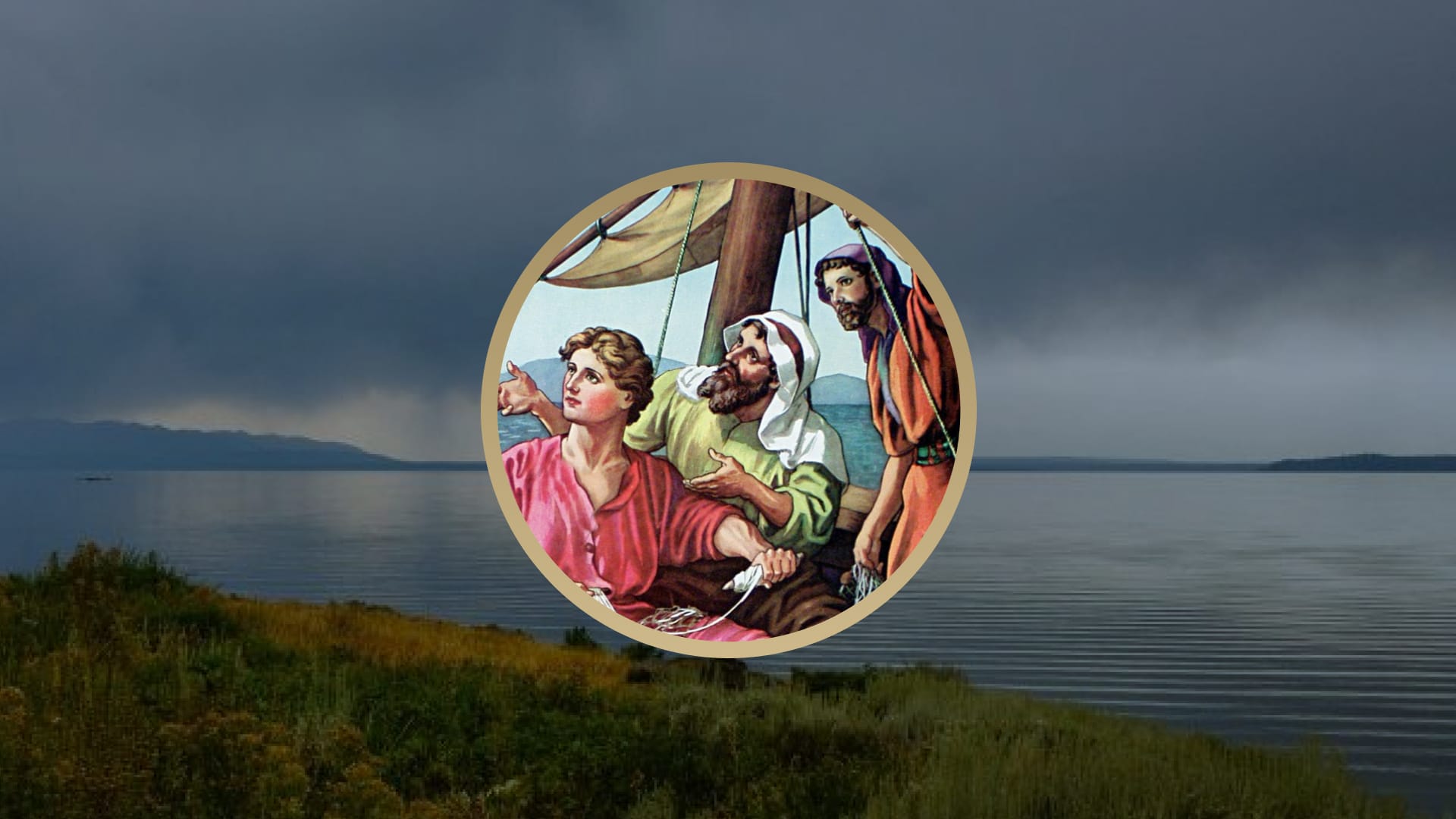
James, the son of Zebedee, held the distinction of being the first of Christ’s apostles to lay down his life as a martyr. James and his brother John are at the center of all the action in the Gospel record. These two brothers were always named nearest to Christ. Along with their parents, Zebedee and Salome, we find a splendid example of an entire family loving and serving Jesus together.
All indications point to James being the older of the two brothers. In 18 of the 19 times that the brothers are named together in the New Testament, James is mentioned first. Always, except in one case, they are referred to as “James and John.”
Perhaps it would be helpful at this point to clear up the natural confusion concerning the various men named James in the New Testament. Three prominent men by this name were involved in the life of the Lord Jesus Christ.
First, there was the person we examine in this article, James: the son of Zebedee and Salome, cousin of the Lord Jesus (son of Mary’s sister, Salome), part of the inner circle of disciples, brother of John, and the first martyr among the disciples. Second, there was another disciple of Jesus called “James the less” (Mark 15:40) or “James the son of Alphaeus” (Matthew 10:3). Third, there was James who was the son of Joseph and Mary and the younger brother of our Lord. People considered Jesus the “carpenter, the son of Mary, the brother of James” (Mark 6:3). It was the Lord’s brother James who figured prominently in the Council of Jerusalem in Acts 15 and was later the author of the Epistle of James.
When we first meet James, the son of Zebedee, in Matthew 4:21–22, he was mending nets with his brother John and their father. Many hours were spent by fishermen mending broken and worn nets. The life of a fisherman was a hard life, but a pleasant one. Today, the freshwater Sea of Galilee continues to abound with many fish, primarily an excellent species of freshwater tilapia called St. Peter’s fish.
After calling Andrew and Peter, Christ moved on to the sons of Zebedee. “And going on from thence, he saw other two brethren, James the son of Zebedee, and John his brother, in a ship with Zebedee their father, mending their nets; and he called them” (Matthew 4:21).
Jesus’ call to them was a crucial moment and an important decision for James and John. The rest of their lives hung upon what decision they would make. They considered that their father Zebedee would be left without his two stalwart sons to aid him. Yet there was no hesitation in their decision. “And they immediately left the ship and their father, and followed him” (Matthew 4:22). Their decision did not dishonor their father. Rather, James honored Zebedee and Salome by his determination to follow Jesus.
It is noble of Zebedee and Salome that they allowed their sons to follow the Carpenter from Nazareth. The sacrifice of this family was without reserve. By following Jesus, they gained their highest honor.
From that moment onward, the course for James’s life was set. He became an integral part of Christ’s inner circle. He was witness to the most private miracles, such as the raising of Jairus’s young daughter from the dead (see Mark 5:36–43). He beheld the stirring event of the Transfiguration (see Matthew 17:1–2). He was privileged to be present for Christ’s supplication and surrender to the will of His Father in the Garden of Gethsemane (see Matthew 26:36–39).
Jesus called James and John “Boanerges, which is, The sons of thunder” (Mark 3:17). This very picturesque Aramaic nickname originally stemmed from two Hebrew words, meaning “son who thunders or quivers with rage.” This nickname seems to identify the two brothers, and perhaps James especially, as fiery and determined, quick to make a decision, and swift to pass judgment.
In Luke 9:51–56 is an example of this fiery determination in action. Christ had been journeying through the region of Samaria. The Samaritans were abhorred by pure-blooded Jews due to their being descended from a mixed bloodline. When the Assyrian Empire had conquered the Northern Kingdom in 722 B.C., the Assyrians had depopulated northern Israel and introduced various other conquered people groups from other parts of their empire. The remaining Israelites had intermarried with these foreigners, and the resulting people were disdained and called Samaritans by the Jewish people of Christ’s day. This Jewish hatred for the “half-breeds” of Samaria is the reason why the disciples were so surprised to find their Master speaking to a Samaritan woman in John 4.
James and John had been sent ahead of Jesus to secure lodging for Him in the Samaritan village. When the Samaritan village refused to welcome the Lord Jesus, according to Luke 9:54, James and John reacted, and asked Christ, “Lord, wilt thou that we command fire to come down from heaven, and consume them, even as Elias did?” The two zealous followers of Christ were referring to Elijah’s response to the king’s demand, according to II Kings 1:9ff. It was near the same spot where they were standing that Elijah had called fire down upon a succession of captains and their men who were sent by the king to apprehend him!
Jesus answered the two brothers calmly but sternly. “But he turned, and rebuked them, and said, Ye know not what manner of spirit ye are of. For the Son of man is not come to destroy men’s lives, but to save them. And they went to another village” (Luke 9:55–56). Meekly, James the son of thunder, needed to lay aside his natural reaction to destroy an unwelcoming city and instead submit to his Master’s will.
Later, Christ again had to redirect the ambitions of His cousins when they expressed their desire to sit on His right hand and on His left in the coming Kingdom. Christ had promised a life of trouble and hardship; He asked them, “Are ye able to drink of the cup that I shall drink of, and to be baptized with the baptism that I am baptized with?” to which the two brothers James and John answered sincerely, “We are able” (Matthew 20:22).
Ambition is good, and the desire for genuine greatness is good, but true greatness is only found in following Christ—in being a servant and patterning our lives after the obedient life of the Lord Jesus Christ.
That obedience led James to Jerusalem. He watched as his Messiah, Master, and King submitted Himself into the hands of wicked men. Jesus Christ, the King of kings and Lord of lords, was bound by the hands of sinful men. James heard when his Master said to one disciple who had tried to defend Him, “Thinkest thou that I cannot now pray to my Father, and he shall presently give me more than twelve legions of angels?” (Matthew 26:53). Christ easily could have called down fire from heaven to destroy His enemies, but He did not.
After Christ’s arrest, James was among those disciples who fled. The son of thunder vanished into the night. He apparently was not one of the witnesses of the crucifixion, although his brother John was there.
James, however, was among the witnesses of the Resurrection. He saw Christ appear in the Upper Room where the disciples were assembled. Later, according to John 21:1–2, he saw Christ on the shore of Galilee after a long night of fruitless fishing. He also was witness to the Ascension, when Christ ascended into Heaven, after giving His command: “Go ye therefore, and teach all nations, baptizing them in the name of the Father, and of the Son, and of the Holy Ghost: Teaching them to observe all things whatsoever I have commanded you: and, lo, I am with you always, even unto the end of the world. Amen” (Matthew 28:19–20).
Following this last command of his Lord and King, James the son of Zebedee devoted the rest of his life to Christ’s service, teaching others what Christ had commanded him. For James, that ministry time was very short. Christ previously had warned His disciples, “But take heed to yourselves: for they shall deliver you up to councils; and in the synagogues ye shall be beaten: and ye shall be brought before rulers and kings for my sake, for a testimony against them” (Mark 13:9). Just a few moments later He had added, “And ye shall be hated of all men for my name’s sake: but he that shall endure unto the end, the same shall be saved” (Mark 13:13).
Little could James have known then that he would be the first martyr. According to Acts 12:1–2, “Now about that time Herod the king stretched forth his hands to vex certain of the church. And he killed James the brother of John with the sword.”
Following the example of his Lord, James the son of Zebedee, the first martyr among the apostles, advanced to the place of execution. There he fulfilled the resolution he had expressed to the Lord long before at the side of his mother, Salome. James, indeed, had been able.