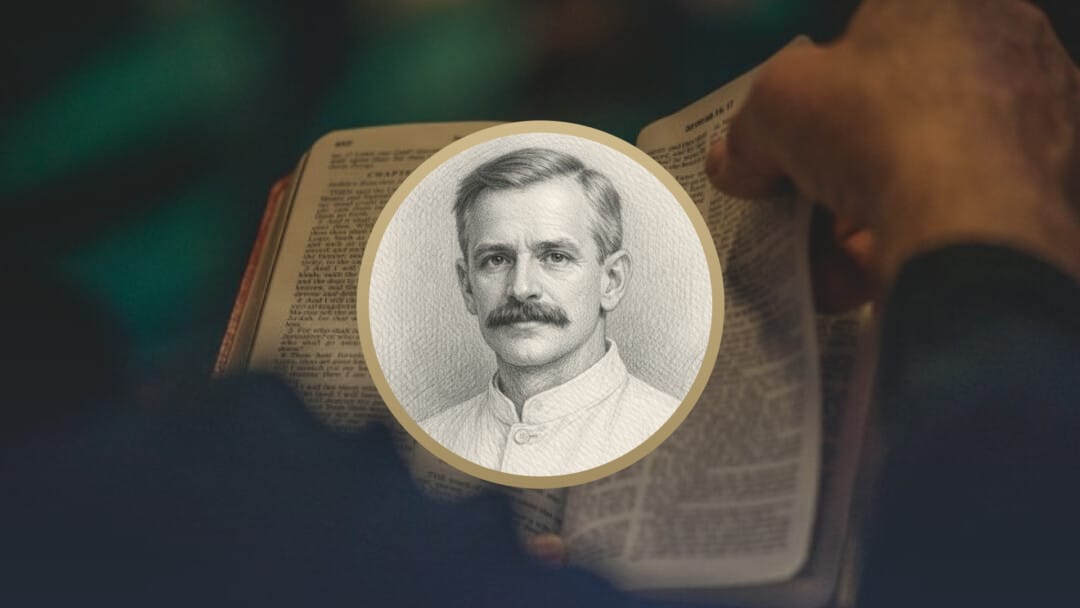

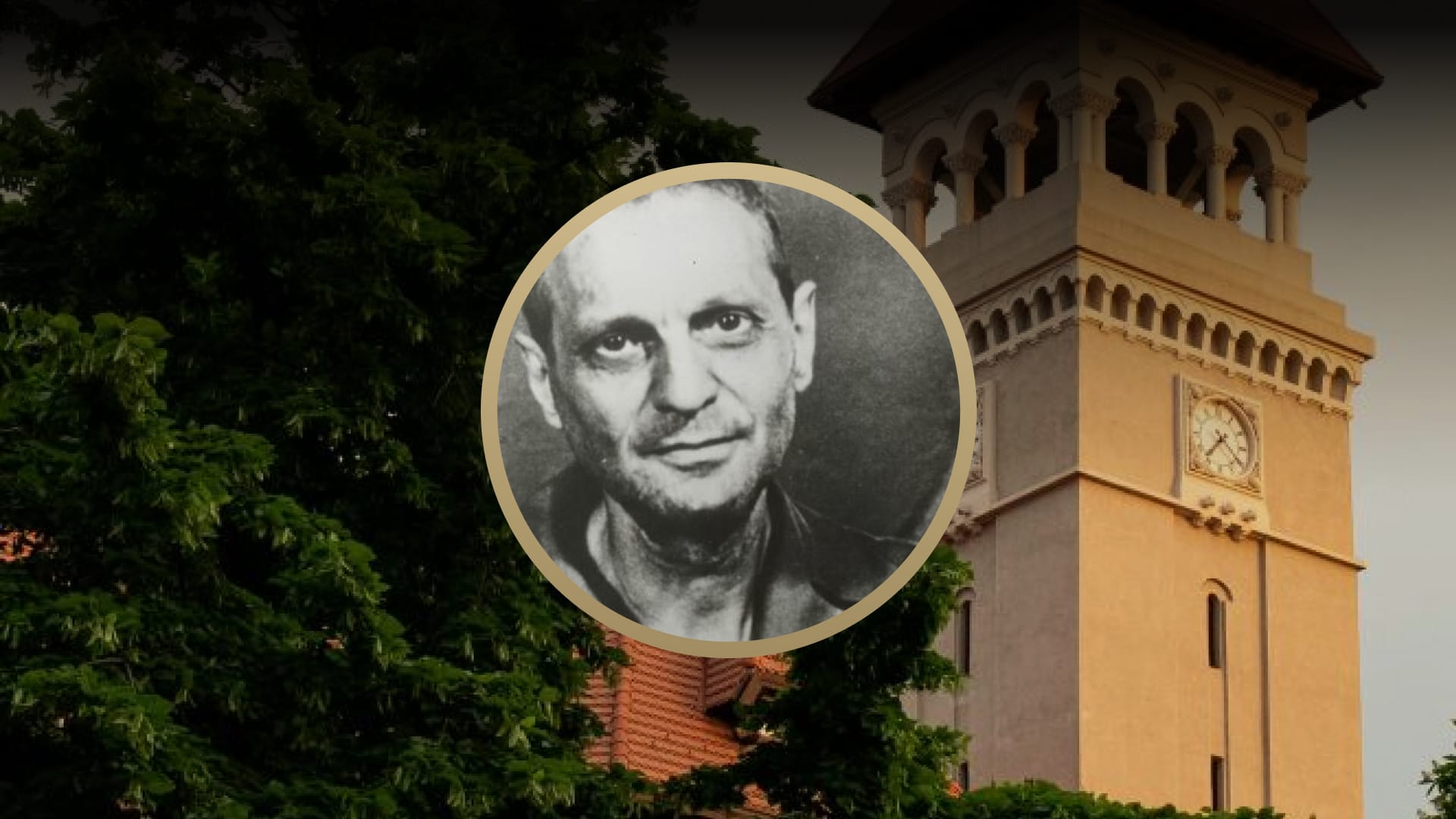
It was February 29, 1948, a leap year. The day would be forever stamped upon the memory of a Romanian pastor of Jewish descent. His name was Richard Wurmbrand.
As the thirty-nine-year old pastor was heading to church, a black van pulled up. Two men jumped out of the van, seized Wurmbrand, shoved him into the back of the van, and put a gun to his head. Thus, began the imprisonment of the man who would one day write a famous book, Tortured for Christ. This book was on the importance of rejoicing in persecution. It has been a blessing and encouragement to millions of believers worldwide.
Richard Wurmbrand was born in Bucharest on March 24, 1909. His family heritage was Jewish. He lost his father when he was only nine years old, while the family was living temporarily in Istanbul. Eventually returning to Romania, young Richard became enamored with the Communist movement and the seemingly successful Russian Revolution to the east. He became a committed Marxist and fully embraced the Marxist mentality.
Wurmbrand traveled to Moscow where he was educated in Marxist ideology. When he returned to his native Romania, he was a Comintern (Communist International) agent, working on behalf of Communist leaders in Moscow.
In 1936, Wurmbrand married Sabina Oster. In spite of his marriage, Wurmbrand lived in open sin, indulging in the pleasures of immorality and drunkenness. He later wrote regarding his life at the time, “I despised others and I hated myself.” His rough living severely damaged his health, and a doctor advised him to rest and recuperate in a remote, isolated mountain village.
In the providence of God, an elderly German carpenter named Christian Wolfkes lived in this same village that the doctor had recommended to Wurmbrand. For years, Wolfkes had prayed that God would give him the privilege of leading a Jewish soul to saving faith in the Messiah. The man was too old to travel, and no Jews lived in the village. So, he had been praying that God would bring a Jew to him!
That prayer was answered when Richard and Sabina Wurmbrand walked into town in 1938. The elderly carpenter gave Wurmbrand a Bible. Years later, Wurmbrand wrote, “The Bible he gave me was written not so much in words, but in flames of love fired by his prayers. I could barely read it. I could only weep over it, comparing my bad life with the life of Jesus; my impurity with His righteousness; my hatred with His love—and He accepted me as one of His own.”
Richard and Sabina Wurmbrand were saved and came to love and trust the Messiah of Israel. Turning his back on Karl Marx, Wurmbrand fully embraced Jesus Christ. He studied the Bible, devoted himself to the proclamation of the Gospel, and was ordained as an Anglican minister.
By this time, the flames of World War II had engulfed all of Europe. Thousands of young men were being fed into the meat grinder of total war. Hitler’s Panzer divisions barreled across Europe, bringing devastation and destruction wherever they went. Jews were rounded up; many of Wurmbrand’s people were sent into the horrible gas chambers. When Hitler broke his treaty with Stalin, the Russian armies joined the fray, sending millions of men into the battlefields of the unstable eastern front.
In 1944, the Russian army had taken possession of Romania. Christians were threatened, and religious meetings were outlawed. Richard had become a Lutheran pastor by conviction, and he was leading secret meetings of Christians. By 1945, Communist leaders made it clear that all religious leaders must openly support the atheistic government or face fines or imprisonment. While many Christian leaders compromised out of fear of persecution, Richard and Sabina Wurmbrand made the difficult decision to stand boldly for Christ and His truth.
When Wurmbrand warned his wife that if he spoke out openly, she would likely lose her husband, the brave Christian wife responded, “I don’t need a coward for a husband.” Her husband Richard spoke out indeed, and he was arrested on Leap Year day in 1948.
His first imprisonment lasted eight and one-half years. For three of those years, he was imprisoned at Jilava, a prison camp south of Bucharest, in solitary confinement. In those long hours of silence and darkness, enduring horrifying beatings and merciless torture, many prisoners went raving mad, cursing and fuming. But, similar to Paul and Silas in the dungeon at Philippi, Richard Wurmbrand learned to rejoice when persecuted for the name of Jesus.
He wrote, “Christians are meant to have the same vocation as their King, that of cross-bearers. It is this conscience of a high calling and of partnership with Jesus which brings gladness in tribulations, which makes Christians enter prisons for their faith with the joy of a bridegroom entering the bridal room.”
Richard Wurmbrand was released from prison in 1956. He had been ordered, like the early apostles, not to teach anymore or preach the name of Jesus. Yet, he resumed his ministry among the persecuted Christians in the underground church. In 1959, he was arrested again and sentenced to twenty-five years of imprisonment.
During this second imprisonment, Wurmbrand was savagely tortured. For example, he was locked in an icebox. He endured pain for which he himself testified that there were no words to describe. The Communists told his wife that her husband was dead.
Richard Wurmbrand later spoke of the triumph with which he could answer his tormentors with the thrill of victory that the worst they could do would be to kill him and usher him into the presence of Jesus. He fully acknowledged that the exuberant joy that he felt in the midst of suffering was not by his own emotional or spiritual power; rather, it was Christ’s power from on high. He later wrote, “The living Jesus will give you joy amid tribulation.”
Through a complicated effort, Richard Wurmbrand was granted amnesty in 1964. The Norwegian Mission to the Jews along with the Hebrew Christian Alliance worked diligently and with great perseverance, and finally succeeded in obtaining his release.
Pastor and Mrs. Wurmbrand, along with their one son, Michael, founded an organization that still exists today as Voice of the Martyrs. Wurmbrand became a powerful voice for the persecuted Christians behind the Iron Curtain. While testifying before the U.S. Congress in 1966, Pastor Wurmbrand took off his shirt in front of TV cameras, and displayed the scars inflicted by his torture.
Richard Wurmbrand died at the age of ninety-one near his home in California. He wrote eighteen books in English, as well as his many writings in Romanian. The ministry he founded, Voice of the Martyrs, continues today his work of awakening believers to the plight of their persecuted brothers and sisters around the world, heroic men and women of faith who continue to obey our Lord’s command to “rejoice and be exceeding glad.” Truly, their reward is great in Heaven!
Sources and Further Reference:
Wurmbrand, Richard. Tortured for Christ. Bartlesville, OK: Living Sacrifice Books, 1998.
 29:15
29:15