

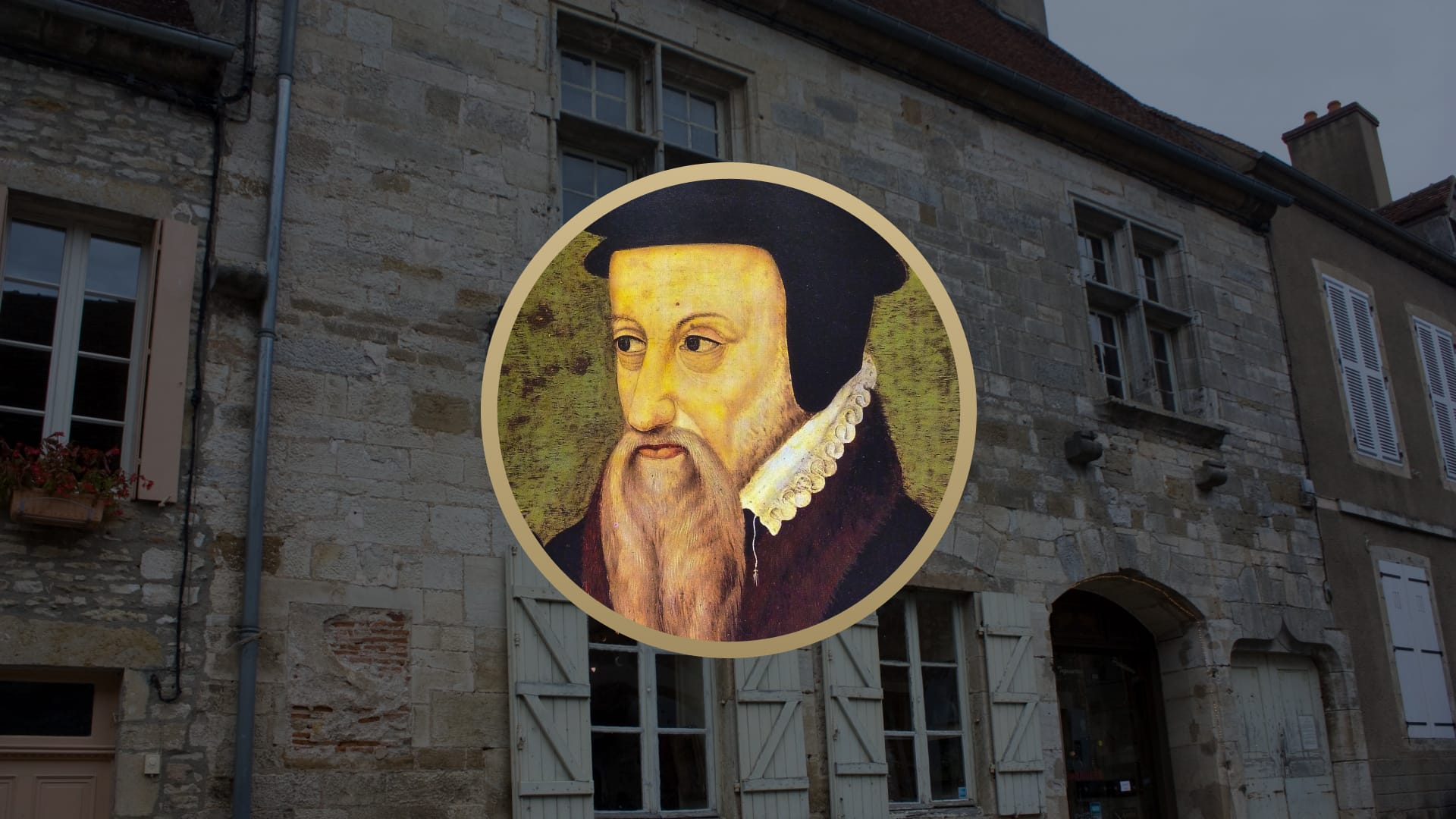
On a cold, dark night in December, 1602, an army of hostile Savoyards quietly crept toward the silent, walled city of Geneva. For years, the powerful Duke of Savoy had sought greedily to add the free Swiss city of Geneva to his dominions. Political intrigue had failed. Now, he was going to try an all-out assault!
At first, the attack went smoothly. The Savoyards had approached the walls undetected. The Jesuit priests whispered encouragement to them, “Climb boldly; every rung of the ladder is a step to heaven.” The soldiers, buoyed by the priests’ urgings, hurriedly climbed the ladders, anticipating the loot they would receive, as well as the Heaven they hoped to gain.
Suddenly, a lone sentinel on the wall sounded his alarm by discharging his musket. Throughout the city, lanterns flickered. Men and boys rushed to their arms, then out from their homes to defend their city, their church, their wives, and their children against attack.
A traitor within the city was to open the city gate when the assault began. The plan was thwarted when a Genevan soldier rushed to the open gate, slammed down the iron-grated barrier, and thus barred the main entry from the enemy!
A fierce battle ensued on the walls. In the bloody, hand-to-hand fighting, 300 Savoyard attackers were slain. The surviving enemy troops fled in disarray. Amazingly, only seventeen men of Geneva had been killed.
With the battle over, the men and women of Geneva flocked to the church. There they rendered thanks to the Almighty for His marvelous deliverance of their city. In the following worship service, the men of Geneva called upon an elderly pastor to come lead them.
Despite his advanced age of eighty-three years, the pastor ascended the pulpit where he had so often preached before. After an appropriate prayer of thanksgiving and the reading of Scripture, the elderly leader asked the congregation to rise and sing the hymn from Psalm 124.
E’en as a bird out of the fowler’s snare
Escapes away, so is our soul set free:
Broke are their nets, and thus escaped we.
Therefore our help is in the Lord’s great name,
Who heav’n and earth by his great pow’r did frame.
Many years earlier that aging pastor, Theodore Beza, had translated and placed this psalm to French meter. While all his former companions, such as John Calvin, Ulrich Zwingli, William Farel, and Pierre Viret, had long gone to their eternal reward, Theodore Beza was still alive at the time of the Escalade in 1602. The God Who had been faithful throughout Beza’s long life was faithful still.
Theodore Beza was born June 1519, the summer before a German monk named Martin Luther nailed his 95 theses to the door of the Wittenberg church. Born in Burgundy, France, to a noble French family, young Theodore was educated by the German scholar Melchior Wolmar. This tutor was the one who first exposed the young scholar to the doctrines of the Reformation.
Torn between truth and error, for a few years Beza hesitated regarding which opinion he would follow. He enjoyed the Latin and Greek classics, developed a love for poetry, and held a comfortable position as priest in two parishes, making him the recipient of two lucrative benefices.
But the young man could halt no longer between the two opinions. He set aside a promising career, refused to take orders in the Roman church, and married the girl he loved, a poor but Godly young lady named Claudine. He then chose to throw his life into the cause of the Reformation.
Beza was appointed to become professor of Greek at Lausanne, and he labored there with Pierre Viret. Beza took a great interest in the welfare of the French Vaudois, known commonly as Waldenses. He and William Farel took a trip through Piedmont villages, preaching and teaching among their persecuted brethren, and seeking to give encouragement and strength to these faithful men and women who loved the truth.
In 1544, John Calvin asked Theodore Beza if he would undertake the completion of the metrical psalter in French. Beza had special gifts for the work; he had a love for poetry, a knowledge of Greek and Hebrew, and an ability to convey the psalms in his native French. Psalm 68, translated by Beza, became the battle hymn for the oppressed French Huguenots during their wars of religion.
That same year, Beza moved from Lausanne to Geneva. In spite of the fact that he had no formal theological training, Theodore Beza became John Calvin’s heir. His intimate knowledge of the Greek and Hebrew Scriptures, his faithful exegetical preaching from the Bible, and his bold, sound teaching gave him an authority that no university could confer.
In addition to his contributions to the psalter, Beza also edited the French New Testament translated by Pierre Olivétan. He contributed much effort to textual scholarship by editing the Greek New Testament of Erasmus, producing a new edition of the Textus Receptus.
When John Calvin died in 1564, Theodore Beza carried on Calvin’s work in Geneva and earned the respect and confidence of the magistrates of the city. Unlike many of his fellow laborers, Beza was destined to live to witness the horrors of Saint Bartholomew’s Day in 1572. He became an encouragement to the oppressed people of God throughout France during those bloody days, and his letters of comfort, advice, and warning to Huguenot pastors, generals, and princes became a stabilizing influence during the wars of religion.
Beza lost his faithful wife, Claudine, in 1588. He penned a sweet tribute to her memory and called her a “woman endowed with all the virtues of a wife.” Theodore and Claudine never had children, but in a very real way, the entire body of Huguenots were their spiritual children.
Throughout his life, Beza traveled widely throughout France. Everywhere he went, he was always a bold defender of God’s truth. At one point, he was reminded how the Roman Catholic Savoyards had scorned the defenders of Geneva as heretics and called them “dogs.” In one particularly bitter colloquy with the French Catholic bishops, he and the other delegates from Geneva were cursed as “Genevese dogs.” Beza calmly replied, “Faithful dogs are much needed in the Lord’s sheepfold to bark at the wolves.” In spite of several assassination attempts, Beza lived to the advanced age of eighty-six.
One of the great triumphs of his life was the Escalade affair of December 21, 1602. On that dark night, Beza saw a great victory that symbolized the eventual success of God’s truth. God’s Word and His people may be threatened and assaulted, but they could not be destroyed. As Beza once stated, “The church of God is an anvil that has worn out many hammers.”

 23:50
23:50