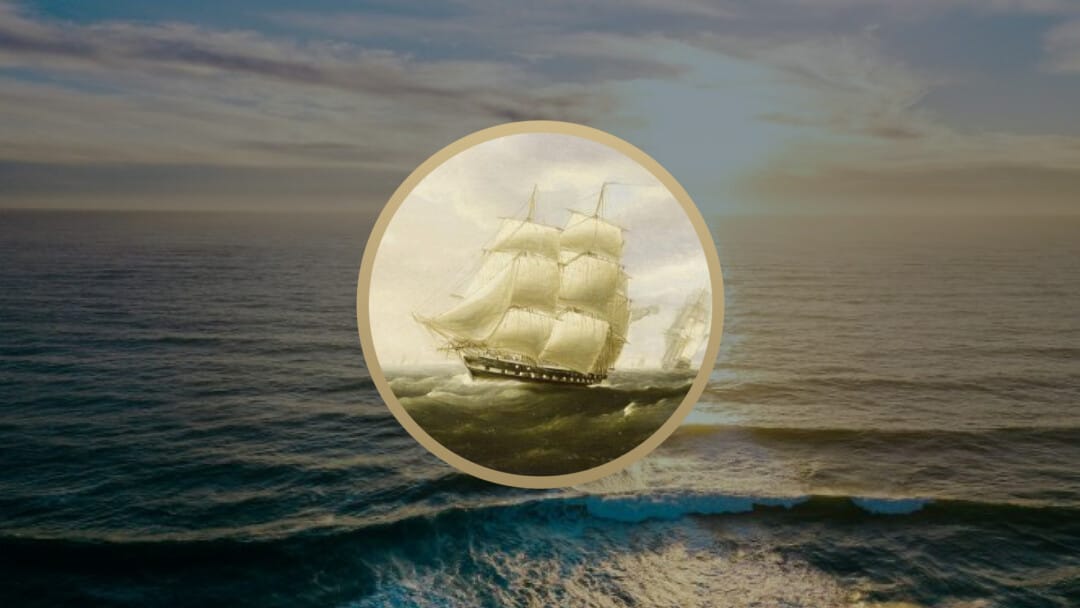

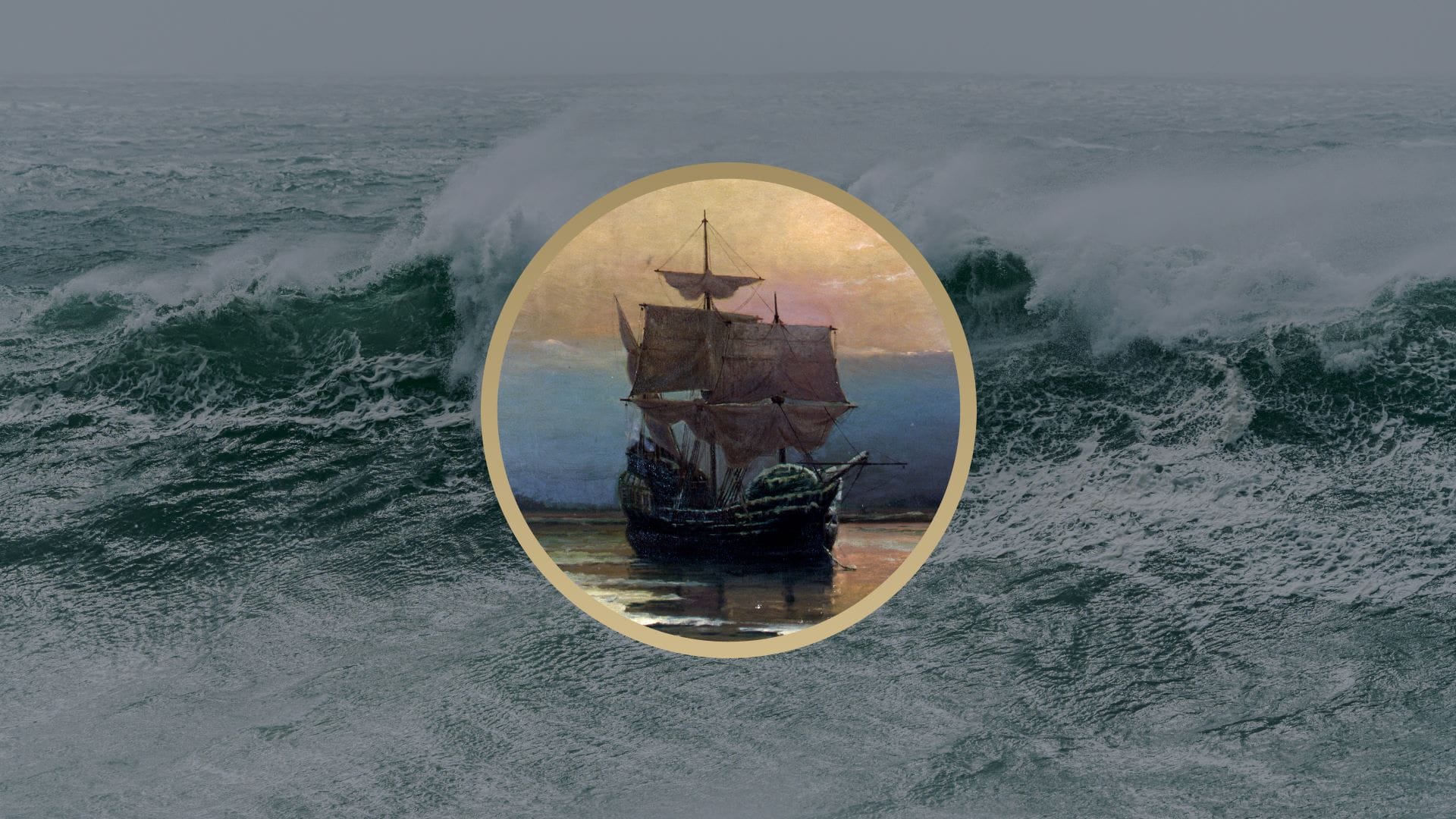
It was a stormy day in the North Atlantic. The wind howled among the ship’s masts and furled sails. The foaming waves angrily thrashed the sides of the small vessel bound for the rugged coast of North America. Already, the Mayflower had endured several weeks of bad weather. How much longer could she hold up under the pounding of the waves?
With every roll of the ship, water seeped through cracks and soaked the bedding and the clothing of the 102 passengers. They were wet, cold, and thoroughly weary of the sea. Seasickness was rampant, and vomiting was common. The stench reeked and was nauseating. The blasphemous sailors mocked the seasick but pious Pilgrims and called them “puke stockings.” The often-used waste buckets added to the vile odor emanating from below deck.
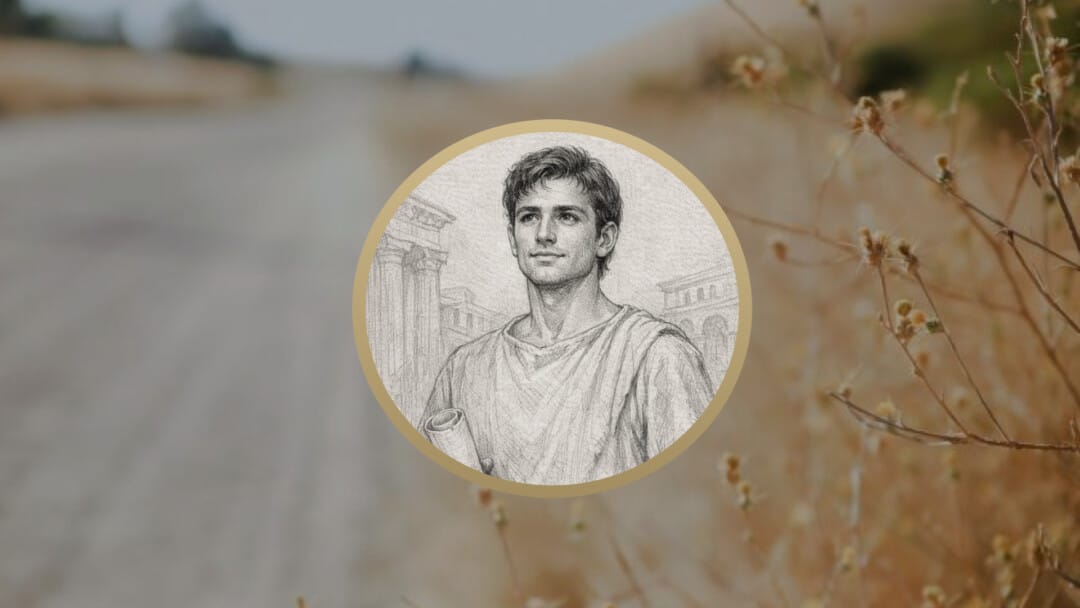
One young man, a servant indentured to John and Katherine Carver, had suffered enough under the captain’s orders to stay below deck. He longed for the fresh air and invigorating breezes of the sea. Finally, in a moment when no one was looking, the desperate fellow pushed open one of the hatch grates! He scrambled quickly and emerged onto the Mayflower’s deck.
Fresh air! The indentured servant gulped in the fresh, briny air. His eyes widened. The waves he viewed were higher and rougher than anything he had ever seen before! But he could breathe fresh air! The young man, John Howland, viewed the vast expanse of the ocean. He actually could smell the salty freshness of the North Atlantic.
Suddenly, as Howland was reveling in the fresh air, another turbulent wave hit the ship! As the vessel heaved to her side, the inexperienced servant’s wobbly feet flew out from under him. John Howland was swept overboard into the surging waters of the frigid Atlantic!
The accident should have proved fatal. But God Who owns the sea and commands the storm had mercy upon the indentured servant. Howland’s arms flailed in the air and his hands desperately clawed the air for anything solid. A topsail halyard (rope from the rigging) was trailing into the water near the desperate man. By God’s providence, the halyard just happened to be right where John Howland’s fingers were wildly reaching for something solid to grasp.
A seaman had seen the young man swept overboard. The sailors of the Mayflower were known to be foul-mouthed and quarrelsome, but they also knew and were committed to their duty. A small band of sailors bravely and hastily scrambled to grasp the trailing rope in the turbulent ocean.
Meanwhile, John Howland had successfully grasped the soaked rope! He was holding on in hope and desperation. However, while holding the rope was a saving factor, it forced his head underwater.
The shocking cold numbed his body. The crushing power of the sea filled his ears, his nose, and stung his eyes. His lungs burned. Soon, he would have to take a fatal gulp of salt water, and it would all be over.
On deck, the quick-acting sailors persevered in their rescue efforts. They pulled the halyard and raised Howland’s head from the ocean. He gulped in fresh air. With determination, the drenched, but experienced seamen hoisted the soaked, shivering John Howland onto the deck. As the young man lay upon the solid deck surface, the rescuers reprimanded him for his foolishness in venturing onto the deck alone.
Howland’s fight for life was far from over. He was in grave danger of perishing from the effects of the icy waters. His lungs had taken in some of the briny water.
For several days afterward, John Howland was very sick. However, his strong, youthful physique and the grace of God gave him the strength to survive the perilous ordeal. Needless to say, Howland did not venture alone on deck again for the rest of the voyage! When the Mayflower cast anchor off Cape Cod in November 1620, John Howland was aboard.
Once in the New World, dissension arose among the Pilgrims about their destination. The dissension threatened the unity among them. Wisely, the leaders reached agreement and drafted the famous Mayflower Compact. Although he was merely an indentured servant, John Howland was one of the men who signed the document. Howland’s master, John Carver, was affirmed as governor of the colony and was respected by all parties.
During that first winter in the New World with its extremely cold temperatures and harsh conditions, almost half of the 102 Pilgrims died. Remarkably, the Carver family and their indentured servant survived those deadly months. One of the families in Plymouth, the Tilley family, suffered the death of everyone except one teenage daughter. The Carvers welcomed the orphan girl into their family and cared for her.
Alas, this arrangement for the Tilley orphan was short-lived. One warm spring day in 1621, just as the settlers were starting to plant their crops and hope for a better year, John Carver said that he was suffering pain in his head. Concerned friends took him back to his abode. There he soon sunk into a coma and died a few days later. His wife, Katherine, followed him in death only a few weeks later.
The deaths of his master and mistress left John Howland as the inheritor of their belongings. The Carvers had buried all of their children in Leiden (in the Netherlands). Since the Carvers had no survivors, Howland was the only heir.
Indentured no longer, he became a freeman and gradually rose in leadership among the colonists. Along with the Carver property, Howland also became the guardian of three children who had no parents or protectors: Elizabeth Tilley, Desire Minter, and William Latham. Later, when she became of age, Howland married Elizabeth Tilley, the orphaned girl who had been kindly taken in by the Carvers.
Among his fellow Pilgrims, John Howland gained their respect. He was chosen to be an assistant to the new governor, William Bradford. Howland became skilled in the fur trade and was chosen to explore the Kennebec River (in what is now the state of Maine) to establish a fur trading post. He was respected by all for his Godly integrity, courage, wisdom, and rich experience.
God Who had so kindly preserved the young indentured servant from drowning in the North Atlantic had extensive plans for the Howland family. John and Elizabeth Howland were blessed with ten surviving children who eventually multiplied the Howlands’s legacy to over eighty grandchildren! Quite literally, John Howland became one of the great patriarchs of the American continent. By the time that he died in 1673, his children and grandchildren richly populated the villages, farms, trading posts, and churches of New England.
John Howland’s direct descendants include such names as Nathaniel Gorham, president of the Continental Congress during the Revolutionary War, as well as a namesake named John Howland, a medical doctor who was one of the most respected pediatricians in the history of medicine. Another prominent descendant was James D. Dole, the “Pineapple King” of Hawaii.
Howland’s direct descendants also include very familiar names, such as United States Presidents Franklin D. Roosevelt, George H. W. Bush, and George Walker Bush.
In Plymouth, Massachusetts, a house stands on Sandwich Street that was built in 1667. It was the home of Jabez Howland, one of the ten children of John and Elizabeth. One winter, Jabez invited his aged parents to live with him in the house. This Howland home is the last standing house in which original Mayflower passengers resided.
Today, John Howland’s gravestone stands on Plymouth’s Burial Hill. Inscribed on it are these words, “Here ended the pilgrimage of John Howland.” The inscription goes on to testify, “He was a godly man and an ancient professor in the ways of Christ. He was one of the first comers into this land.”
May the Almighty God, Master of the wind and waves, continue to guide and bless Howland’s children and grandchildren forever until we all finish our earthly pilgrimage and anchor in our desired haven.
Sources and Further Reference:
Bradford, William. Of Plymouth Plantation. San Antonio, TX: Vision Forum, 2011.