
It was early morning in 1901. Far away from her native land, a young Irish lady was drinking her morning tea out on her veranda. The birds of her new home here in India were beginning to greet the morning with cheery songs. She was unfamiliar with these tweeted greetings, yet their bright melodies were delightful to her listening ears.
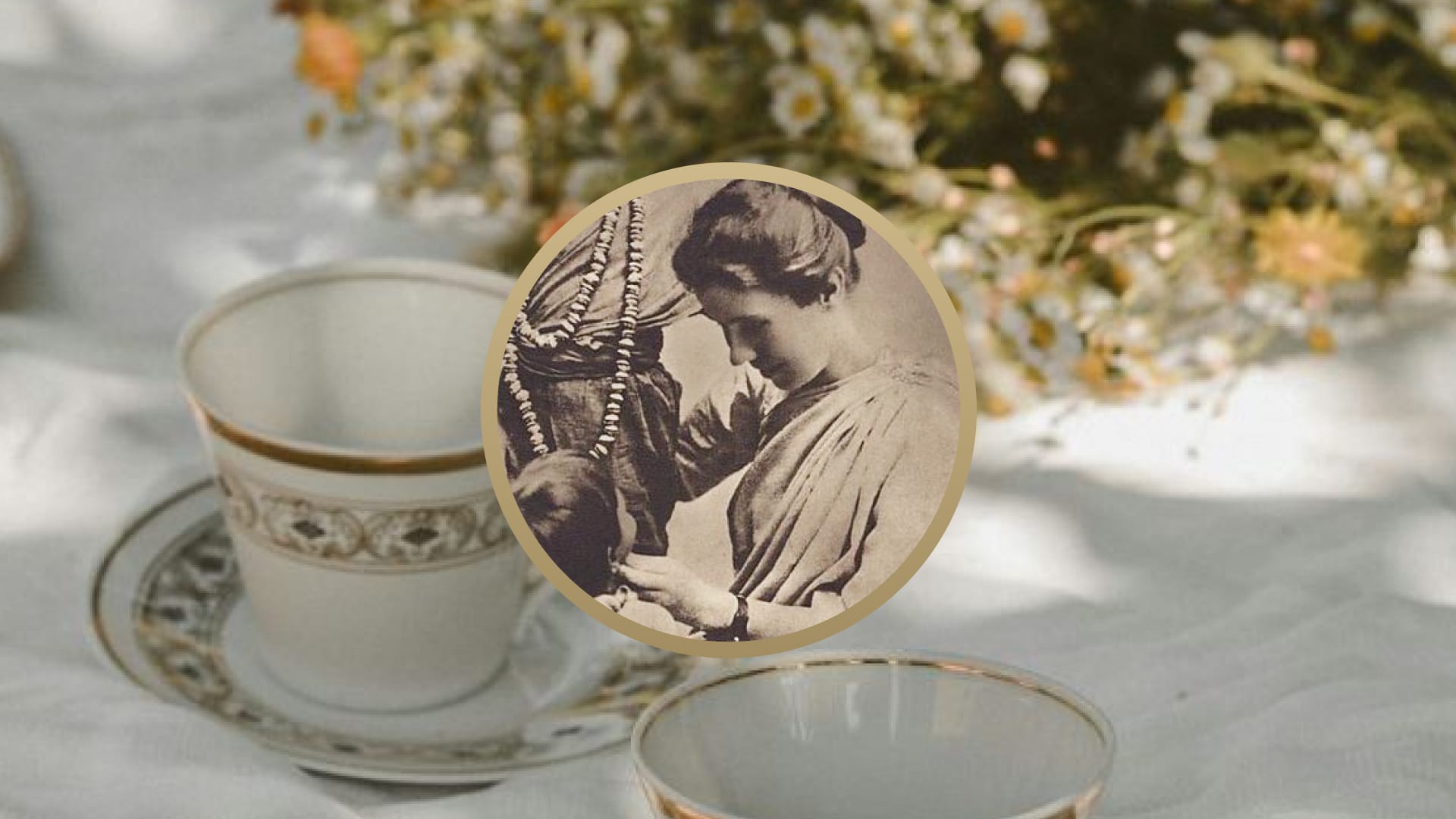
Suddenly, another woman, named “Servant of Jesus,” appeared with a seven-year-old girl. The little dark-skinned girl climbed into the lap of the young white woman and began to chatter in the native language of Tamil: “My name is Pearl-Eyes, and I want to stay here always.”
The little girl received a warm welcome as she felt herself wrapped in a motherly hug and a tender kiss placed on her head. “My mother used to put me on her lap and kiss me!” she probably wondered with delight. “Who is this person that kisses me like my mother?”
Little “Pearl-Eyes,” called Preena by her new mother, did indeed “stay here always” in her new home. She was the first of hundreds of girls and boys who would call this Irish woman—Amy Carmichael—their mother, or Amma in the native language of South India.
India is a long way from Ireland. Why was this young woman, who possessed many gifts and talents, so far from home, far from her own mother and siblings in her native land? Why was she giving up all opportunities for marriage and children of her own to help poor girls (and eventually boys, too) who were being enslaved to gods of stone in pagan temples?
Her missionary story began on a wet, windy day in Ireland as the Carmichael family walked home from the Sunday morning church service. They saw a poor, elderly woman struggling with bundles in her arms, and Amy and two of her brothers began to help the woman on her way home. The damp weather and wind made the trek uncomfortable. Furthermore, being seen by other respectable members of their church made the situation miserably embarrassing. Out of the mist and above the sound of the busy street, a voice seemed to call out to seventeen-year-old Amy: “Gold, silver, precious stones, wood, hay, stubble—every man’s work shall be made manifest: for the day shall declare it, because it shall be declared by fire; and the fire shall try every man’s work of what sort it is.”
Amy looked around to find the speaker. But no one had spoken to her. So, she trudged on through the muddy street, but her heart was changed forever.
Amy Carmichael, who was once embarrassed to be seen with a poor, old woman, now began to search out such people in need of help. Her well-known life and work in South India was with the temple children—children who were in moral danger, who had been orphaned or forsaken and were in grave danger of being sold to the heathen temples into a life of prostitution and misery.
Up until the day Preena climbed into her lap, Amy Carmichael considered her work to be evangelism throughout the villages. She did not have intentions to be a mother. But on that day in March 1901, her ministry began that lasted for over fifty years in a place she named Dohnavur. Her special work became rescuing and raising these temple girls and eventually boys for Jesus instead of the heathen gods of stone.
“Children tie the mother’s feet” was a Tamil proverb. As more and more girls and babies came to Amy Carmichael, who quickly became Amma to them, she had to turn her evangelistic work over to others. Instead, the Irish Christian woman devoted her time, energy, thoughts, and her whole life to being “mother” to the children God was giving to her. This work was not the exciting and interesting ministry of preaching in the streets. Rather, she now went about doing the mundane, regular “Mommy” duties of changing diapers, preparing meals, cleaning house, tending garden, disciplining children, homeschooling them, and teaching them about Jesus, as well as daily praying for each one. However, Amy Carmichael found joy in the work, knowing it was God’s calling for her life.
After many years of such ministry, she wrote, “If by doing some work which the undiscerning consider ‘not spiritual work’ I can best help others, and I inwardly rebel, thinking it is the spiritual for which I crave, when in truth it is the interesting and exciting, then I know nothing of Calvary love.”
Genuine love was a theme always in Amy Carmichael’s heart. And that is what it took to get through the difficulties of her work. Satan always attacks God’s work, and the family in Dohnavur, which included Amy, adult workers, and the children, endured suffering and hardship. They were hated by the Hindus. They were misunderstood and criticized by the Christians abroad. Many babies and children died from sickness or accidents. Most of the time there were not enough workers to assist Amy Carmichael; sometimes there seemed to not be enough money. Furthermore, some girls did not appreciate the sheltering Christian home and care the missionary provided them.
While Amy Carmichael tried to make life joyful for her children, she also was strict. She taught them early to bear responsibility and to do hard work cheerfully for Jesus’ sake. She also taught the children to love one another, not bear grudges, and to lay down their lives in the service of others. Even when injury and disease confined her to her bedroom during the latter years of her life, Amy Carmichael continued to shine the light of Christ to all around her.
A prayer she wrote for the children in her care sums up what mothers might pray for their own offspring:
Father, hear us, we are praying,
Hear the words our hearts are saying,
We are praying for our children.
Keep them from the powers of evil,
From the secret, hidden peril,
From the whirlpool that would suck them,
From the treacherous quicksand, pluck them.
From the worldling’s hollow gladness,
From the sting of faithless sadness,
Holy Father, save our children.
Through life’s troubled waters steer them,
Through life’s bitter battle cheer them,
Father, Father, be Thou near them.
Read the language of our longing,
Read the wordless pleadings thronging,
Holy Father, for our children.
And wherever they may bide,
Lead them Home at eventide.
When Amy Carmichael breathed her last breath in 1951—on the day she had looked forward to as her “Glory Day”—the family in Dohnavur numbered over nine hundred. Although many babies had died and older children had wandered over the years, the first child—Preena—was still there. Preena, now a much older woman, saw her beloved Amma buried amidst the flowers in the family cemetery they called “God’s Garden.”
According to the Tamil proverb, Amy Carmichael’s “feet were tied” for fifty years. But, by the call of God and the power of the Holy Spirit, she had brought the light of Christ to a land locked in darkness, and India would be forever changed.
Sources and Further Resources:
Elliot, Elisabeth. A Chance to Die: The Life and Legacy of Amy Carmichael. Grand Rapids, MI: Fleming H. Revell Company, 1987.

 29:15
29:15