

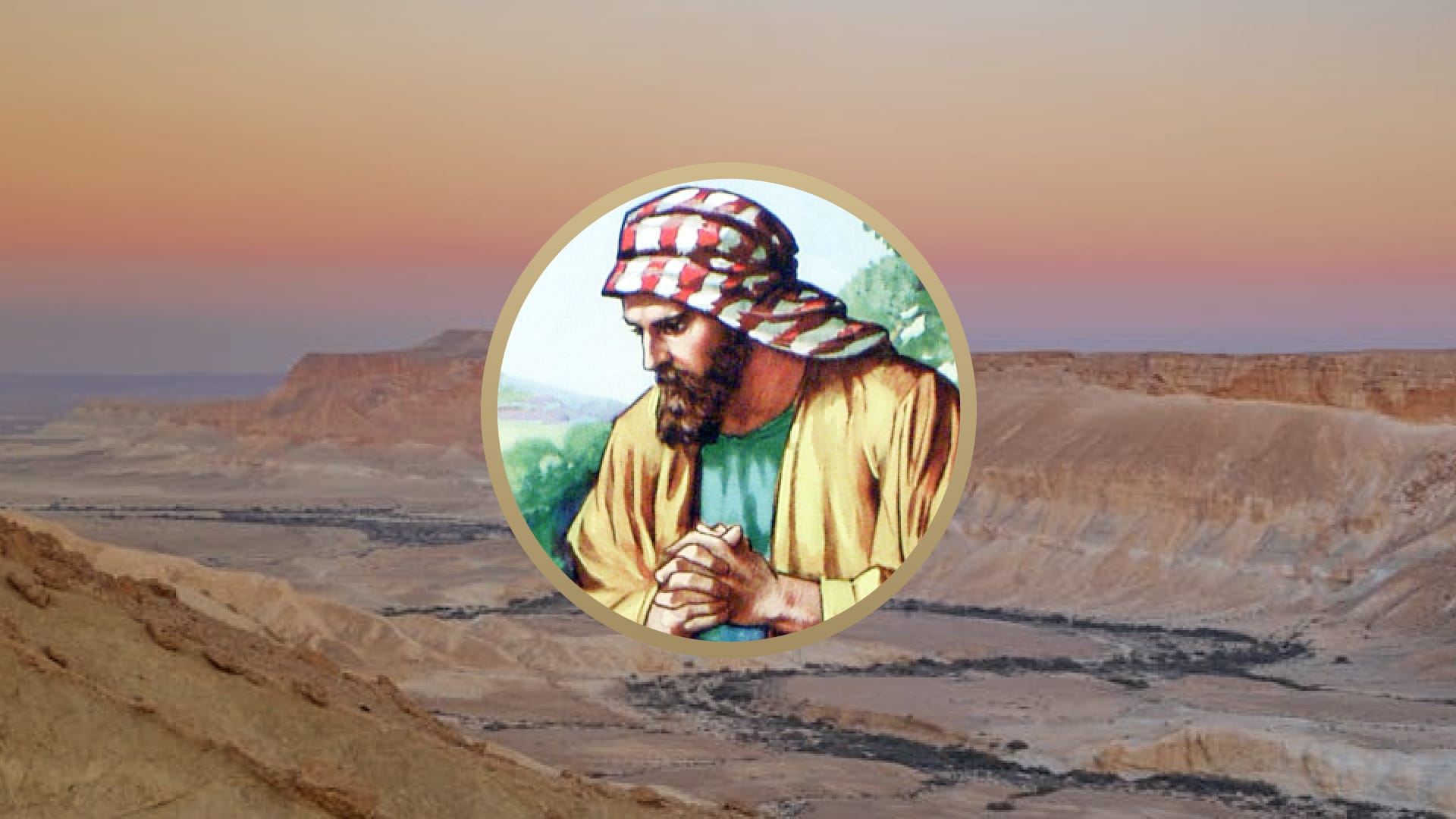
In His earthly ministry, Jesus Christ had a remarkable ability to influence lives so that men and women of very different backgrounds and cultures could blend together for God’s purposes. In Christ’s band of the twelve Apostles, the men were of very diverse backgrounds and occupations. Some of the men, such as Philip, came from a Hellenistic background, while others had names and family lineages that were distinctly Hebrew.
Of the many who sought out Jesus, one man was Nicodemus, a member of the Sanhedrin, the highest court of Judaism. On the opposite end of the spectrum, we find a Roman centurion who believed in Jesus and received the miracle he requested. From these various cultures, backgrounds, languages, and occupations, Christ formed His Church. Only the Lord Jesus could unite into one body people from every nation on earth, and He continues today to do the same!
In Luke 6:12–16, the twelve disciples are listed. “And it came to pass in those days, that he went out into a mountain to pray, and continued all night in prayer to God. And when it was day, he called unto him his disciples: and of them he chose twelve, whom also he named apostles; Simon, (whom he also named Peter,) and Andrew his brother, James and John, Philip and Bartholomew, Matthew and Thomas, James the son of Alphaeus, and Simon called Zelotes, And Judas the brother of James, and Judas Iscariot, which also was the traitor.”
One of Christ’s disciples, “Simon called Zelotes,” had a fascinating background that would have made him stand out among the apostles. Before his conversion, Simon the Zealot would have been a bitter enemy of a publican such as Matthew, or even of a Hellenistic Jew as Philip was. The term zealot is a reference to a particular radical political party whose mission was to throw off all Roman authority and lead a Jewish revolt against Rome as the Maccabees had once led against Greece.
In the New Testament account, we meet a Roman officer who would have been a direct threat to Simon. The Roman centurion whose servant Christ cured (see Matthew 8:5–7) was stationed with his men near the crossroads of Capernaum. These soldiers were stationed there for the specific purpose of keeping in check rebels such as the Zealots. At the same time, the Zealots had a stronghold north of the Sea of Galilee in a place called Gamla. The ridge there looks similar to a camel’s hump, and thus is so-named since the Hebrew word for “camel” is gamal.
The feeding of the 5,000 by Jesus was on the northeastern shore of the lake near Bethsaida, which was not too far from the Zealot stronghold at Gamla. Right after this miracle, some of the men there in the crowd forcefully tried to make Christ king. According to John 6:15, “When Jesus therefore perceived that they would come and take him by force, to make him a king, he departed again into a mountain himself alone.” From the geography, possibly the men who sought at that time to crown Jesus as the king of the Jews were Zealots.
These patriotic Jews probably reasoned that, if this Teacher from Nazareth was the promised Messiah and could feed 5,000 people, He would be more than willing to lead their revolt, and, if necessary, He could feed their army in the wilderness. With His healing powers, He could restore wounded soldiers to health. These Zealots were looking for a political Messiah to be the powerful leader of the Jewish nation, their king on His white charger.
However, Jesus would not accept the crown or the sword at this time. Indeed, one day, He as the King of kings and Lord of lords will return to earth, mounted on a white war horse. On that day, He will destroy the armies that oppose Him, and with a rod of iron He will rule the nations in righteousness.
Jesus did not need the swords of the Zealots to help Him establish His Kingdom. He did not then, nor does He now, rest His credentials upon His popularity with a political party. When Christ does come as a warrior, He will need neither the stronghold of Gamla nor the swords of the Zealots.
Yet, given His refusal of their overtures, Jesus chose a member of this militaristic group to be one of His twelve chosen Apostles. Not much is known about this particular Simon except for his being named in the various lists of the Apostles. He is listed in Luke 6:15 as “Simon called Zelotes.” The term zealot comes from the Greek word ζῆλος (zelos), which means “heat.” It is the root of our English word zeal.
Zealots were typically young men who were fervent, patriotic, and filled with a hatred for anything Roman. They were intensely devoted to their Hebrew roots. Their heroes were men such as Joshua, Othniel, Ehud, Gideon, and David and his mighty men. They wanted to revolt against Roman power similar to Judas Maccabeus’s revolt against Greek power. Simon the Zealot was one of these men. He was probably excited to accept Jesus’ invitation to be one of His disciples! Perhaps he had a continuing hope that Jesus would fulfill all that his passionate heart desired of Messiah.
In Matthew 10:4, Simon is called “Simon the Canaanite.” This name does not mean that Simon was a descendant of the pagan inhabitants of the land of Canaan. Rather, from statements that Christ made as recorded in the Gospels, as well as from the discussions of Jewish matters recorded in the Book of Acts, clearly all of Christ’s disciples were Jewish.
The word Canaanite is the Hebrew or Aramaic version of the Greek term “zealot.” The Hebrew word for “zeal” is קַנָּא (qana). In Matthew 10:4, this Hebrew word zealot is transliterated into the Greek word Canaanite. Matthew 10:4 and Luke 6:15 are actually communicating the exact same information. As is entirely fitting, Luke used the Greek term “zealot,” while Matthew employed the Hebrew term, which gives the same information as Luke recorded.
Outside of Simon’s being mentioned in the various lists of the twelve Apostles, we know nothing else of Simon the Zealot from the Biblical narrative. We can only surmise that it must have been disappointing for this ardent Hebrew patriot when his Master entered Jerusalem not on a war horse but on a lowly donkey.
Jesus’ purpose was clearly stated to the Roman procurator, Pontius Pilate. Pilate asked Him, “Art thou the King of the Jews?” (John 18:33). Jesus replied, “My kingdom is not of this world: if my kingdom were of this world, then would my servants fight, that I should not be delivered to the Jews: but now is my kingdom not from hence” (John 18:36). Perhaps when He said these words to Pilate, Christ thought of His ardent disciple, Simon the Zealot.
Simon the Zealot had to lay aside many preconceived notions. Jesus Christ does not always do for us what we expect Him to do. No doubt Simon the Zealot, as well as the other disciples, expected Christ to set Himself up as King of the Jews, to throw off Roman power, and to usher in the Messianic age.
These expectations were all crushed at Jesus’ crucifixion. The disciples did not comprehend the two comings of the Messiah. On His first advent, Christ had come to seek and to save the lost, not to be ministered unto but to minister, and to give Himself as a ransom for many. This mission would have been especially hard for Simon to understand. But, to his credit, the apostle did lay aside his notions of earthly glory and patriotic fervor to believe in and accept Christ as his Savior.
Another likely difficulty for men like Simon the Zealot to learn was to obey Christ’s command to “judge not.” These patriotic Jews thought themselves morally superior to those Jews, such as Matthew, who went along with the Roman rule. How difficult it must have been for Simon the Zealot to learn to lay aside his political prejudice and love Matthew the tax collector as a brother!
After the crucifixion and resurrection of Jesus, Simon Zelotes is mentioned in Acts 1:13 as being among the disciples who met in the Upper Room. However, rather than drawing his sword as he may have earlier supposed, instead Simon was commissioned by Christ to preach the Gospel.
Early church history suggests that Simon the Zealot became as valiant a soldier of the cross as he was a soldier of Hebrew nationalism. It is not certain where Simon labored as an evangelist. The author John Foxe suggested that Simon preached the Gospel as far as the British Isles, where he was crucified circa A.D. 74. Others have traced his ministry to Africa or Syria, where he died as a brave martyr.
The calling of Simon Zelotes teaches us that, in order to be Christ’s disciple, we must lay aside our aspirations, preconceived notions, prejudices, passions, and even our political ideals. We must surrender our zeal to Christ and allow Him to direct it into a proper channel—zeal for His Kingdom.

 22:09
22:09