

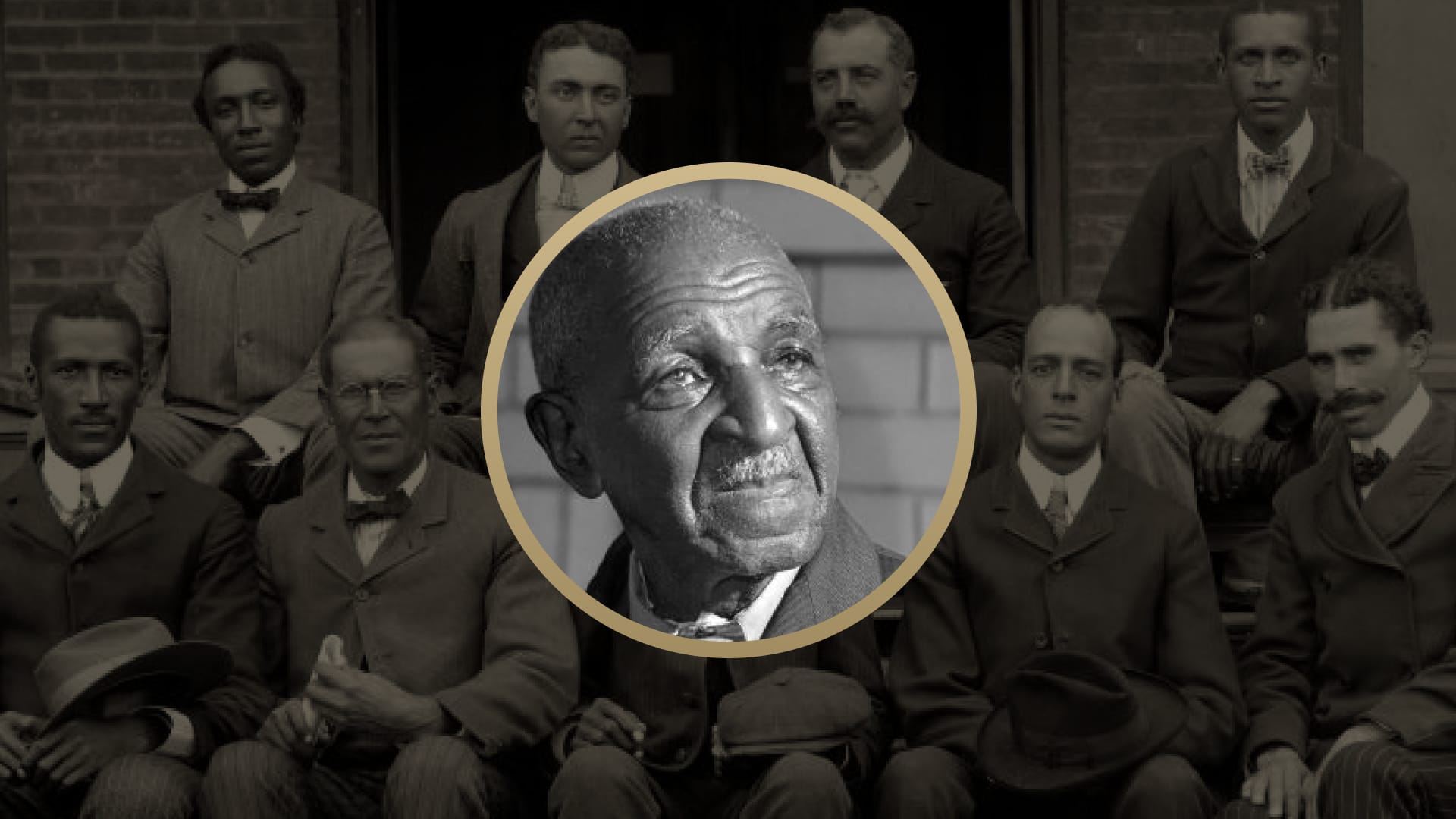
It was 1921 in Washington D.C. Politicians in their fancy suits rushed here and there, preparing for another day in the House of Representatives. Important matters were at hand. The war with Germany had recently ended. The world was changing fast.
America had taken center stage in world affairs. There was a great shift happening in population from smaller farm communities to great urban centers. Horses were giving way to fancy black automobiles. Cities were growing, and rural villages and towns were shrinking.
The halls of the political chambers were filled with men who had come to lobby for their various causes. Most were lobbying for powerful business interests. As often happened in Congress, side deals, quiet talks in the corners of the hall, winks, and handshakes promised support for this bill or that.
In a strange contrast to the bustling of the politicians, that particular day a thin man with a simple suit made his way toward the place where he had been invited to address the Ways and Means Committee. He was a black man from rural Alabama, and an invitation to address Congress was out of the ordinary. He carried an odd collection of bottles filled with various powders, creams, and liquids. He was here in Washington to plead for his beloved rural farming people in the American South.
The chairman of the committee, eager to get on to the bill concerning protective tariffs, gave the man from Alabama ten minutes to speak. The guest had a high, thin voice, but the words he spoke were fascinating. Instead of begging for favors, he began to open his bottles! He held up peanuts covered in chocolate, ground peanut hulls that could be used in polishing tin plate, peanut flour that could be used in making bread, powder that could be used in thickening ice cream, and medicine that might help with diabetes. His humble manners, his warm Southern humor, and his gentle spirit attracted the attention of every delegate on the committee.
At one point, with a polite smile, he held up another bottle, but then reminded the committee that his time was probably up. The chairman smiled and granted him another ten minutes.
He opened more bottles. He talked about products far beyond the peanut. He talked about the potential of the lowly sweet potato, the medicinal use of the chinaberry, and other overlooked but valuable products produced in the farms back home in Alabama and surrounding states. Once again, George Washington Carver’s time was up, but the chairman said, “Go ahead brother, your time is unlimited.”
Many decades earlier, near the end of the War Between the States, George Washington Carver had been born into slavery. His father had been killed even before Carver was born, crushed to death when he had fallen under a cart pulled by oxen. When Carver was an infant, he and his mother had been kidnapped by one of the lawless bands of raiding marauders that patrolled the Missouri countryside at the end of the war. When the owner offered to buy his kidnapped slaves back, the kidnappers refused to release the mother, but traded the infant boy for a horse. George Washington Carver grew up with no memory of his mother.
Fatherless and now motherless, Carver was raised by the plantation owner, who continued to care for him, even after the end of slavery. The young boy had an insatiable thirst for knowledge. He wanted to know the name of every bird, every flower, and every tree. He would come home in the evenings to dinner, his pockets stuffed with specimens. He would pull them out and ask the owner of the plantation to identify them. The kind man would usually give the same answer, “Son, I don’t know.”
Not only did Carver have a hunger to understand the mysteries of creation, he had a hunger to know the Creator. In every flower, every bird, every fish, and every tree he saw the wonder-working hand of the Creator.
At the age of ten, alone in the loft of his master’s barn, George Washington Carver was shelling corn when Bible verses and hymns he had learned came flooding into his heart. There, by the barrel of corn, he knelt down. In later years, he could not remember exactly what he prayed, but he was convinced that in those moments he trusted in the salvation provided by the death, burial, and resurrection of Jesus Christ.
From then on, there was a new purpose to Carver’s life. Having known God as Creator and Redeemer, he now wanted to love and serve his fellow man. Jesus came to earth to be a servant of man, and this is what Carver wanted to be. His favorite hymn was “Must Jesus Bear the Cross Alone.” The first stanza asks and replies, “Must Jesus bear the cross alone, and all the world go free? No, there’s a cross for everyone, and there’s a cross for me.”
The owner of the plantation offered Carver the opportunity to go to school in Neosho, Missouri. For two years, he learned everything his teacher could teach him. From there, he went to school in Kansas and then in Iowa, devouring every book he could get his hands on. Carver took employment as a cook in a hotel and opened a small side business of doing laundry.
One day, Carver attended church and sat in one of the back pews. The next day, he was surprised to receive an invitation to a large, splendid house. He went and found that one of the ladies in the choir had noticed his fine voice singing enthusiastically at the back of the church. This lady decided to offer the young man an opportunity to learn music and painting. Through the patronage of this lady, he was admitted to college in Iowa where he studied music and painting. He then went on to earn a bachelor’s degree and then a master’s degree in agriculture. Upon graduation, the brilliant young scientist was given an appointment with the faculty of Iowa State College, and was placed in charge of the greenhouse, the laboratory, and the department of botany.
George Washington Carver now was able to learn and find out more about the mysteries of God’s world. The birds, flowers, and trees that had puzzled him in boyhood puzzled him no more. As he stood each day before his classes, as he worked in his laboratory, and as he did research in his greenhouse, he would silently breathe prayers to God, asking for help in uncovering new ways to use plants to help his fellow men.
Carver’s great opportunity came when he received an offer from Booker T. Washington of Alabama to come to his new school at Tuskegee and teach science. Carver accepted and went to Tuskegee, where he would spend the rest of his life, giving himself for the needs of his fellow man. His Jesup Agricultural Wagons left the halls of Tuskegee and took learning to the farms and villages of the rural South. Wherever his Jesup Wagon parked, Carver would explain to farmers how to use their soil more effectively, how to rotate their crops for better production, how to fertilize their fields naturally, and how to use and market overlooked commodities.
George Washington Carver is most famous for discovering many remarkable uses of the sweet potato and the peanut. But Carver’s influence was far beyond these two commodities. His greatest legacy was the way that he overcame the prejudices of his generation. He helped white men, even former slaveholders, to appreciate the gifts of their black brethren. He set an example of not judging men by the color of their skin, laying aside prejudice, and following the example of His Master, Jesus.
The third verse of his favorite hymn contains a beautiful stanza that looks to the day that redeemed sinners see Jesus face to face: “Upon the crystal pavement down, at Jesus’ pierced feet, joyful I’ll cast my golden crown, and His dear name repeat.” More than any one man of his generation, George Washington Carver was responsible for building bridges of trust and appreciation between whites and blacks.
Sources and Further Reference:
Federer, William. George Washington Carver—His Life and Faith in His Own Words. St. Louis, MO: Amerisearch, 2003.


 22:09
22:09