

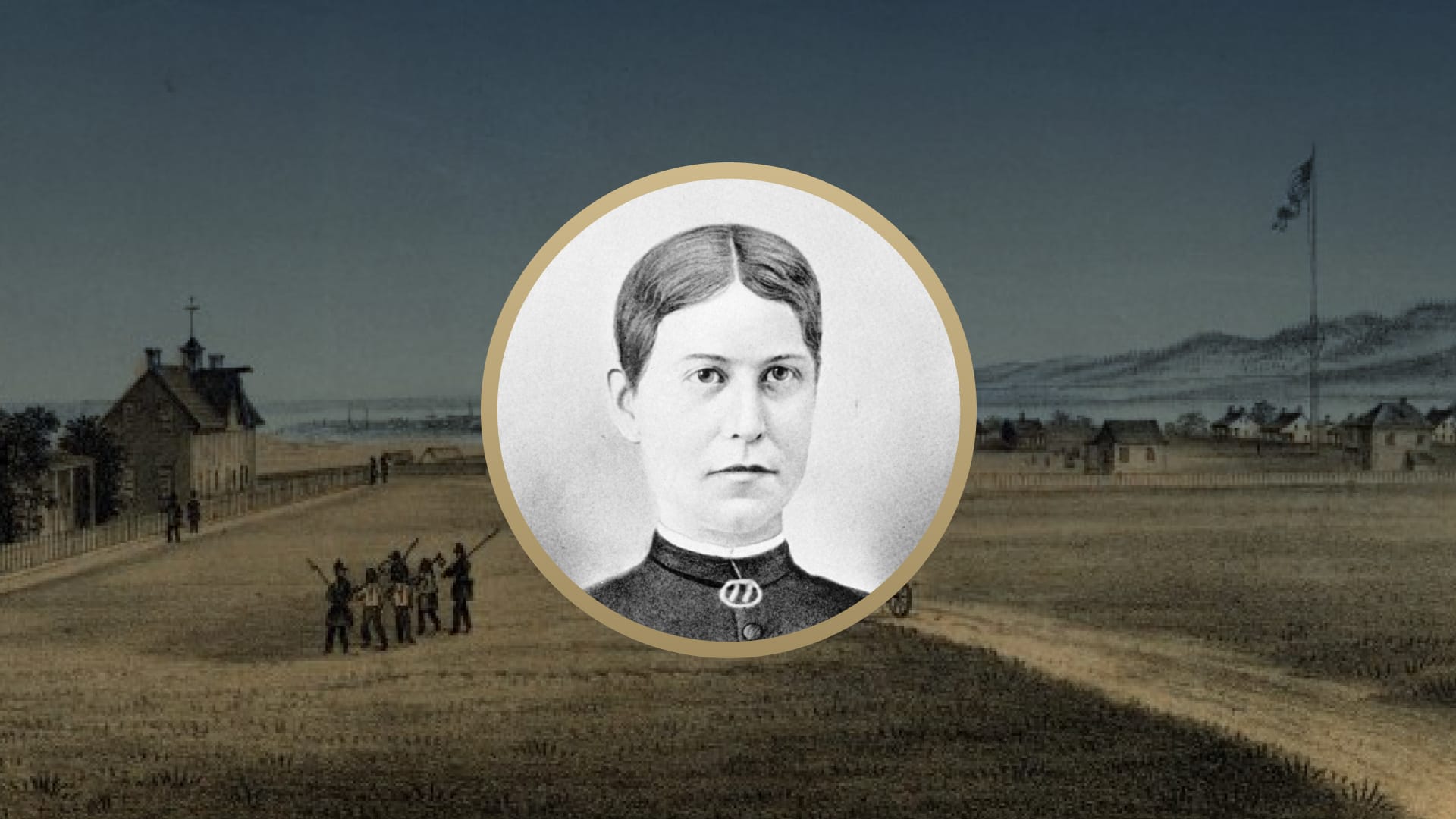
It was a simple wedding. It had to be. The bride and groom had only known each other in the last few months, but they were bound together by a purpose greater than themselves. The groom was a young medical doctor named Marcus Whitman who had offered himself as a missionary to the tribes of the Oregon Territory on the west side of the Rocky Mountains.
The bride was Narcissa Prentiss. She was the eldest daughter of Stephen and Clarissa Prentiss. Her father was a respected judge in Amity, New York, and also served as an elder in their local Presbyterian church.
Narcissa was considered one of the brightest and best young ladies in the community. She had been educated at Franklin Academy and had served as a teacher there for other young ladies. She was red-haired and vivacious, and many suitors had sought her hand in marriage. Narcissa was also famous in the local area for her beautiful soprano voice. This vibrant, young lady had been active in a recent spiritual awakening in her community, and God had enabled her to point other young ladies to a saving knowledge in the Lord Jesus Christ.
Now, Narcissa was getting married to a man she hardly knew, and the couple would afterward embark on a journey to the Oregon Territory, a savage and untamed land of harsh winters, wild animals, and uncivilized heathens. It seemed such a waste! But Narcissa Whitman had no regrets on her wedding day.
The bride wore a black dress. The attire was not because she was mournful, but because there had been no time or money to make any fancier wedding dress. The wedding ceremony was simple and included a communion service for the assembled guests. The room was packed with Narcissa’s friends and family who had come to see her once more. The honeymoon was to be a journey that no white woman had ever taken before! The wedded couple would travel overland to cross the Continental Divide and then penetrate the Indian country west of the mountains.
At the close of the wedding, the pastor announced a hymn that the bride had chosen for the occasion: “Yes, My Native Land, I Love Thee.” The congregation joined together in words that were very appropriate to the solemn occasion:
Yes, my native land, I love thee;
All thy scenes, I love them well;
Friends, connections, happy country,
Can I bid you all farewell?
Can I leave you, can I leave you,
Far in heathen lands to dwell?
After several stanzas, the congregation was suffused in tears, and one by one the voices were stifled by sobs. Only a few, including Narcissa in her clear soprano voice, were able to sing the fourth stanza:
Yes! I hasten from you gladly,
From the scenes I love so well,
Far away, ye billows, bear me;
Lovely, native land, farewell!
Pleased I leave thee, pleased I leave thee—
Far in heathen lands to dwell.
On the final verse, muffled weeping could be heard throughout the church. The courageous young bride sang the last stanza alone while the others wept.
In the deserts let me labor,
On the mountains let me tell
How He died—the blessed Saviour—
To redeem a world from hell!
Let me hasten, let me hasten,
Far in heathen lands to dwell.
The very next day, newlyweds Marcus and Narcissa Whitman set out on their long journey westward. It was hardly a honeymoon, but they braved the rigors of the trail together. Along with their companions, Henry and Eliza Spalding, the Whitmans reached the Rocky Mountains. Narcissa Whitman and Eliza Spalding became the first white women to cross the Continental Divide of the Americas.
The Whitmans settled in 1836 among the Cayuse tribe. They built a mission station on the banks of the Walla Walla River at Waiilatpu, in what is now southern Washington state, near the border of Oregon state. The Spaldings settled at Lapwai in what is now Idaho and ministered to the Nez Perce tribe.
Narcissa Whitman faithfully kept a diary and wrote letters to her mother back in New York. These letters provide a window into the lonely life of a missionary wife on the fringes of civilization. She shared her failures as well as her triumphs, her sorrows as well as her joys.
The Whitmans were blessed with a healthy baby girl that they named Alice Clarissa, after Narcissa’s mother. Little Alice brought a spark of joy to the mission station. However, it was a joy cut short by tragedy. When Alice was only two years old, the toddler picked up her little tin cup and wandered unattended down to the river bank. Later, her little body was found, and attempts at resuscitation were all in vain. The grieving mother trustingly yielded her little girl back into the arms of the Lord Jesus.
Mrs. Whitman became a second mother to several orphaned children who had lost their parents along the Oregon Trail. The Sager children, whose parents had died along the trail, were welcomed by Narcissa into the Whitman home. Several Cayuse children whose parents could not care for them were also compassionately received into the Whitman fold.
However, with the influx of settlers and the growing presence of white men in the Oregon Territory, many of the tribes began to feel uneasy and suspicious about the Whitmans’ motives. Were they secretly helping the settlers to steal Cayuse land?
The crisis came to a head in 1847 with an outbreak of the measles. The Cayuse had no natural immunity. The native Americans began to die in alarming numbers, in spite of the best medical care that Dr. Whitman could administer. Several Cayuse leaders became convinced that the doctor was poisoning them, and they connived a plan to kill Dr. Whitman and break up the mission station.
The Whitmans were warned about the plot, but both Dr. and Mrs. Whitman decided that they would remain at their post. On the morning of November 29, a Cayuse warrior slammed his tomahawk into the head of Doctor Whitman. A general massacre of the white men began, and shots rang out across the mission compound. Mrs. Whitman quickly gathered the children into a safe place in the upper story of their mission house. However, she left the children when she was lured out into the open by promises of safety from the attackers. As she came down the stairs, she passed her husband who was lying in a pool of his own blood. Amazingly, Marcus Whitman was still alive. She stopped by his side, and the two were able to exchange a few tender words. Several minutes later, Narcissa Whitman was shot by the rampaging murderers and died alongside her husband.
Today, the Whitman Mission National Historical Site preserves the mission compound at Waiilatpu. Narcissa Whitman left her own comfortable home in the East to go west and share the Gospel with the unreached. She willingly and kindly opened her home to orphaned pioneer children, abandoned Indian children, and others who needed shelter and love.
Sources and Further Reference:
Drury, Clifford Merrill. Marcus Whitman, M. D., Pioneer and Martyr. Caldwell, ID: Caxton Printers, 1937.

 27:22
27:22