

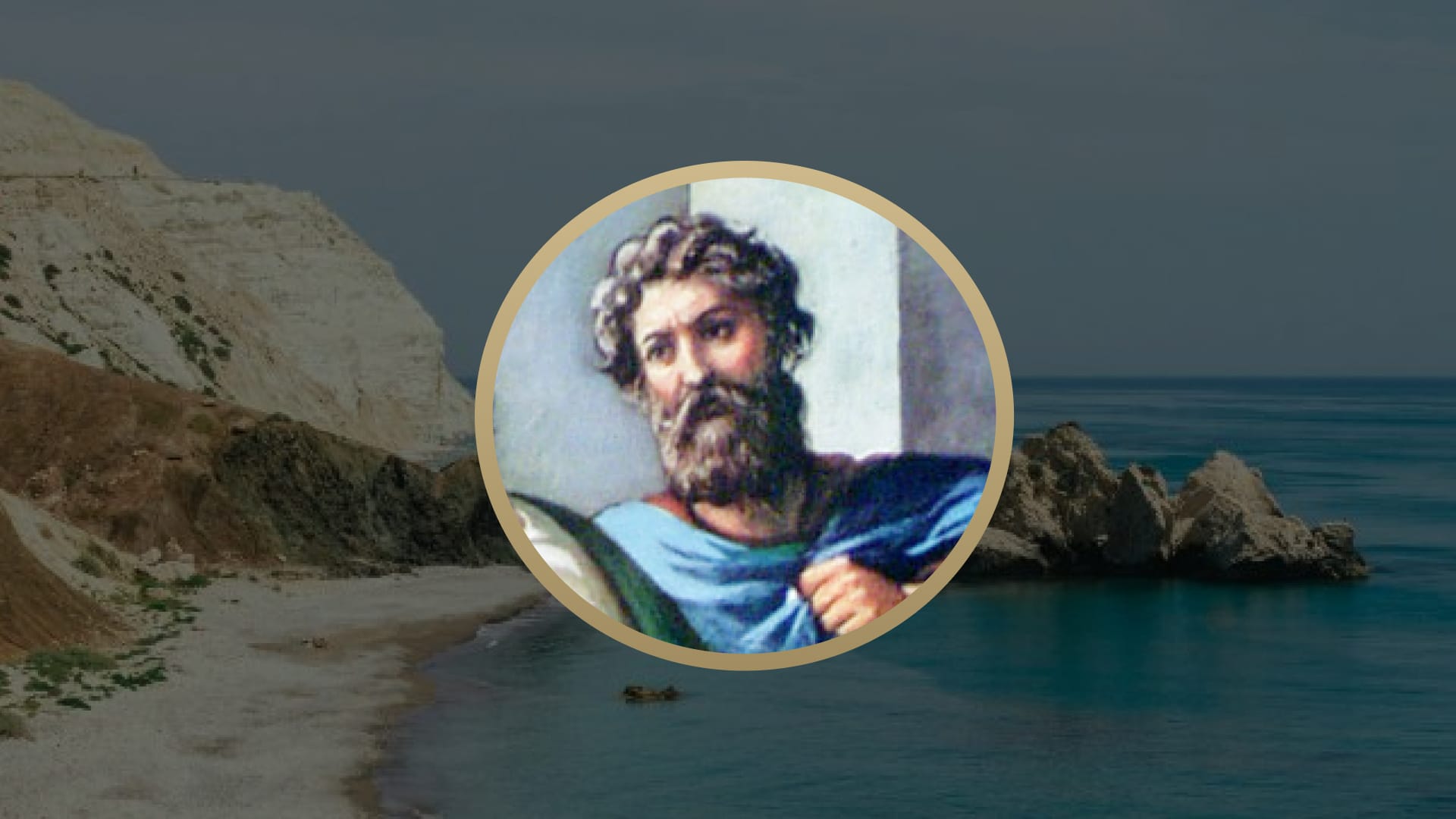
In the time following the Day of Pentecost, there was an explosive growth of the early church. During these days of the expanding early church, the Lord raised up a man who became a generous supporter, a tremendous encourager, and a loyal Christian brother to the saints. His given name was Joses, but he was soon called Barnabas, a name which fittingly means “the son of consolation or encouragement.”
Barnabas was a servant for the Master. He made his life’s work to pray for, befriend, select, and encourage other laborers in the Lord’s harvest.
This encouraging, faithful believer never wrote a book, although some scholars suggest that he may have been the author of the Book of Hebrews. It seems that Barnabas never preached a sermon. As far as history reveals, the man never pastored a church or had a specific ministry of any sort. Instead, he is always linked with others and stands humbly in the background.
Barnabas is not important for what he did; rather, he is notable for whom he influenced. There are times when influence is stronger than the power of position. In fact, influence is power, and Barnabas’s influence was the power of encouragement, a trustworthy example, and the ability to give gifts to the church that reaped ongoing benefits.
Barnabas is first mentioned in Acts 4, when the church was still young. This was a time when no seminaries, church buildings, mission boards, or programs existed, nor church funds accumulated in the “bank of Rome.” The church of Jesus Christ consisted of men, women, boys, and girls who had repented of their sins, trusted in the Lord Jesus, and had been baptized as followers of Christ. They were filled with the Holy Spirit and were ready to go into all the world and preach the Gospel to every creature.
During this time, according to Acts 4:36–37, a Levite from Cyprus stepped forward to contribute financially to the early church. “And Joses, who by the apostles was surnamed Barnabas, (which is, being interpreted, The son of consolation,) a Levite, and of the country of Cyprus, Having land, sold it, and brought the money, and laid it at the apostles’ feet.” This generous gift from Barnabas was an early example of the charitable giving that continues even now after twenty centuries of advancing the name and Gospel of the Lord Jesus Christ to all the ends of the earth.
Barnabas gave willingly, even though he had no assurance of how his money would be used or what lasting impact the gift might have. Although it may have seemed that the infant church would be snuffed out by her powerful enemies, Barnabas still gave freely and wholeheartedly. He did not attach strings to his gift. He did not ask for a leadership position in the church in return for his gift. He simply “laid it at the apostles’ feet.”
The accurate recordkeeping of the lineage of the Jewish people over thousands of years is remarkable! Because of this practice, Barnabas’s lineage traced to his being a Levite. This lineage meant that he was from the same tribe as Moses and Aaron, and he would have had regular duties in the Temple in Jerusalem. So, what would have brought him from the island of Cyprus to Jerusalem? When had he come to know and trust in Jesus, the everlasting great High Priest?
The duties of the Levites included preparing the lambs for sacrifice, lighting the menorah, baking the shewbread, and performing menial tasks, such as carrying wood, burning animal carcasses, and disposing of ashes. Had Barnabas been present the night that Jesus said in the Temple courtyard, “I am the Light of the World”? Had he been in the Temple when Jesus physically purged the courtyards of the buyers and sellers? Had this Levite witnessed the trial of Jesus? We do not know. What we do know is that Barnabas was a wholehearted follower of Jesus.
Barnabas was the first to welcome Saul of Tarsus, the newly converted former persecutor of the believers. According to Acts 9:26–-27, “And when Saul was come to Jerusalem, he assayed to join himself to the disciples: but they were all afraid of him, and believed not that he was a disciple. But Barnabas took him, and brought him to the apostles, and declared unto them how he had seen the Lord in the way, and that he had spoken to him, and how he had preached boldly at Damascus in the name of Jesus.”
When the church in Jerusalem selected a man to go to Antioch to determine whether or not the new Gentile converts were genuine or questionable, guess whom they chose. “They sent forth Barnabas, that he should go as far as Antioch. Who, when he came, and had seen the grace of God, was glad, and exhorted them all, that with purpose of heart they would cleave unto the Lord. For he was a good man, and full of the Holy Ghost and of faith: and much people was added unto the Lord” (Acts 11:22–24). These simple words of praise recorded in Scripture are remarkable for their directness. Barnabas was “a good man” and he was “full of the Holy Ghost.”
When Barnabas desired a helper in Antioch, he chose Saul of Tarsus. He even journeyed all the way to Saul’s native town on the southern coast of Asia Minor to find him and encourage him to come to Antioch. Even today, a true encourager would be like Barnabas, willing to give not only his possessions, but also his time and effort to encourage others in the faith.
While it is one thing to give your money, time, and resources to the cause of the Gospel, it is quite another to give yourself for the cause of Christ! Barnabas did both. When the Holy Spirit separated two of the Christians at Antioch to go on the first missionary journey, He selected Barnabas and Saul. “The Holy Ghost said, Separate me Barnabas and Saul for the work whereunto I have called them” (Acts 13:2).
Although the Apostle Paul is often considered as the peerless leader of all the missionary journeys recorded in the Book of Acts, Barnabas actually may have been the leader at first. Luke, under the inspiration of the Holy Spirit, used the name of Barnabas first when he recorded the Holy Spirit’s selection of the two men.
In their travels, the two missionaries went first to Barnabas’s homeland, the island of Cyprus. A few souls were saved there, including the Roman procurator, Sergius Paulus. Initially, Barnabas and Saul were accompanied by Barnabas’s nephew, a young man named John Mark.
As the missionary journey continued, Barnabas quietly receded into the background and Paul took the forefront. Upon reaching Perga on the southern coast of Turkey, the record was given as “Paul and Barnabas.” At this point too, John Mark decided to abandon the journey and return home.
Upon the completion of the first journey, another one was planned. This second journey would be for the purpose to revisit and check on the churches. On this second journey, Barnabas wanted to take his nephew again; however, Paul did not. The disagreement resulted in a point of contention between the two missionaries, according to Acts 15:39.
Faithful servants of God sometimes disagree. In this case, Paul distrusted John Mark because of his previous desertion from the mission. Yet, Barnabas wanted to give the young man a second opportunity to participate in the work. The result: the two missionaries separated and went in different directions. It is recorded later in Scripture that God richly blessed the labors of Paul and his new co-laborer, Silas. Also recorded in Scripture is that God blessed the efforts of Barnabas to encourage and strengthen young John Mark.
While the ministry of Barnabas faded quietly into the background, it is abundantly clear that Paul and Barnabas were later reconciled. In his letters to the Corinthian church, Paul spoke well of Barnabas. Perhaps the greatest credit that Paul ever bestowed upon his dear friend, Barnabas, was recorded in his last epistle to Timothy, “Take Mark, and bring him with thee: for he is profitable to me for the ministry” (II Timothy 4:11). The young man Paul once distrusted was now a trusted worker in the ministry! All who have ever read the Gospel of Mark have Barnabas to thank for encouraging a young man to follow Christ and try again.
Barnabas was a true encourager. He invested in the lives of others through his prayers, his words, and his personal example. We need more men like him—good men who are “full of the Holy Ghost and of faith” (Acts 11:24).

 27:22
27:22