
Not many girls are given the name Phebe anymore. However, Phebe is one of the most noble names that a Christian parent could give their infant daughter. This New Testament lady was given the blessed privilege of carrying a letter that has proved to be the instrument of salvation to countless souls throughout Christian history. Phebe beautifully fulfilled the meaning of her name, and brought “light” to the believers in the city of Rome.
Consider Phebe. She occupied a very quiet place in church history. Although her name is mentioned only once in the Bible, she is worthy of our careful study and admiration as a true heroine of the New Testament era.
Near the end of his third missionary journey, Paul had written the Epistle to the Romans from the city of Corinth. He had not yet visited Rome, but he knew many of the Christians there and had a great desire to go to Rome and see them face to face.
The Book of Romans is considered one of the great doctrinal masterpieces of the New Testament. It was the fullest explanation of the doctrine of salvation. After the letter was written, it was carefully rolled up and handed by Paul to an unexpected emissary.
Unlike most of the letters Paul wrote, this one was not carried by a young, courageous man in the ardor of youthful zeal. Instead, the letter was entrusted into the hands of a woman. This woman from the Corinthian area was making a journey to the capital of the Roman Empire. The journey was not typical for women of the first century to embark upon. Sea travel was feared even by men! Sailors caught in storms at sea would often panic and cry out to the gods to save them.
Yet, with courage in her eye and faith in her heart, Phebe boldly stepped aboard a ship to carry this document to the Christians for whom it was destined. Little could she know that the document in her care would still be read twenty centuries after her mission was accomplished.
After Paul had unfolded the doctrine of salvation by faith in Jesus Christ in the first eleven chapters of the Book of Romans, he then enjoined Godly living and practical piety in chapters 12–15. He paused in the opening verses of Romans 16 to write, “I commend unto you Phebe our sister, which is a servant of the church which is at Cenchrea: That ye receive her in the Lord, as becometh saints, and that ye assist her in whatsoever business she hath need of you: for she hath been a succourer of many, and of myself also.”
Paul’s words were a generous commendation of a virtuous and humble Christian lady. Phebe was not on a mission to seek applause. She was merely doing her duty—delivering a message that had been entrusted to her. But by that quiet discharge of duty, Phebe has become the instrument of blessing to many because of the letter that she carried.
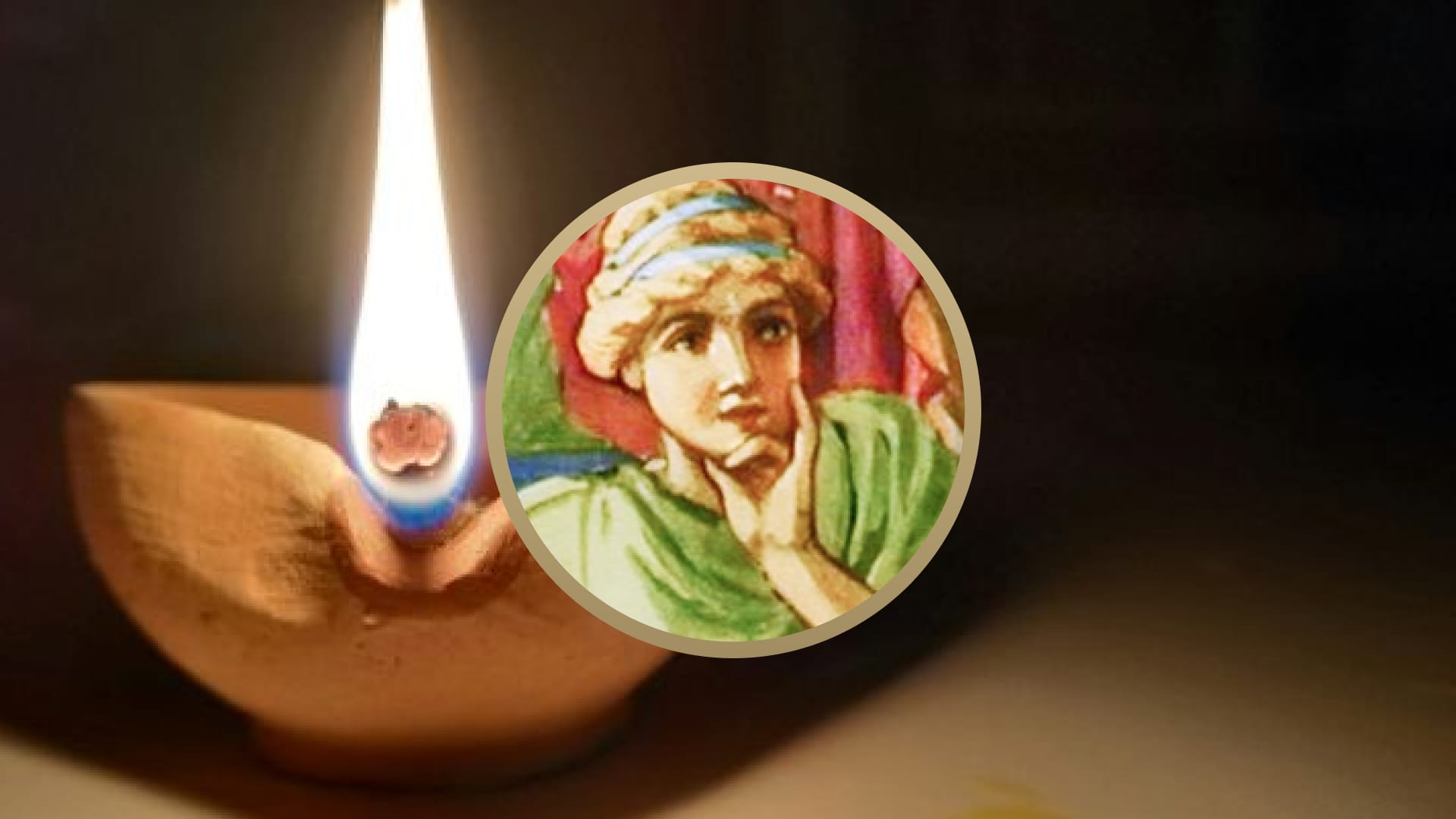
Consider what Paul had to say about Phebe. First, her name has significant meaning. It is Greek and comes from the root φῶς (phos) meaning “light.” It is the same root as our word photography. Her name is very fitting for such a “shining” Christian as she seems to have been. The document she carried to Rome has proved to be a source of light to all those who have been enlightened to a knowledge of salvation by the truths presented in the Book of Romans.
Paul referred to Phebe as “a sister” and “a servant of the church which is at Cenchrea” (Romans 16:1). The name of the city, Cenchrea, means “millet.” Indeed, the city was the main grain port for Corinth; it was located seven miles southeast of Corinth, east of the isthmus on the Saronic Gulf. In Cenchrea, ships from Alexandria and Rome would lie at port while their goods were loaded and unloaded and transported to and from the bustling city of Corinth. Cenchrea was known as a rough city full of sailors and dock workers who were an immoral and rowdy lot.
Paul had visited Cenchrea briefly near the end of his second missionary journey. In this city was a vibrant church, perhaps planted when Paul stopped there. Phebe was a member of this church—and not only a member, but a servant. The word servant is the feminine form of the word deacon, a term used often in the New Testament for both men and women in unofficial roles of service or ministry. This term applied to Phebe demonstrates that, although women were not given the official office of deacon in the New Testament, they are still blessed for a sweet spirit of service.
Paul exhorted the believers of Rome to receive Phebe in the Lord and to assist her in whatever business she had need of. This comment seems to indicate that Phebe had a purpose in traveling to Rome that was in addition to her voluntary role in carrying this message. Perhaps she had a petition to present to the government officials. Perhaps she had a trade similar to that of Lydia and thus had business in Rome. We do not know the purpose of the visit, but it must have been important. Paul exhorted the Roman Christians to assist their spiritual sister Phebe in whatever business that she had in the capital.
The reason Paul gave for helping Phebe was that “she hath been a succourer of many, and of myself also.” To the merciful, God is merciful. It is the succorers, the helpers or those who aid others, whom God delights to help. Phebe was a helper with a servant’s spirit. She was a courageous, humble sister who received a high commendation from the Apostle Paul.
Phebe probably did not realize that two thousand years after the quiet deed of service that her name would still be read and venerated. Little did she know that mothers would one day name their daughters Phebe (or “Phoebe”) in hopes that these little girls would grow up to become helpers and servants in the church, spreading the Gospel light to all around.
Phebe was faithful to shine the light of Christ where she was. She did not seek applause. She did not seek recognition. She was a reflection of the true light which is found in the Lord Jesus Christ. May God enable us to willingly serve Him and spread the light of the Gospel whenever and wherever our business may take us!