
Tax collectors were despised by all patriotic Jews in the first century. Tax collectors, or publicans as they were called in the Bible, were viewed as collaborators with Roman tyrants at best, and merciless parasites or outright thieves at worst!
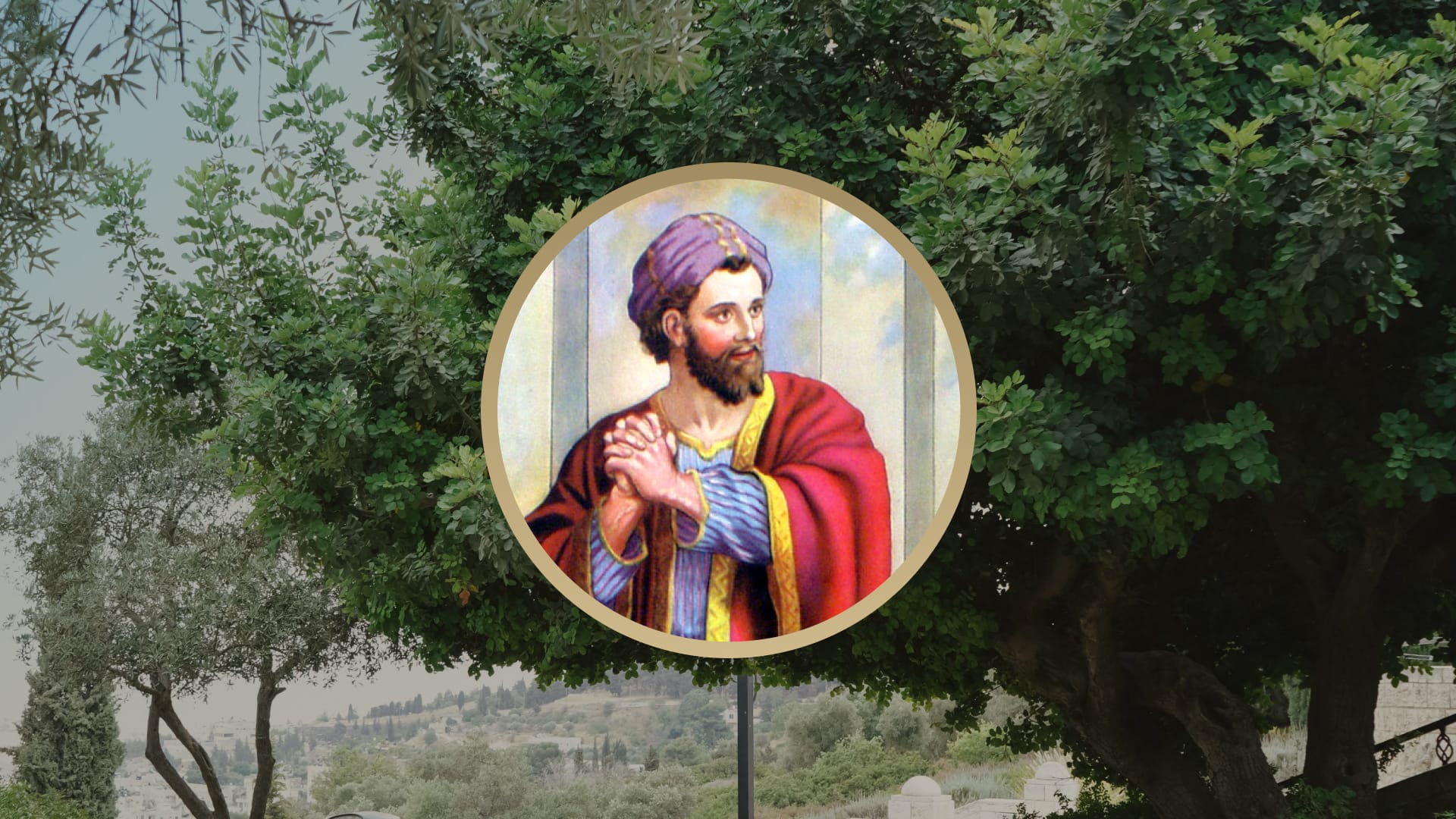
Zacchaeus was not only a tax collector. He was locally known in the region around Jericho as a chief tax collector, meaning he was not only wealthy but also an overseer of the other tax collectors.
What compelled Zacchaeus, despised by his fellow Jews, to climb a tree to see the Son of Man? What is it that continues to draw men of every sordid and shameful background to the Savior? In this specific chief tax collector’s case, perhaps it may have been curiosity. Or might it have been a conviction? Whatever impetus made him climb up the tree, Zacchaeus came down from the tree a repentant sinner, a sinner saved by the Christ Who continues to call all men everywhere to repent.
The account of Zacchaeus is given in the Gospel of Luke. Jesus had already steadfastly set His face to go up to Jerusalem. At this time, He was making His final trip down the Jordan valley to ascend to Jerusalem in order to keep the Passover. Along the way, Jesus encountered blind Bartimaeus just outside of Jericho and stopped to heal him. Now Jesus entered into the city of Jericho itself.
“And Jesus entered and passed through Jericho. And, behold, there was a man named Zacchaeus, which was the chief among the publicans, and he was rich. And he sought to see Jesus who he was; and could not for the press, because he was little of stature” (Luke 19:1–3). To hold the position of chief publican was a notable office indeed. The taxation system of Jesus’ day was very different from our own system or from the Hebrew system in the Old Testament.
The Roman Empire was supported by heavy taxation which was used to fund not only the Roman army but also the various public projects of the empire, such as the road system, government salaries, the bread dole, and even various public entertainments in the theaters. Rather than taxing the population directly, the Roman government imposed regional taxes. Different regions of the empire were evaluated as to how much tax could be imposed, and a yearly sum was demanded from each province.
To obtain the tax, government officials hired private contractors to collect the tax. In fact, enterprising entrepreneurs could bid on an area, promising to provide the government with a yearly sum, and the contract would go to the highest bidder. Rome allowed these contractors to collect the tax by whatever means necessary. The Roman officials did not bother with how much was collected as long as the government got their share.
Tax collectors were at liberty to do whatever they wanted with the extra “profit” thus obtained. These taxmen were notoriously unjust in their collection practices. They often charged (or taxed) the people more when they thought they could get more. Tax collectors often would go easy on their friends but then be hardhanded with others. The taxmen schemed, lied, and threatened people in order to line their pockets with the surplus income.
The fact that Zacchaeus was a chief publican indicates that he was at the top of a local pyramid scheme and had other subcontractors working for him. Jews hated all tax collectors, but especially Jewish ones. The Hebrew name of Zacchaeus means “purity.” However, as a Jew, he would have been deemed as unclean and seen as a traitor to his own people and a collaborator with the foreign occupation.
Given his occupational background, it is highly interesting that Zacchaeus had a deep curiosity to see Jesus, the Teacher from Nazareth. “And he sought to see Jesus who he was; and could not for the press, because he was little of stature. And he ran before, and climbed up into a sycomore tree to see him: for he was to pass that way” (Luke 19:3–4). Other men of Zacchaeus’s occupation had already seen Jesus. One disciple of Jesus was Matthew, a former tax collector.
Earlier in the Gospel record, John the Baptist had baptized some publicans near Jericho. Very possibly these repentant publicans were colleagues—and perhaps even employees—of Zacchaeus. Having seen their changed lives, he was intrigued to see Jesus for himself and, thus, he climbed a sycamore tree to see this Man. This particular species of wild fig tree that Zacchaeus climbed has large leaves that would hide the despised little man from view, allowing him to see Jesus while not being seen himself.
But no man can hide from the gaze of the Son of God. “And when Jesus came to the place, he looked up, and saw him, and said unto him, Zacchaeus, make haste, and come down; for to day I must abide at thy house. And he made haste, and came down, and received him joyfully. And when they saw it, they all murmured, saying, That he was gone to be guest with a man that is a sinner” (Luke 19:5–7).
Jesus knew exactly the condition of the heart of Zacchaeus. He knew of the man’s curiosity. He knew of this tax collector’s shameful and sinful past. He knew Zacchaeus in his hiding spot in the tree. And yet, Jesus purposely and publicly called out to the chief publican and invited Himself over to lodge and eat with him and his family. The fact that Zacchaeus received Jesus “joyfully” indicates that he already had a longing to see the Master, but was perhaps ashamed of his own sins and embarrassed by the multitude, which no doubt despised him.
“And Zacchaeus stood, and said unto the Lord; Behold, Lord, the half of my goods I give to the poor; and if I have taken any thing from any man by false accusation, I restore him fourfold” (Luke 19:8). Zacchaeus promised to follow the Old Testament regulation for restitution as given in Exodus 22. He not only promised to cease his unlawful and unjust business practices, but he offered generous restitution—with interest—of the things that had been stolen.
Have you ever, in Zacchaeus’s words, “taken any thing from any man”? You have an opportunity and an obligation to make amends and appropriate restitution. Ask the Holy Spirit to search your heart and yield to His promptings to repent, clear your conscience, and gain a good name. The Lord sees you in your “sycamore tree” as surely as He saw Zacchaeus! And He desires to lodge with you, bring salvation to your house, and accomplish His purposes for your life.
The passage ends with a gracious statement of the Master. “And Jesus said unto him, This day is salvation come to this house, forsomuch as he also is a son of Abraham. For the Son of man is come to seek and to save that which was lost” (Luke 19:9–10).