
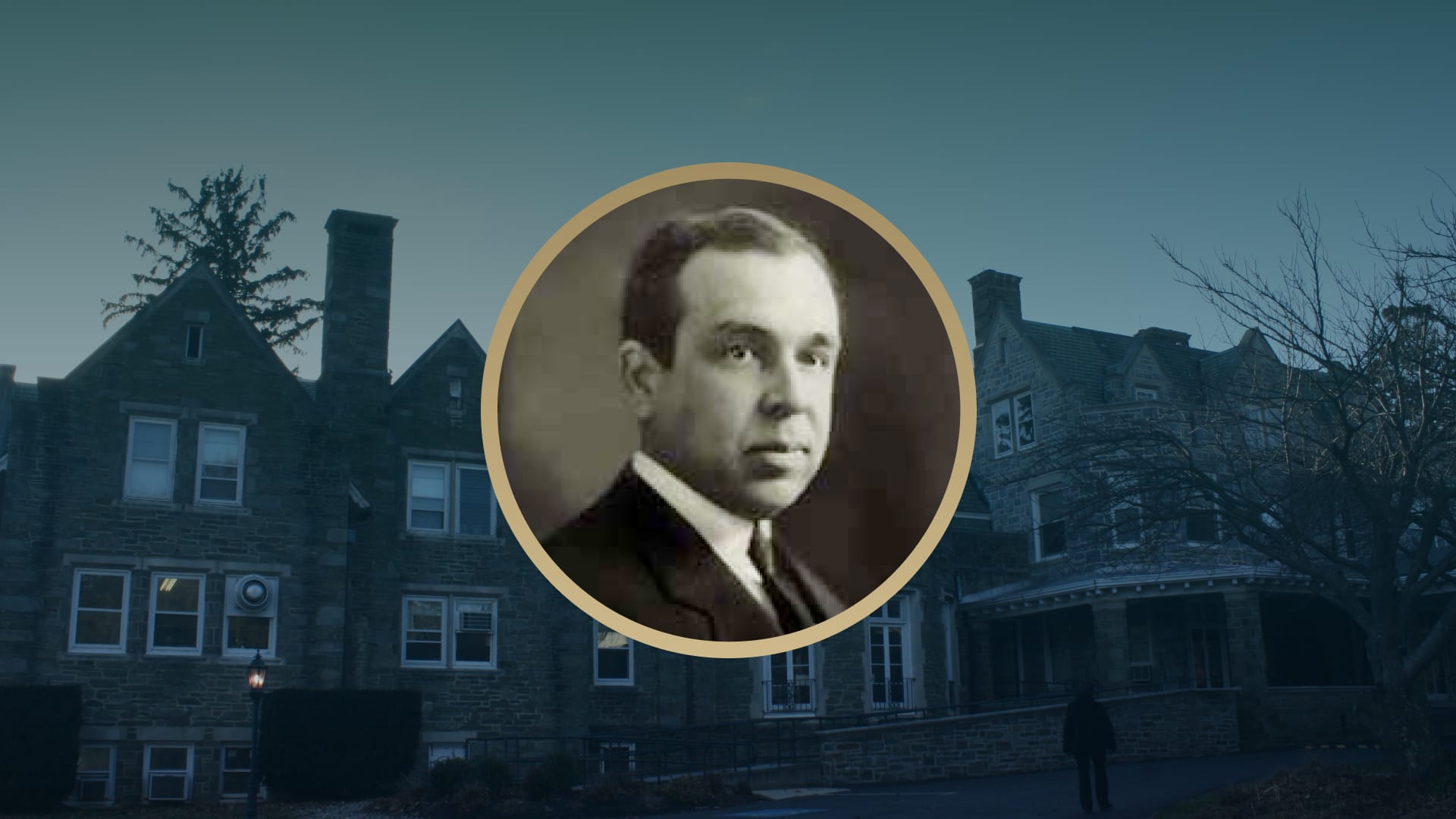
Finally! The mail had arrived. The elderly lady opened her front door to find the package the postman had placed there. The package was from her son; she had been praying and waiting for this box for many long years. With trembling excitement, she opened the box to find a bound book with the simple title, The Virgin Birth of Christ.
This book was the magnum opus of her son! It was the crowning work of his long and brilliant career as a theologian. The book contained a scholarly defense of the truth of the inspired account of Christ’s virgin birth.
The lady was in her eighties, and she rejoiced to see this fruit of her son’s many years of labor. More than any other man of his generation, her son would be regarded as the foremost champion responsible for maintaining the truth of God in an age of theological liberalism and rationalism.
Some mighty men are destined by God to wage war against flesh and blood enemies that threaten our physical survival. Other mighty men are destined to wage war against the poisonous ideas that threaten our spiritual survival as a Christian civilization. Of this latter group of mighty men was J. Gresham Machen.
Many conservative theologians and pastors today have heard of this man and have perhaps read his writings. Machen is known as a brilliant scholar, a champion in the early Fundamentalist movement, and the founder of Westminster Theological Seminary. While many have read the output of his mighty pen, few are aware of the warm hand that guided that pen.
John Gresham Machen was born July 28, 1881, in Baltimore, Maryland. His father was a distinguished lawyer who spent sixty-two years in the active practice of law. His father became well-known in Baltimore for his integrity and piety. His mother was of the Greshams from Macon, Georgia.
From his early boyhood, J. Gresham Machen was exposed to the Word of God. He committed to heart the Westminster Shorter Catechism. In the living room where his father led family devotions, young Machen learned to love the Bible. He was an active boy who took a bright interest in everything around him, from the dissection of a beetle to regular practice of piano lessons to excitedly rooting for the home baseball team—the Baltimore Orioles.
By the age of twelve, Machen knew the names of all the kings of Israel and Judah and could intelligently discuss their virtues and vices. He loved to travel and journeyed with his parents to his mother’s ancestral home in Georgia. He loved the beautiful vines and flowers of the deep South where his mother was reared. Machen also loved the rugged beauty of the White Mountains of upper New England and the coastline of Maine where his family would often spend their summer vacations.
When he was fifteen, Machen became a professing member of his parents’ Presbyterian church in Baltimore. With the blessing of his parents, he attended Johns Hopkins University. There he became skilled in the Greek and Latin classics. During this period of his life, he vacillated between the study of law and the study of economics. His parents did not want to force their will upon their son, but willingly they gave their Godly advice and counsel whenever their son requested it.
After graduating from Johns Hopkins, the young scholar was still undecided as to his future. He took an extended trip to Europe during the summer of 1901. At this time, Europe was in the Golden Age of peace. Machen toured London, Paris, Milan, Venice, Florence, Pisa, and climbed mountains in the Swiss Alps. He then traveled through Ghent, Brussels, Amsterdam, and then back to Great Britain.
Upon his return to the United States, Machen had decided to return to Johns Hopkins for graduate studies. But his plans changed, and instead he entered Princeton in 1902. The contrast was great—while Johns Hopkins University represented the speculative liberalism of the new century, Princeton represented the staunch conservatism of the old century.
But before Machen could be a champion of truth and carry on the heritage of Princeton, he first had to win the victory in his own mind. At the time that Machen began to study theology, the attractions of German rationalism and higher criticism were very strong. Even at Princeton, their pull could be felt.
Young Machen took a year abroad to study theology in Germany and fell under the charms of Professor Wilhelm Herrmann. While earnestly teaching the morals and excellence of Jesus, Dr. Herrmann rejected the inspiration of Scripture, merely smiled at the accounts of the miracles, denied the literal virgin birth, and minimized the importance of the blood atonement. Essentially, he taught that Jesus was only an exemplary man, not God.
Machen was both appalled and attracted at the same time. While this contemporary teaching opposed the religion of his father, the young scholar found something charming in Herrmann’s version of Christianity. The old-fashioned historical Christ of the Bible did not seem to fit with the modern world; the new social views—universal brotherhood of man, toleration of variant dogmas, and rationalistic science—seemed to fit much better with Herrmann’s way of extrapolating good morals and maxims from the teachings of Jesus without believing in the “myths” of His miracles, or His bloody death and, as Herrmann taught, the “supposed” resurrection.
During this time of theological consideration, Machen maintained a close correspondence with his parents, especially his mother. She fervently prayed for her son far away in Germany, especially that God would protect him from error and guide him in truth.
Machen hesitantly returned from Europe in 1906 to join the faculty of Princeton Seminary as a professor in New Testament Greek. Still plagued with doubts theologically, he refrained from signing any statement of faith. Gradually, the faithful prayers of his mother, the example of Princeton professor B. B. Warfield, and his study of the Greek New Testament brought Machen to a firm decision. In 1914, he was ordained as a minister of the Gospel of Jesus Christ and embraced the Word of God as the absolute standard of faith and practice. His mother’s prayers were answered.
During World War I, Machen traveled again to Europe, this time to serve with the YMCA and pastor soldiers. He saw that Herrmann’s conception of a universal brotherhood of man and a social Jesus could not help a war-torn Europe. Only the Christ of the inspired Bible, the virgin-born Son of God, and His atoning death, bodily resurrection, and the promise of His glorious Second Coming could give hope to a world in turmoil.
For the remainder of his life, J. Gresham Machen became a proclaimer of the Christ of the inspired Scripture. His first major work, The Origin of Paul’s Religion, was a scholarly rebuttal of the teaching of Modernism, which erroneously taught that Paul’s religion was based on Greek philosophy. Machen followed his first book with a second one. Christianity and Liberalism sharply drew the battle lines between truth and error. His next book was titled What is Faith? In it, Machen demonstrated that only faith in the blood atonement of Jesus Christ could save men from sin.
Machen’s battle for truth and against error gained him many enemies. Intellectuals called him unscientific. Progressives called him old-fashioned. Populist Fundamentalists called him a Calvinist. Ecumenicals called him divisive.
Machen was eventually forced to break with Princeton Seminary. He founded his own institution of higher learning, Westminster Seminary. Increasing liberalism forced him and the few men that stood with him to withdraw from the Northern Presbyterian Church to form the Orthodox Presbyterian Church. Machen’s only serious romance ended because the woman he loved would not agree with him on the nature of Christ’s deity. Through all the trials of life, Machen’s mother remained his faithful supporter and prayer warrior.
During these years of controversy, Machen worked on what would be the magnum opus of his life. His greatest work, The Virgin Birth of Christ, was a scholarly defense of this essential Biblical doctrine. When his elderly mother finally received her own copy in the mail, her eyes filled with tears when she opened it. Inside the book, she saw that the book had been simply dedicated “To Mother.”
J. Gresham Machen followed his mother to the grave at the young age of fifty-five, only seven years after the publication of his book, Virgin Birth. He left an enduring testimony. Everyone who loves the venerable and true “faith of our fathers” owes Machen a debt of gratitude. Simply and well-stated, the inscription on his tombstone, written in Greek, translates as “Faithful unto Death.”
Sources and Further Reference:
Stonehouse, Ned B. J. Gresham Machen: A Biographical Memoir. Carlisle, PA: Banner of Truth, 2019.

 31:19
31:19