
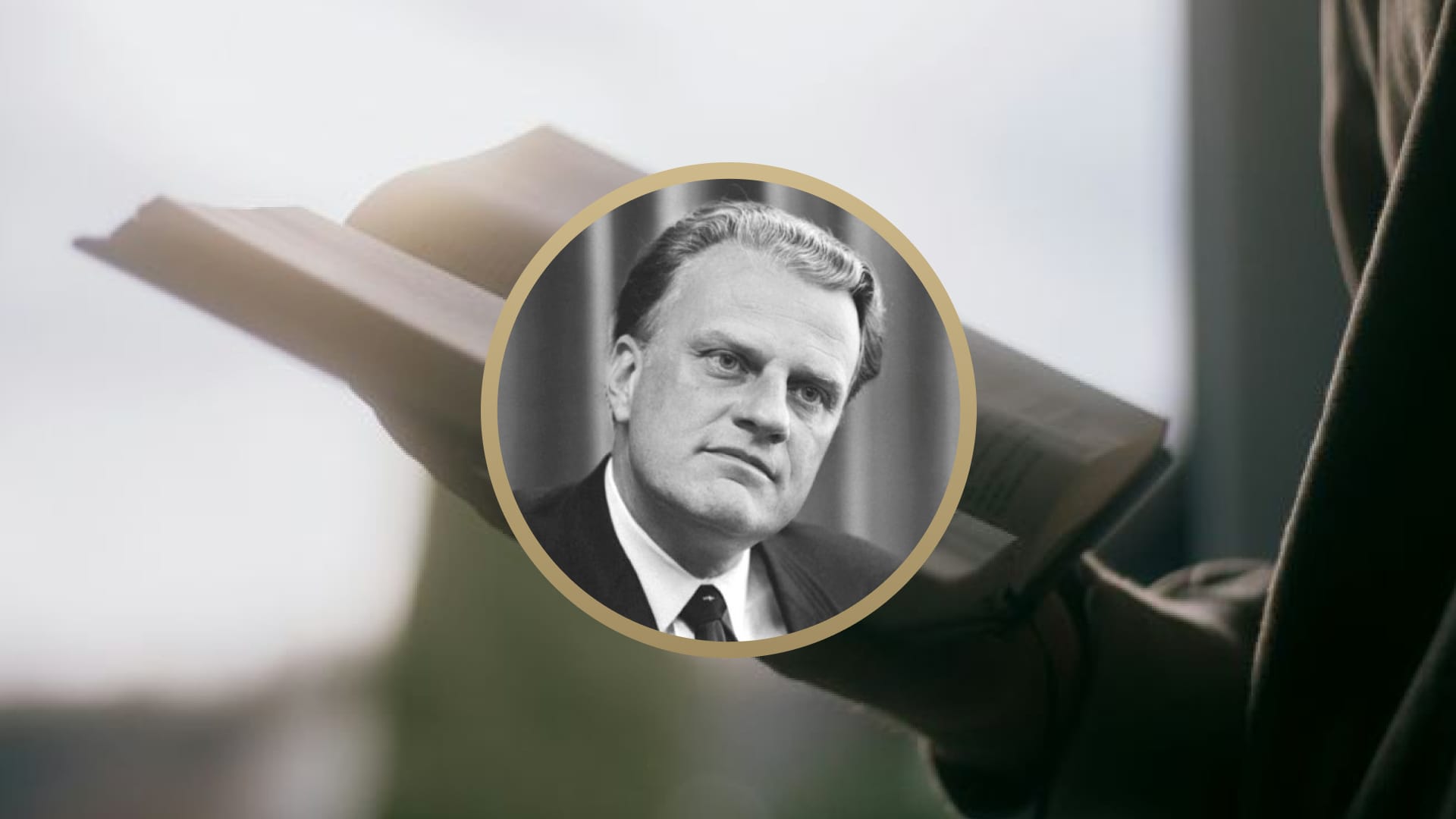
The year was 1948. The place was Modesto, California. A young evangelist by the name of Billy Graham was conducting a series of Gospel meetings in the city. The glare of public popularity was starting to shine on this powerful preacher from the mountains of North Carolina. After the conclusion of World War II, it seemed that men and women were hungry for the simple truths of the Gospel of the Lord Jesus Christ.
In the picturesque language of the folks of the Appalachian Mountains, Graham once said he felt like “a turtle on a fencepost.” It was obvious to the man that he could not have gotten to a major city on the West Coast on his own!
As Graham grew in popularity and notoriety, he sensed that temptation would be stronger than usual. Many popular preachers over the centuries had fallen prey to lust, resulting in scandal, and afforded by the wiles of the devil.
One quiet afternoon in Modesto, while preparing to preach that evening, Billy Graham called his team members together. “I asked them to go to their rooms for an hour and list all the problems they could think of that evangelists and evangelism encountered. When they returned, the lists were remarkably similar, and in a short amount of time, we made a series of resolutions or commitments among ourselves that would guide us in our future evangelistic work. In reality, it was more of an informal understanding among ourselves—a shared commitment to do all we could do to uphold the Bible’s standard of absolute integrity and purity for evangelists.”
The short code of ethics drawn up that day was later called the Modesto Manifesto or simply, the “Billy Graham Rule.” Years later, Graham described the first and most important part of that manifesto in his own words: “We all knew of evangelists who had fallen into immorality while separated from their families by travel. We pledged among ourselves to avoid any situation that would have even the appearance of compromise or suspicion. From that day on, I did not travel, meet, or eat alone with a woman other than my wife. We determined that the Apostle Paul’s mandate to the young pastor Timothy to flee youthful lusts would be ours as well.”
Other planks of the manifesto dealt with financial integrity and honest reporting of numbers in attendance at crusade meetings and how to count those who responded to the altar call. All the matters addressed called for integrity, which Graham described in this memorable way: “Integrity means that if our private life was suddenly exposed, we’d have no reason to be ashamed or embarrassed. Integrity means our outward life is consistent with our inner convictions.”
Personal integrity was very important to the life and ministry of Dr. Billy Graham. It is significant that, in a day of moral failure and the downfall of many popular preachers, Dr. Graham’s testimony was never tainted by any moral scandal. The simple reason was that he never made any provision for the lusts of the flesh.
He always asked that the cable TV be disconnected in any hotel room in which he stayed, prior to his entry into the room. On one occasion this was not done. He would have sought different lodging, but the hour was late. So, Billy Graham did the only thing he knew to do. He yanked the cable right out of the wall. He later paid the hotel for the damage done, saying, “We can replace the television cable; we can’t replace integrity.”
From humble beginnings on a dairy farm in his mountain home near Charlotte, North Carolina, Dr. Graham became one of the most famous evangelists in modern Christian history. Over the course of six decades of ministry, he preached the Gospel of the Lord Jesus Christ to more people assembled in live audiences than any other man in history. His hearers have been estimated at 210 million people! This total does not even include the millions of others who watched him on television or listened to him on the radio.
No one would have guessed when he was younger that this massive preaching ministry would become Graham’s calling. His parents were William Franklin Graham Sr. and Morrow Graham. Their son was born on November 7, 1918, just as the first World War was coming to a close. Young Billy milked cows alongside his parents and worked hard on their small farm. He was sixteen years old when he was saved in a local revival meeting.
Billy Graham attended Bob Jones College and then Florida Bible Institute. In the evenings, he would sometimes paddle a canoe to an uninhabited island in the middle of the sluggish Hillsborough River. There he practiced preaching Gospel sermons to the swamp birds and Florida alligators.
He became an evangelist with the organization Youth for Christ and soon was preaching to young people all across the United States. In his first year as a full-time evangelist, Graham preached the Gospel in forty-seven states. In 1943, Billy Graham married Ruth Bell, and the Lord blessed them with five children over the years: Virginia (“Gigi”), Anne, Ruth, Franklin, and Nelson.
As he grew in popularity, Billy Graham purposed that he would not defile himself. In a day when the enemies of righteousness would have latched onto any scandal they could find, Graham lived above reproach with integrity, moral purity, and Godly accountability. In the stress of public scrutiny and the limelight of world fame, he never succumbed to the “strange woman” and consistently lived by his “Billy Graham Rules” formulated that day in Modesto California.
Dr. Graham became known as “America’s pastor.” He preached in 185 countries all over the planet. He was friends with numerous presidents, and met personally with these men, from Harry Truman to Barack Obama. Graham was known and respected by heads of state all around the world.
His son Franklin Graham is the founder of the international relief ministry called Samaritan’s Purse. Franklin Graham once said about his father, “My father, Billy Graham, lived to be 100 years old without a scandal, because he followed the footsteps of his father in heaven with consistency.”
Billy Graham died on February 21, 2018, at the age of ninety-nine. He was only the fourth private citizen in American history to be afforded the honor of lying in state in the Capitol Rotunda in Washington D.C. President Donald Trump called Dr. Graham “an ambassador for Christ.” On May 16, 2024, a statue of Billy Graham was unveiled by Speaker of the House Mike Johnson as part of the National Statuary Hall collection. The statue depicts Billy Graham holding an open Bible, inviting the world to find in the pages of Scripture the transforming power of the Gospel of Jesus Christ.
Sources and Further Reference:
Graham, Billy. Just as I Am: The Autobiography of Billy Graham. San Francisco, CA: HarperOne, 1997.
Aikman, David. Billy Graham: His Life and Influence. Nashville, TN: Thomas Nelson Publishers, 2007.