Commands of Christ

Get these articles delivered right to your inbox.

Matters of Life & Death is a free teaching series looking at the nature & character of God revealed in Scripture and bringing inspirational stories of people who, with Christ’s power, held fast to God’s Word in their daily lives.

After signing up, we’ll send you emails on the days you choose with teachings from our Matters of Life & Death teaching series. Occasionally there may be a few updates on other events or resources that may be relevant to you.

"*" indicates required fields

Tuesday - Commands of Christ
Every Tuesday you'll get a teaching article that focuses on the Commands of Christ as seen in the lives of His disciples.
Thursday: Biography
Every Thursday you'll get a short biographical sketch of a hero or heroine from Christian history who lived out the command of Christ under consideration.
Saturday - Covenant Marriage
Every Saturday, you'll get an article that will delve into practical areas that affect every Christian marriage.

Topics

Character Qualities

Commands of Christ

Basic Life Principles

Attributes of God

The event many know best about John Mark was when he turned back and went home partway through the first missionary journey. Barnabas wanted to bring John Mark along on the second journey. Paul did not want to bring him. “But Paul thought not good to take him with them, who departed from them from Pamphylia, and went not with them to the work” (Acts 15:38). Like us, John Mark had to learn to see Christ through his failures. In fact, until we see and confess our failures, we cannot see Christ aright. Under the encouraging influence of Barnabas, John Mark blossomed.
Ananias of Damascus changed the world forever. It was not because he preached an eloquent sermon or wrote an epistle or gave a large donation. Rather, it was because he obeyed the command of Christ to love your enemies. There are no long passages in Scripture about Ananias. However, in the one passage that includes Ananias, we gain one small tidbit of information. That one act of kindness for which he is remembered was an act of kindness that changed the world, for it was an act of kindness to a recent convert named Saul of Tarsus.
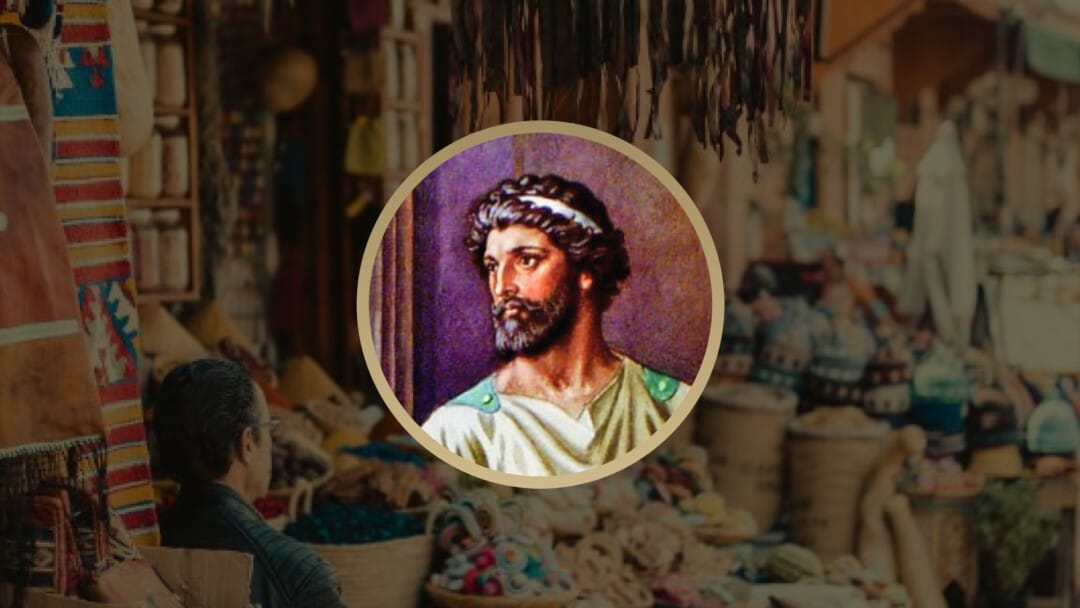
In the life of Lydia, who was noted in Acts 16:14 as a “seller of purple,” we find an example of a woman who knew what it meant to go the second mile in the service of her Lord. She lived a holy life in an unholy world and set an example for many generations of Christian women throughout history to follow. Lydia is first mentioned in Acts 16. At this point in the record of Acts, Paul had already been on his first missionary journey and had just received the vision of the man of Macedonia saying, “Come over into Macedonia, and help us” (Acts 16:9). Thus, in Acts 16:12, Paul is recorded as arriving in Philippi, where his path would soon cross Lydia’s.
Very little is known about this first-century Christian named Demetrius. In fact, all that we know of him is found in this one verse (III John 12) from one of the shortest New Testament books. But what an example Demetirus set forth for us to follow! Oh! What a worthwhile life it would be if, after 2,000 years, all that would be remembered of our legacy would be that simple statement—that we lived in such a way that we had “good report of all men, and of the truth itself.” The apostle’s testimony indeed declared that Demetirus was a man of his word.
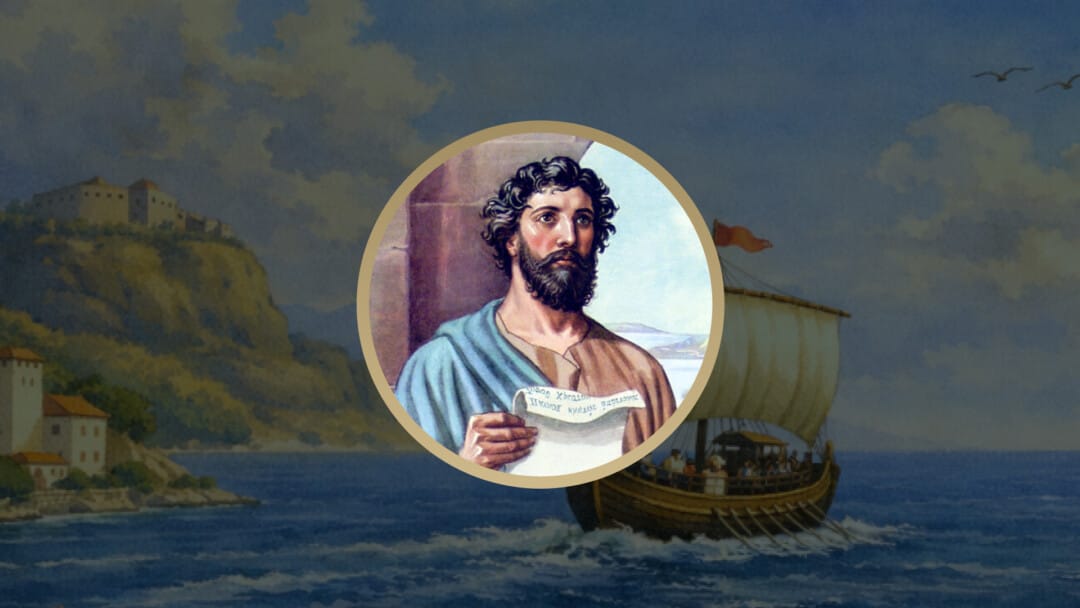
Many people are familiar with the Epistle to Titus, but it is surprising how little is known about Titus the man. Typically, in common thought, Titus is often associated with Timothy. However, the two young men had very different backgrounds! Unlike Timothy, Titus was a Gentile. He carried a Roman name and probably came from a pagan background. Yet, Titus is a splendid example of a young man serving the Lord in a difficult mission on the island of Crete, “denying ungodliness and worldly lusts,” and living “soberly, righteously, and godly, in this present world” (Titus 2:12).
It should come as no surprise that disagreements arise among believers. Even during the earthly ministry of the Lord Jesus, the twelve disciples often disputed with one another. According to Acts 6, a disagreement arose between the Hellenistic (Greek-speaking) widows and the Hebrew widows about the distribution of charity. Even Paul and Barnabas had a sharp disagreement over the inclusion or exclusion of John Mark from the second missionary journey. Disputes among Christians will arise in a fallen world. In the case of Euodias and Syntyche, Paul made an exhortation to these ladies that they can and ought to be reconciled. He specifically urged them “that they be of the same mind in the Lord.”
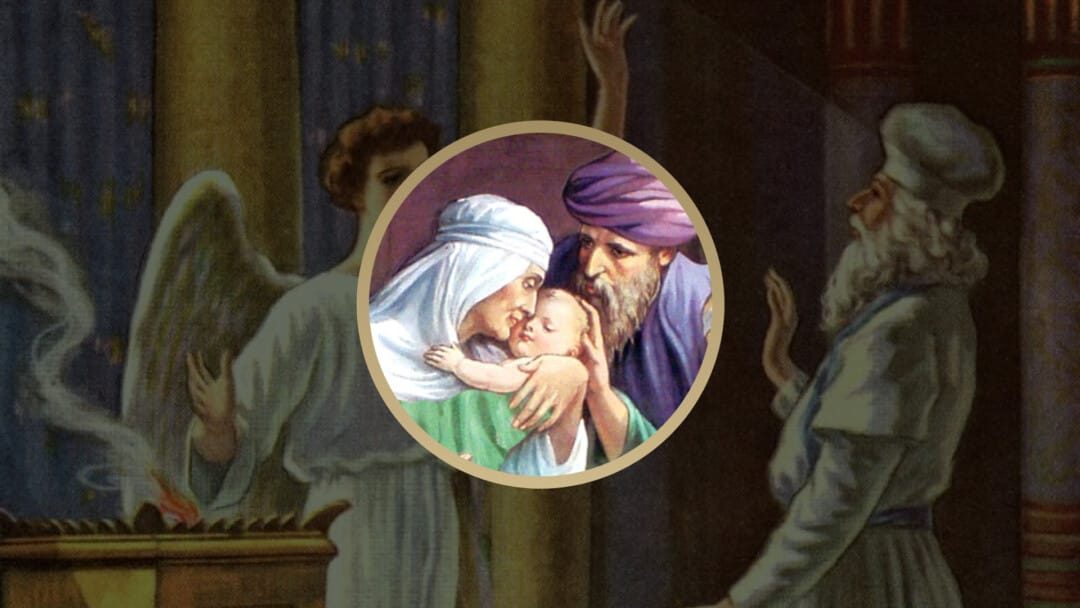
In Acts 18:24, we meet a remarkable man named Apollos. The Apostle Paul had just completed his second missionary journey. On that journey, he had briefly preached the Gospel at Ephesus, where he had left Aquila and Priscilla, and then he departed for Jerusalem. During his absence, another preacher arrived in Ephesus. The report of this preacher is recorded in Acts 18:24–26.
Phebe probably did not realize that two thousand years after the quiet deed of service that her name would still be read and venerated. Little did she know that mothers would one day name their daughters Phebe (or “Phoebe”) in hopes that these little girls would grow up to become helpers and servants in the church, spreading the Gospel light to all around. Phebe was faithful to shine the light of Christ where she was. She did not seek applause. She did not seek recognition. She was a reflection of the true light which is found in the Lord Jesus Christ.
Silas stands in Scripture as a man who learned the value of rejoicing in the midst of persecution. He was a man of deep, sincere humility, often appearing in second place. He was named seventeen times in the Bible, sometimes by his Greek name, Silas, and sometimes by his Latin name, Silvanus. Silas was not at all a minor player in New Testament events; in fact, he was noted to be one of the “chief men among the brethren” (Acts 15:22).
In Matthew 9:9, we read the first salvation testimony in the New Testament. It is the written record of the conversion and call of Matthew the Publican, from the pen of the man himself. According to this Scripture passage, “And as Jesus passed forth from thence, he saw a man, named Matthew, sitting at the receipt of custom: and he saith unto him, Follow me. And he arose, and followed him.”
Tax collectors were despised by all patriotic Jews in the first century. Tax collectors, or publicans as they were called in the Bible, were viewed as collaborators with Roman tyrants at best, and merciless parasites or outright thieves at worst! Zacchaeus was not only a tax collector. He was locally known in the region around Jericho as a chief tax collector, meaning he was not only wealthy but also an overseer of the other tax collectors.
John the Apostle knew what it meant to abide in Christ. It was John who devoted five chapters of his Gospel record to Christ’s discussion with His disciples on the night that He was betrayed. Bible scholars refer to this conversation as the “Upper Room Discourse.” During this discussion, Jesus introduced the imagery of the vine and the branches with these words: “Abide in me, and I in you. As the branch cannot bear fruit of itself, except it abide in the vine; no more can ye, except ye abide in me” (John 15:4).
In 2026, for our next study in the MLD series, we believe that the Lord has been leading us toward a survey of the Commands of Christ, specifically how His commands have been obeyed and lived out by His disciples. This ministry has produced many articles, messages, booklets, and podcasts on the Commands of Christ over the years. However, we believe there is fresh ground to cover as we discover how these commands of our Lord have been lived out by men and women throughout history who have loved and served our Savior.
Loading...