Biographical Sketch

Get these articles delivered right to your inbox.

Matters of Life & Death is a free teaching series looking at the nature & character of God revealed in Scripture and bringing inspirational stories of people who, with Christ’s power, held fast to God’s Word in their daily lives.

After signing up, we’ll send you emails on the days you choose with teachings from our Matters of Life & Death teaching series. Occasionally there may be a few updates on other events or resources that may be relevant to you.

"*" indicates required fields
Tuesday - Commands of Christ
Every Tuesday you'll get a teaching article that focuses on the Commands of Christ as seen in the lives of His disciples.
Thursday: Biography
Every Thursday you'll get a short biographical sketch of a hero or heroine from Christian history who lived out the command of Christ under consideration.
Saturday - Covenant Marriage
Every Saturday, you'll get an article that will delve into practical areas that affect every Christian marriage.

Topics

Character Qualities

Commands of Christ

Basic Life Principles

Attributes of God

As Studd advanced in his schooling and in his successful pursuit of cricket, he found himself becoming more and more dissatisfied. Even as his fame and popularity grew, he began to be impressed with the futility of earthly fame and wealth. He stated that he knew “that cricket would not last, and honour would not last, and nothing in this world would last, but it was worthwhile living for the world to come.”
After two hours, General Lee sent word that Moultrie should spike his cannon and abandon the fort while there was still time. General Lee waited in consternation for the fort to be abandoned. But Moultrie was not considering retreat, and he stubbornly kept his post. When the blue flag with the white crescent was shot down from its staff, a courageous young sergeant, William Jasper, dashed outside the fort to retrieve the fallen colors. Tying the flag to a sponge staff (a big, long implement used to clean the inner barrels of cannons), Jasper climbed to the top of the rampart and defiantly lifted the flag to the breeze again.
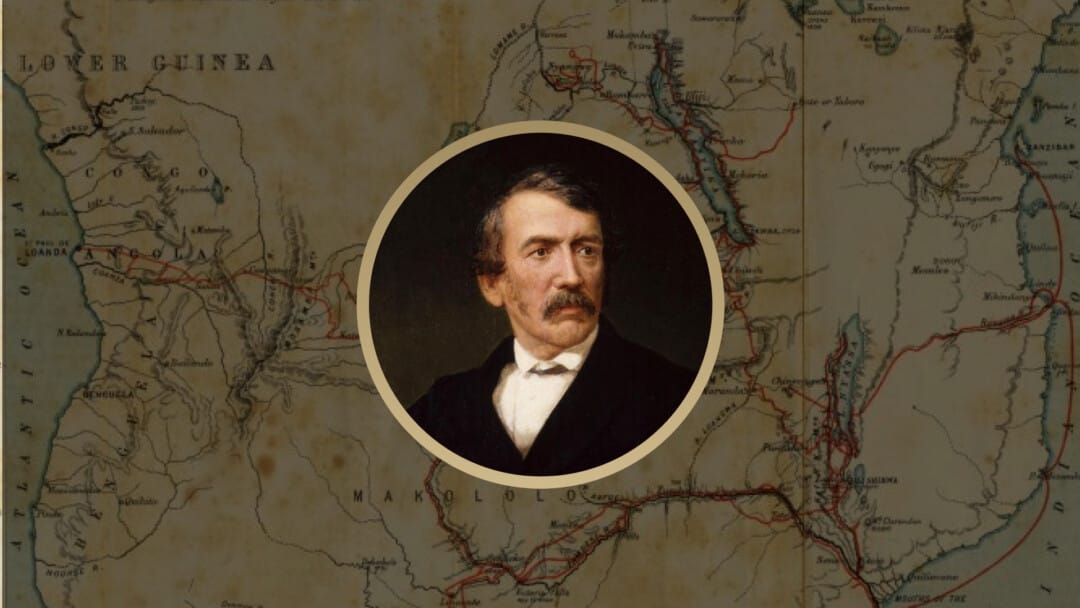
Over the years, David Livingstone memorized large sections of the Bible. He read science and history. He especially liked to read geography and to learn about strange lands far from the hills of his native Scotland. When he was twenty years old, he openly confessed Christ and dedicated his life to the service of God.
Sergei’s fanatical zeal for the Communist cause and his reckless bravery had attracted attention. While still a cadet, he was approached one day by a major in the KGB, the Russian secret police, with an offer to begin training for this exciting branch of service. Sergei jumped at the opportunity! His training went swiftly. Sergei became the leader of a small squad of trained young men, men for whom cruelty became a way of life.
The younger Glenn was in agony also. His legs received the brunt of injury; the painful changing of bandages on his extremely injured legs resulted in his crying aloud and moaning. Sadly, the doctor explained to the Cunninghams and Glenn that, due to the extent of the injuries from the accident, Glenn would always be a cripple. The faithful, older brother tried to keep his younger brother calm and hopeful.
These words penetrated deeply into Bartholomew Milon’s heart. He had never considered that his soul was as ugly as his crooked body. The Huguenot handed him a copy of the newly translated French New Testament and urged him to read it, promising to visit him again. But no teacher was needed. The Gospel touched the heart of the hunchback. Milon later wrote of his first reading of the New Testament, “Mercy has been shown me, in order that the love of God which pardons the greatest sinners should be placed as on a hill and be seen by all the world.”
Harry Wisbey kissed his wife and squeezed his little children to his heart. The Great War (WWI) was raging in Europe. Wisbey would soon be leaving his home in Northern Ireland to do his part. At breakfast that morning, he read the Bible to his family and then fell to his knees to pray. His voice was so choked with emotion that it was hard for him to pray. Meanwhile, Wisbey’s little boy, too young to know the gravity of the situation, merrily announced after family prayers, “Dada prayer very funny this morning!”
As Captain Pickens led his twenty-five men through an old cornfield and uphill toward a wooded ridge, they were suddenly assaulted by approximately 200 Cherokee braves that had set up a clever ambush. The Indians saw that they outnumbered the militia by almost 8 to 1! From all directions, they dashed forward with sharp knives and deadly tomahawks to kill and scalp the startled American riflemen.
Nicknames often highlight a character trait that is obvious to many. So it was that a worthy Scottish preacher named James Guthrie was given the nickname “Sickerfoot.” This unusual nickname meant “sure of foot” in the old Scottish dialect. Guthrie lived during the dark days of the persecution of the Covenanters. He was one of those who was faithful to Christ in a day when many were compromising the truth in order to save their lives.
Persecution was intensifying against those who preached reform. Thus, Myles Coverdale deemed it wise to flee England for the Continent near the end of 1528. He lived for a while at Antwerp, assisting William Tyndale in his work of translating the Scriptures from Hebrew and Greek into English. When Tyndale was betrayed by a man he had kindly befriended, Coverdale steadfastly continued Tyndale’s work alone, laboring faithfully to complete this English translation.
Suddenly, the quiet afternoon was shattered by the booming of cannon from Fort Charles! Terrible howling arose from the bushes, followed by a volley of shots. Then fierce, unfriendly Indians rushed out of the woods! Some of the men, including Mr. Gyles, quickly seized their guns. They put up a determined resistance. But the few colonists were overwhelmed by nearly forty Indian warriors. One lad, John Gyles, was unarmed, as he had no knife or farming implement with which to defend himself. As such, he was pursued by a stout warrior brandishing a cutlass!
At first, the attack went smoothly. The Savoyards had approached the walls undetected. The Jesuit priests whispered encouragement to them, “Climb boldly; every rung of the ladder is a step to heaven.” The soldiers, buoyed by the priests’ urgings, hurriedly climbed the ladders, anticipating the loot they would receive, as well as the Heaven they hoped to gain.
Young and strong as he was, Willems made good time! He swiftly fled on foot into the woods around the prison. Coming upon a body of water covered with a thin coating of ice, Willems set out carefully across the ice. He safely made it across to the other shore. His pursuer close behind, the guard started across the ice, assuming that if it held solid for the escaped prisoner, it would also hold him.
Viggo Olsen, the mischievous young “surgeon,” grew up in Omaha, Nebraska. Gradually, the Lord turned his interest away from basketball, and the youth focused more and more on developing his skill in using his knife. An early interest in medicine and anatomy directed his attention to the medical field.
The setting where Toplady made his decision for Christ was not an impressive nor elaborate one. In England, the young man was very familiar with religious surroundings, such as the lofty stonework of Westminster Abbey and the resonant, rich sounds of the organ and choir. By contrast, the church service in Ireland was held inside a farmer’s barn. The preacher was an illiterate layman named James Morris. But, the man was empowered by God’s Holy Spirit, and he preached a soul-searching message of salvation!
Whitman dismounted his horse at the T-shaped mission house. The hour was late, and he was tired. He sent his wife, Narcissa, to bed so that she could get some needed rest. Little did either of them know that it was to be their last hours on earth. Whitman took his wife’s place and attended to the sick children, white and red alike, who needed his merciful aid through the rest of the night.
As the conflicted youth walked along the road, he suddenly stopped. Did he hear a voice? Or was it his imagination? He stood stock-still in the road and listened. There it was again! But where was it coming from? Was it the voice of God? Did God speak to men? Was he going to be struck dead for his sins and for his mockery of the itinerant, dipping preachers who were so earnest and seemingly fanatical?
Now an orphan, Philip had to rely only upon the grace of God to establish, strengthen, and settle him upon his course of life. The twelve-year-old orphan wrote in his journal, “God is an immortal Father, my soul rejoices in him; He hath hitherto helped me and provided for me; may it be my study to approve myself a more affectionate, grateful, and dutiful child.”
A gloomy light filtered into the dark prison cell where Thomas Cranmer sat. The feeble shaft of daylight illuminated a piece of paper. Cut off from aid or help of his friends, separated from his wife and children, his weary heart pondered his options. Only two options were before Cranmer. First, he could assert the truths he believed, or, second, he could give in to the pressure of the age and hope to retain his position as Archbishop of Canterbury.
E.M. Bounds not only preached about prayer—he lived it. He was well-known in his lifetime for his habit of rising at 4:00 every morning and praying alone for several hours before breakfast. His prayers were fervent, consistent, detailed, powerful, and they had a lasting influence upon the few who were privileged to hear his private prayers.
Loading...