Biographical Sketch

Get these articles delivered right to your inbox.

Matters of Life & Death is a free teaching series looking at the nature & character of God revealed in Scripture and bringing inspirational stories of people who, with Christ’s power, held fast to God’s Word in their daily lives.

After signing up, we’ll send you emails on the days you choose with teachings from our Matters of Life & Death teaching series. Occasionally there may be a few updates on other events or resources that may be relevant to you.

"*" indicates required fields
Tuesday - Commands of Christ
Every Tuesday you'll get a teaching article that focuses on the Commands of Christ as seen in the lives of His disciples.
Thursday: Biography
Every Thursday you'll get a short biographical sketch of a hero or heroine from Christian history who lived out the command of Christ under consideration.
Saturday - Covenant Marriage
Every Saturday, you'll get an article that will delve into practical areas that affect every Christian marriage.

Topics

Character Qualities

Commands of Christ

Basic Life Principles

Attributes of God

Consider these questions: Who in Chrisitan history saw dramatic spiritual fruit when he obeyed our Lord’s command to pray for laborers? What medical doctor learned to love his neighbor as himself and thus spared many lives? Who was a mother that obeyed our Lord’s command to “despise not little ones” and saw the Lord use her children in a mighty way?
This servant of the Lord has often been called “The Morning Star of the Reformation.” Like the gleaming planet Venus that fades away with the rising sun, so also John Wycliffe died on the last day of the year and gradually faded away as the Son of Righteousness began to dawn upon Europe, a land held fast in the darkness of superstition and fear. Wycliffe had reflected the true light of God, and his translation of the Bible into the English language gave promise that a day of glorious revival was coming!
You probably were not expecting a biographical sketch of jolly old Saint Nicholas on this Christmas morning! The British know him as Father Christmas. The Dutch call him Sinterklaas. In German regions, he is referred to as Weihnachtsmann, meaning “Christmas Man.” Most Americans simply know him as Santa or Santa Claus.
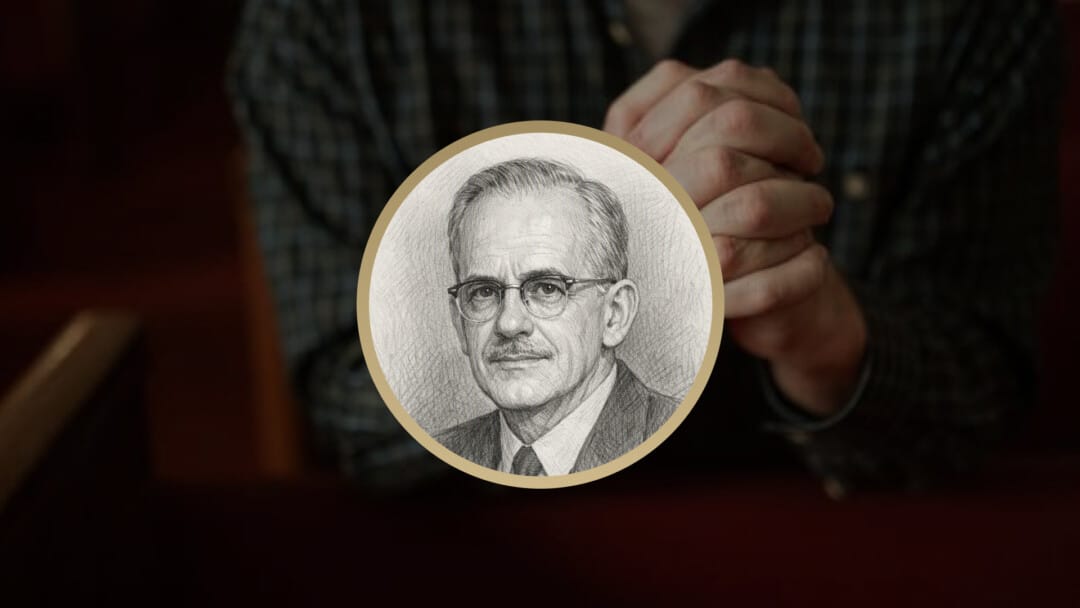
John MacArthur grew up in his father’s church and saw the power of the Gospel to transform lives. For a time, he lived with his widowed grandmother, and her pious, Godly testimony deeply influenced young John for good. Although he was a sickly child, he grew into a strong teenager who had many athletic abilities. He developed great skill on the football field and considered a career in professional football.
Seawater poured into the crippled steamship. Chaos spread quickly through the ship, as passengers scrambled for life preservers and lifeboats. Within twelve minutes, the ship had slid into the icy waters of the Atlantic. Of the 313 passengers and crew, only 26 passengers and 61 crew members were pulled from the frigid water. The other 226 people drowned in that cold water.
In June 1645, Oliver Cromwell led his forces to an even greater victory on the field of Naseby. Cromwell, by this time, had risen to command an entire wing of the Parliamentarian army. His men, known as the “New Model Army,” shattered the Royalist forces under the flamboyant Prince Rupert. Cromwell’s men coined the phrase “Praise be for Naseby” to thank God for the dramatic victory.
One young man, a servant indentured to John and Katherine Carver, had suffered enough under the captain’s orders to stay below deck. He longed for the fresh air and invigorating breezes of the sea. Finally, in a moment when no one was looking, the desperate fellow pushed open one of the hatch grates! He scrambled quickly and emerged onto the Mayflower’s deck.
The newly converted chief soon began to be pressured by those in his tribe who resisted the “new ways” of the missionaries. Some wanted the chief to return to his former ways, which included his sins and his sorceries. Chief Timothy steadfastly refused. When he was mocked as being a weak man, Chief Timothy always proved that God strengthened his hands for the hunt. He could face grizzly bears, mountain lions, and enemy tribes even more courageously as a Christian!
It was now early dawn. Old Wagoner had spent the entire night around the campfires with his men, seeking to instill in them some of his own enthusiasm. While he knew that he could depend upon his veteran riflemen, he had little confidence in the raw recruits from the Carolinas. Thus, the wise leader had sought to encourage them for the coming battle. He had stoked their fires, shared their meager suppers, and encouraged them to stand firm the next morning. He asked his men to give the enemy three volleys: “Three shots, boys, and the day is ours.”
Finally, at about 9:30 at night, long after the sun had set, the party approached a clearing on the bank. For fifteen hours, the explorers had been on the river. They were wet, cold, and very hungry. The eyes of Lieutenant William Lynch gleamed with delight as the pale light of the moon reflected off the river. He looked upon the cleared bank with a smile of relief. They had made it!
Henry Ainsworth left England in 1593 when he was twenty-three years old. He found refuge in Amsterdam with the other Separatists who had come here from England before him. In Amsterdam he found employment as a porter to a bookseller. At first, he was given the ordinary tasks of a porter, which was making deliveries, and was paid barely enough to keep him from starving.
Pastor Duncan dearly loved his wife and six children; he could not bear the thought of separation from them. Boldly, he decided to take them with him across the River Tweed to Berwick, in the extreme northern tip of England. There, just across the river from his beloved Scotland, he was still under the rule of King James, but outside the reach of the Archbishop of St. Andrews.
The intended first target of the attack would be the great Huguenot leader, Admiral Gaspard de Coligny. With him dispatched, the general massacre could begin. Stealthily in the early morning darkness, Besme, a Bohemian servant of the Duke of Guise, led a small party of determined assassins to the door of the house where the Admiral was lodging. The men knocked loudly, demanding admission in the name of the King!
The ruddy light of early dawn began to streak through the barred window and softly fell upon the face of a sleeping man. The man was John Hus. Despite that almost all of Christendom was arrayed against him and this was the dawn of his last day on earth, Jan Hus slept peacefully. The heavy, grated window barred him from the outside world and partially obscured the beautiful scenery of the lake and mountains.
One hot summer day in 1881, a young man walked into Tuskegee, a small town in rural Alabama. The district was one of the poorest in the entire country. This was cotton country, and the area had been devastated by the War Between the States. Although this rural district had been spared the worst of the animosity, a general feeling of distrust and suspicion still existed between whites and blacks.
Walter Smith had a unique gift as a writer of poems. He sometimes wrote under pseudonyms, two of which were “Orwell” and “Herman Knott.” His poetry was deep and thoughtful and contributed much to Scottish literature. Of his many poems and other writings, one hymn has stood out far above all other productions from the pen of Walter Smith.
Horatius Bonar is best known as an author of hymns. He wrote approximately 150 hymns, including “I Heard the Voice of Jesus Say,” “Thy Way, Not Mine, O Lord,” and “I Was a Wandering Sheep.” Although Bonar’s denomination was known for its adherence to the exclusive use of the Psalms in public worship, he saw a need and a place for the composing and singing of devotional hymns that expressed the fullness of God’s revelation in the New Testament.
Gordon was the son of a soldier; his father was Major General Henry William Gordon. In fact, Charles Gordon’s ancestors had consecutively served as officers in the British service for four generations! From the time of his birth, he seemed destined to follow in the footsteps of his fathers. All of Gordon’s brothers likewise became officers in the British army.
Noah Webster was born in West Hartford, Connecticut, on October 16, 1758. Webster came from an important New England family, and he grew up with a love for history. His father, Noah Webster Sr., was descended from John Webster, an early governor of colonial Connecticut. His mother, Mercy Steele, was a descendant of William Bradford, the dedicated and well-loved Mayflower pilgrim who served as governor of Plymouth Colony for many years.
At noon on the appointed day, Daniel stepped into a clearing from one side. Squire stepped into the clearing from the other side. The two Boone brothers had a joyous reunion and exchanged news and supplies. Many historians over the years have marveled at this reunion. Amazingly, with no maps or modern navigational equipment, Daniel and Squire met on the exact day and at the exact place they had agreed upon months earlier.
Loading...